Related: Best Espresso Grinders for Home Bars: Burr Beats Blade Every Time
Twelve years behind a bar and a garage full of dead machines taught me one thing: most people shopping for home espresso machines are solving the wrong problem. They compare boilers and pressure numbers, then ignore the fact that they will be standing at that counter at 6:40 in the morning, half asleep, holding a tamper.
I have pulled more than 40,000 shots in my life, set up espresso stations for friends, family, and two cafes, and I keep a machine graveyard in my garage to prove it. The Breville that leaked. The Gaggia I modded into something unrecognizable. The ECM that is still going. So when I look at the four machines below, I am not looking at stickers or spec sheets. I am looking at the workflow you will still be running in month three.
Here is the rule that governs everything else: the grinder is roughly 70 percent of the shot. A modest machine with a serious grinder beats a serious machine with a cheap grinder, every time. Two of the machines here include a grinder. Two do not. That single difference should decide more of your purchase than any other feature on this page.
Best Overall: Breville BES878BSS Barista Pro Espresso Machine, Brushed Stainless Steel
This is the machine I point people to when they want one box on the counter and no excuses. It is built as an all-in-one: espresso, a grinder, and a steam wand sharing a single footprint, which means you are not shopping for two separate machines before you pull your first shot. For someone moving off pods, that is the difference between starting this weekend and starting next spring.
The honest version, though: a built-in grinder is a convenience, not a destination. It gets you into the hobby, and it teaches you what dose, distribution, and tamp actually do to a shot. When you start tasting the gap between a good shot and a great one, you will want a standalone burr grinder, and that is fine. That is the natural path. Buy the all-in-one now, add the grinder later, keep the machine for years.
What sells it is the workflow. Grind, dose, tamp, pull, steam, all in one place, on one power cord, with nothing to carry across the kitchen. On any machine in this tier, the thing I would watch is temperature stability across back-to-back shots, because that is the line between consistent espresso and sometimes great, sometimes sour. If you make two or three milk drinks every morning, that consistency is the whole ballgame.
Best Grinder-Included Step Up: De'Longhi La Specialista Arte Evo Espresso Machine with Coffee Grinder
The La Specialista Arte Evo is the pick for the person who wants to be involved. It pairs a coffee grinder with a more hands-on, manual-style workflow, so you are making decisions about the dose and the tamp rather than pressing one button and walking away. If you have ever watched a barista work and thought, I want to learn that, this is the tier where that starts making sense.
That involvement is a real trade. More steps means more to learn, and it means a bad habit can follow you for weeks before you notice it in the cup. The reward is that when a shot finally lands, you know exactly why, and you can do it again tomorrow. Machines that hide the variables from you cannot teach you that.
My advice for anyone considering this one: pair it with a scale before you pair it with anything else. Dosing by eye is how people end up with sour mornings and no idea where to look. Weigh the beans in, weigh the shot out, and the machine stops feeling complicated within a week.
Best Push-Button Machine: De'Longhi Magnifica Duo Automatic Espresso Machine, Milk Frother, Silver
Some kitchens have one coffee person and one person who just wants a latte without a ceremony. That is the household this machine is built for. It is an automatic, bean-to-cup design with a milk frother, which means the whole drink happens with a press or two and no tamping, no dosing, no puck to knock out.
The trade is control, and you should go in knowing it. An automatic decides a lot on your behalf: grind setting, dose, and the shape of the extraction. You can nudge it, but you cannot dial a specific bean to its absolute best the way you can on a machine where you control every step. What you get instead is consistency, which for a busy house is worth more than the last five percent of flavor.
Two things I tell every automatic owner. Use fresh beans, because an automatic with stale beans makes stale coffee faster than any other machine on this list. And keep up with the cleaning cycle, because milk systems and brew groups that go unattended are where off flavors and repair bills come from. Do those two things and this class of machine lasts a long time.
Best for Small Counters: CHULUX Slim Espresso Machine with Milk Frother for Home Latte, Light Pink
Not every kitchen can spare two feet of counter, and not every budget starts in the hundreds. This one is slim, it has a milk frother, and it does not pretend to be a lab instrument. Light pink is a choice, and I respect a machine that admits it is going in a home rather than a cafe.
Be clear about what you are buying. A slim machine means a small boiler, and a small boiler means a wait between brewing and steaming. That wait is called dead time, and it is where weak workflows die: you pull a shot, then stand around while the machine catches up to steam your milk, and the shot cools while you wait. If you drink mostly straight espresso, this does not matter at all. If you make two lattes back to back every morning, it will.
The other thing to know about this tier, in general, is the basket. Budget machines very often ship with a pressurized basket, which is a crutch: it creates fake crema and hides stale beans and a bad grind. It will make drinkable coffee on day one, which is why it exists. But if your machine comes with both a pressurized and a non-pressurized basket, use the non-pressurized one as soon as you have a grinder that can keep up. That is the moment the hobby actually starts.
How I evaluate a home espresso machine
Four checks, every time, and none of them are on the box.
First, the grinder situation. Is there one built in, and can it actually grind fine enough for espresso? If the answer is no, the machine budget is not the real budget. Second, temperature stability. How steady does the brew water stay across a shot and across back-to-back shots? That is the difference between a machine you trust and a machine you argue with.
Third, dead time. The wait between brewing and steaming on a single boiler is where a morning routine goes to die. Fourth, the workflow I would actually keep. Not the Sunday morning version of me who wants to weigh beans and admire a naked portafilter, but the Tuesday version who has eleven minutes before a meeting. Buy for the Tuesday version.
And a fifth, unofficial check: would I still enjoy this machine after month three? That is the test that outlasts every spec sheet.
What separates these four machines
These four sit at four different points on the same line, and the line is about how much of the work you want to do.
The Breville Barista Pro is the one-box answer, with the grinder included and the most conventional workflow of the group. The La Specialista Arte Evo is the step up for someone who wants to learn the craft and is willing to be bad at it for a few weeks. The Magnifica Duo removes the craft entirely in exchange for a drink that is ready before you are. The CHULUX Slim trades capacity and boiler size for a footprint that fits where the others cannot.
None of them is the wrong answer. Buying the wrong one for your kitchen is the wrong answer. If you drink milk drinks and hate mornings, the automatic is the smart buy even though it costs more. If you have a tiny counter and drink espresso, the slim machine will make you happy for years. Match the machine to the person, not the other way around.
One more note, because I would be a bad host not to say it: whichever of these you pick, put money toward the grinder before you put money toward an upgrade. A great grinder on a modest machine makes good coffee. A bad grinder on any machine makes bad coffee, reliably, forever.
The home espresso machine comparison table
This is the table I keep in my notes when friends ask what to buy. It is sorted by role rather than by price, because price is the least useful way to compare these four.
| Machine | Type | Grinder | Best for | Price |
|---|---|---|---|---|
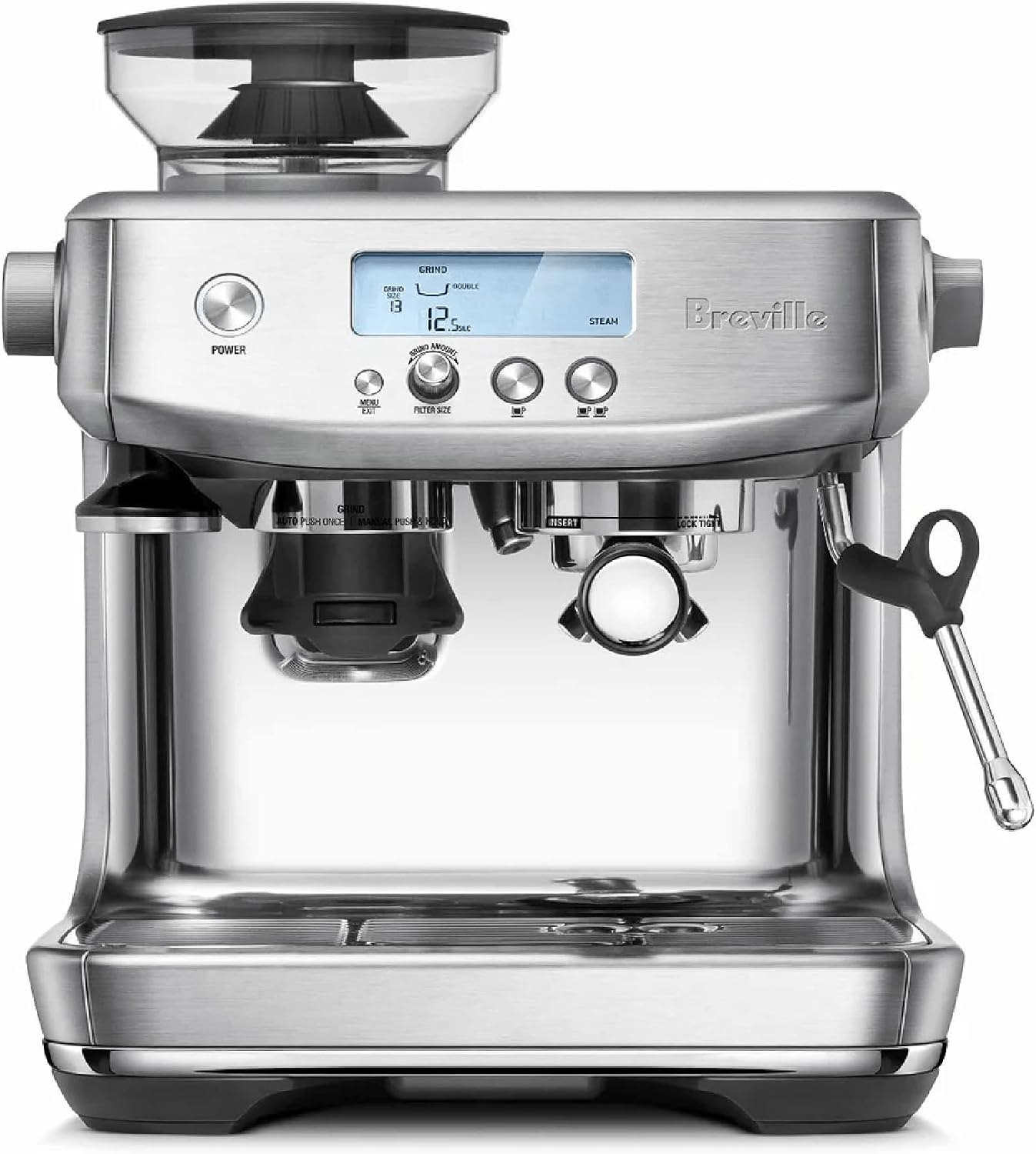 Visit on Amazon → Breville Barista Pro |
Semi-automatic, all-in-one | Built in | The one-box starter setup | $849.95 |
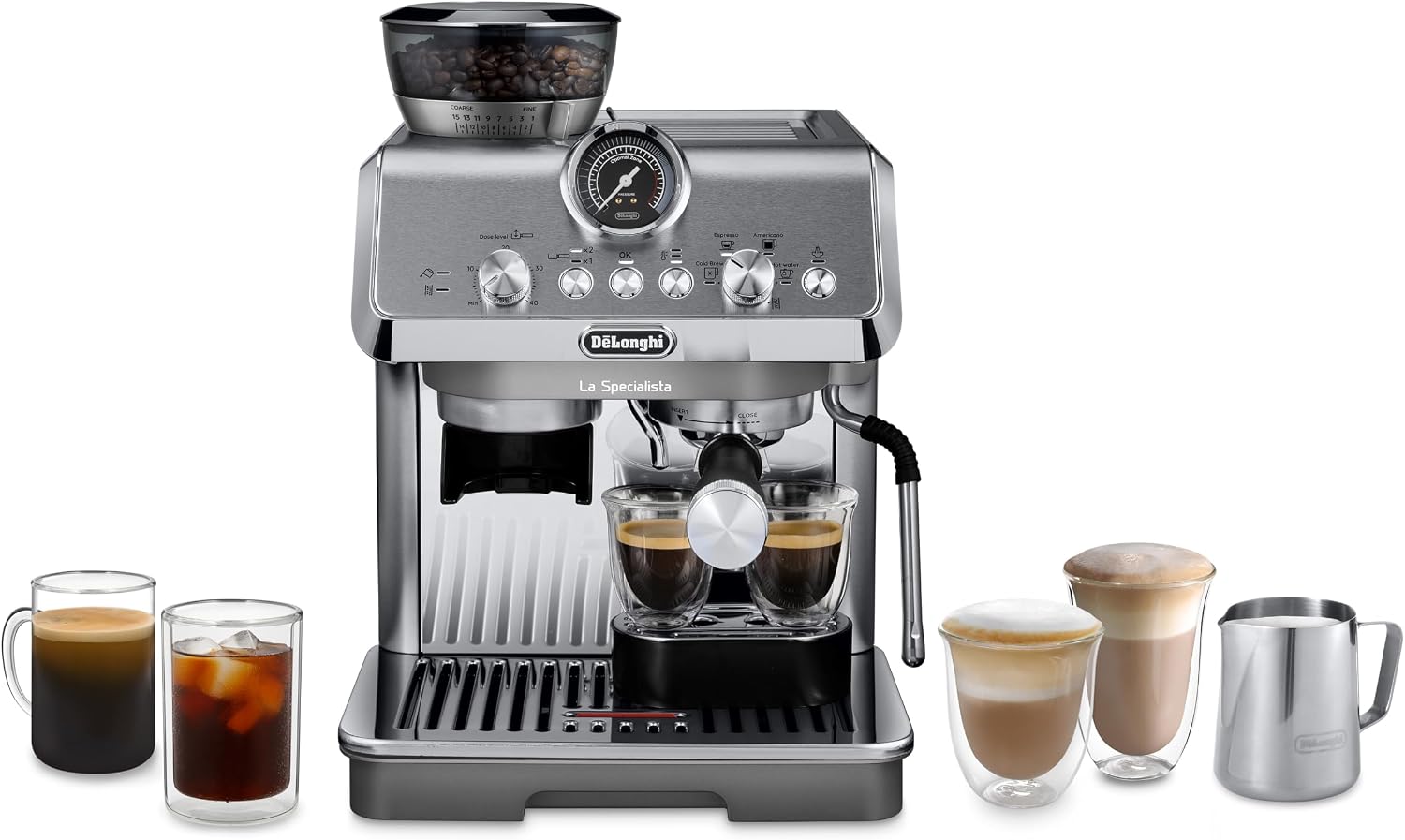 Visit on Amazon → De'Longhi La Specialista Arte Evo |
Semi-automatic with grinder | Built in | Learning the craft hands-on | $699.95 |
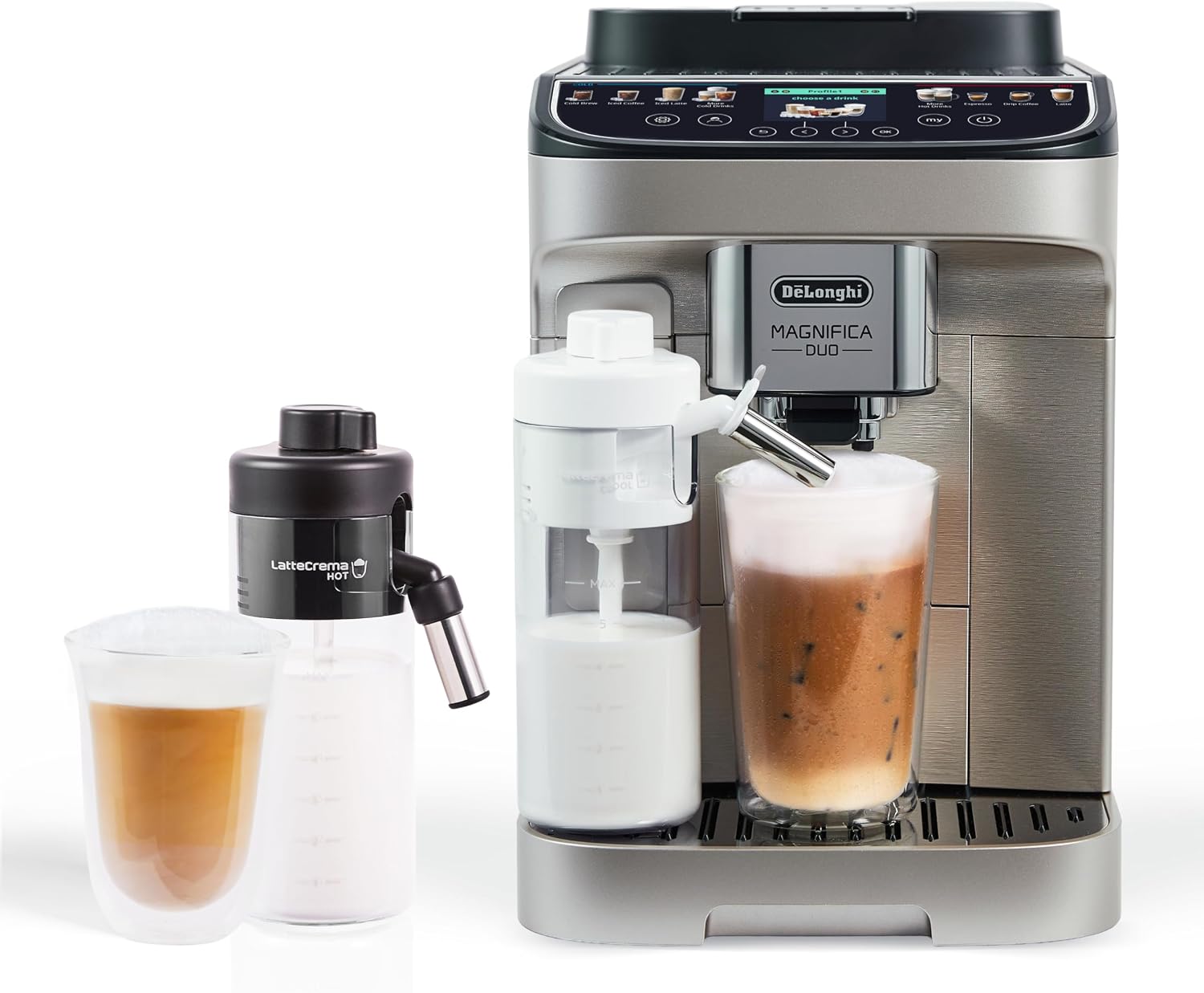 Visit on Amazon → De'Longhi Magnifica Duo |
Automatic, bean to cup | Built in | Households that want one button | $999.95 |
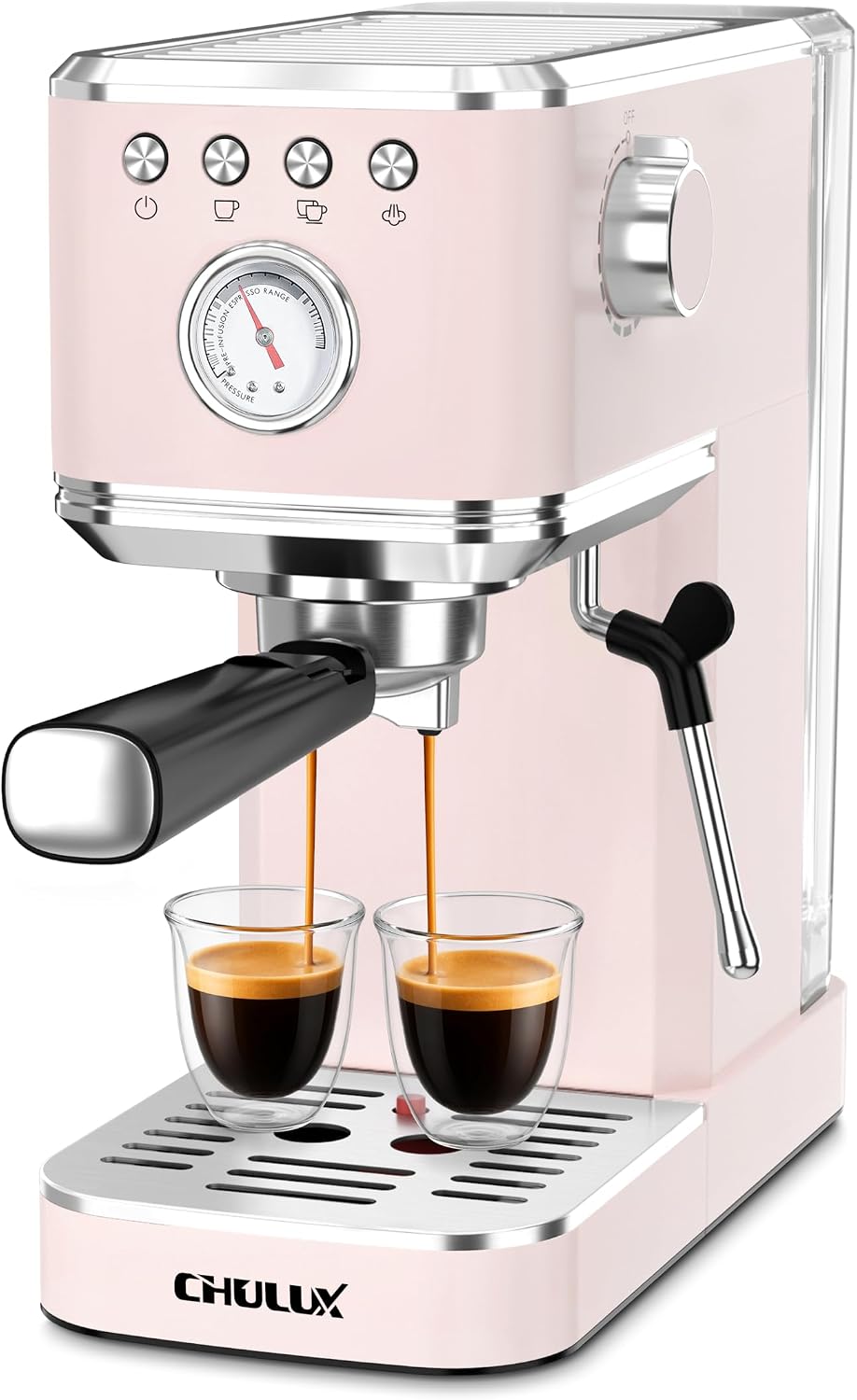 Visit on Amazon → CHULUX Slim Espresso Machine |
Compact manual | Add your own | Small counters and small budgets | $109.99 |
Should you buy the Breville Barista Pro?
Yes, if you want one box on the counter and a workflow you can learn in a weekend. It is the machine I would hand a friend who is moving off pods and does not want to research two purchases. The built-in grinder is a starting point rather than a destination, and you will eventually want a standalone burr grinder. That is not a flaw in the machine. That is the hobby working the way it should.
What I would not do is buy it expecting the grinder to be the last one you own. Treat it as the machine that teaches you what you like, and budget for a better grinder in a year or two. Buy the all-in-one now, add the grinder later, keep the machine.
Should you buy the De'Longhi La Specialista Arte Evo?
Yes, if you want to be involved and you like the idea of a machine that includes its own grinder without turning the whole thing into a science project. It asks more of you than the Barista Pro does in terms of attention, and it rewards that attention with more control over the shot. If you have a scale and a willingness to be mediocre for two weeks, this is a satisfying machine to grow into.
If you want coffee before you want craft, skip it and look at the Magnifica Duo instead. There is no shame in that. I make coffee for a living and I still own a push-button machine for the mornings I cannot be trusted with a tamper.
Should you buy the CHULUX Slim Espresso Machine?
Yes, if counter space is the deciding constraint and you drink milk drinks. It is slim, it has a milk frother, and it costs a fraction of the machines above it. Understand what you are buying: a small machine with a small boiler, which means a wait between brewing and steaming. If you can give it a real grinder and fresh beans, it will outperform a bigger machine fed stale pre-ground coffee. That is not a theory, that is just how espresso works.
And if you are torn between the CHULUX and the Magnifica Duo, the question is not which makes better coffee. The question is whether you want to stand at the counter and make it, or press a button and walk away. Answer that honestly and the choice makes itself.