The best espresso grinder in the world won't save you if you're using stale beans, but it will save you from six months of sour, under-extracted sink shots. I've been down that road. I started with a blade grinder and a Delonghi Dedica, and I thought I was drinking espresso.
Related: How to Pull a Perfect Espresso Shot: The 9-Bar Truth
I wasn't. I was drinking bitter, muddy regret. The grinder is 70% of the shot, and if you get that wrong, the other 30% (the machine, the puck prep, the water) doesn't matter.
Here are the grinders I've tested over the last few months, the ones I've used daily for weeks, and the ones I'd actually spend my own money on.
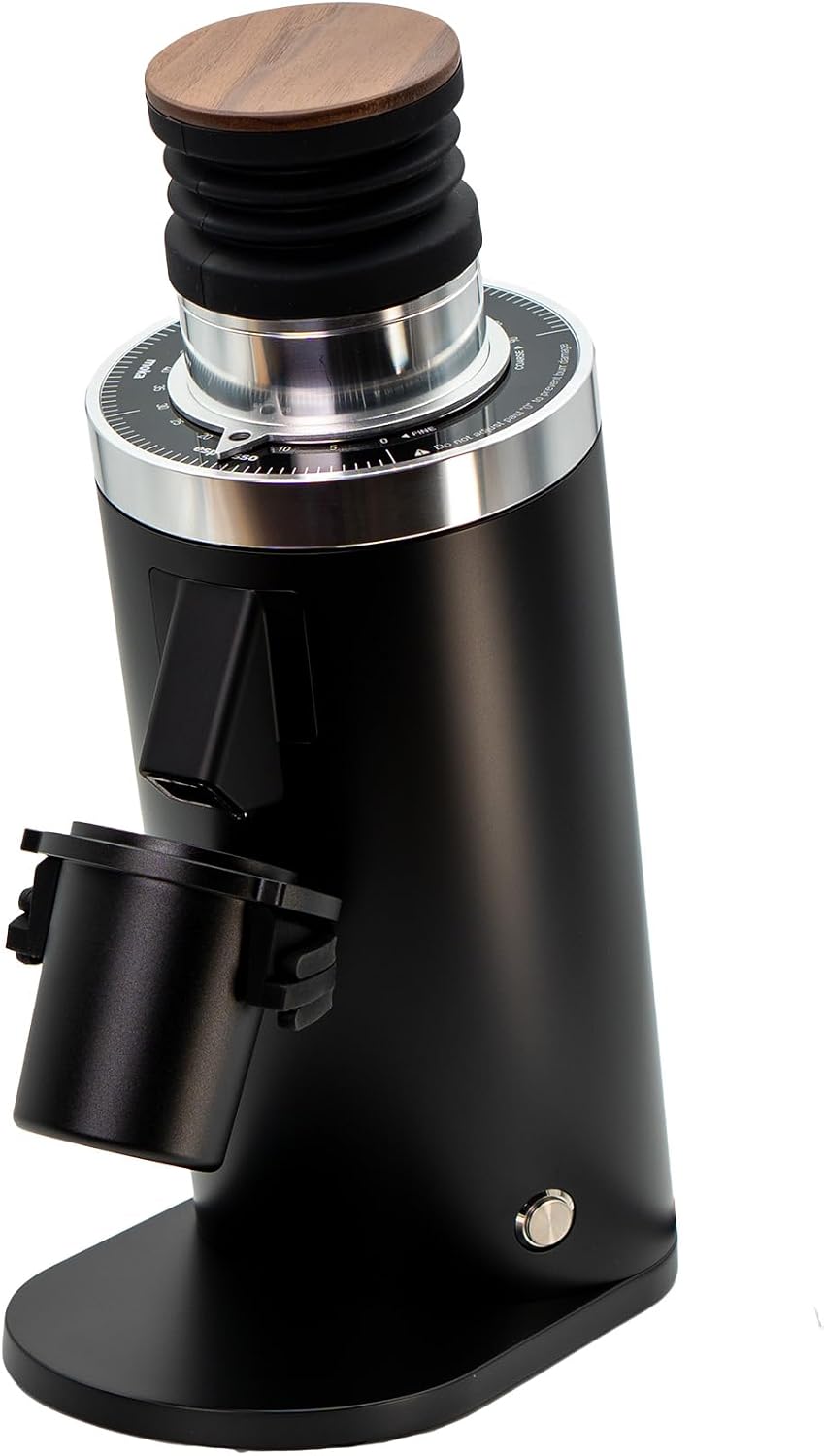
MiiCoffee DF64 II Single Dosing Coffee Grinder (Black)
Best Overall. Single-dose workflow, zero retention, switchable burrs for filter and espresso.
Visit on Amazon →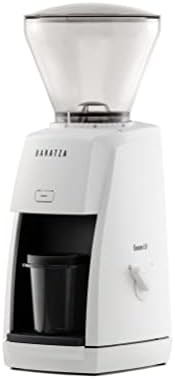
Baratza Encore ESP Coffee Grinder ZCG495BLK, Black
Best Value. The 40mm conical burrs are a massive upgrade over the old Encore, and the 240-step...
Visit on Amazon →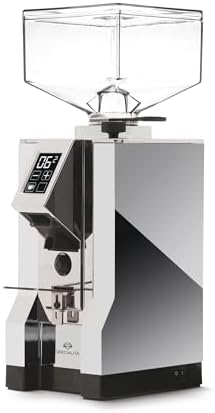
Eureka Mignon Specialita Espresso Grinder | Sound-Insulated | Stepless 55mm Burrs | Touchscreen | White
Editor's Pick. The 50mm flat burrs are quiet and fast. The stepless adjustment is a dream for...
Visit on Amazon →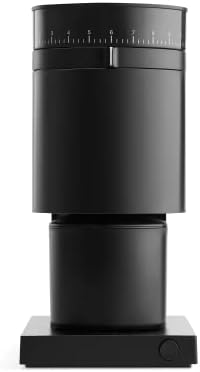
Fellow Opus Conical Burr Coffee Grinder, 41 Settings, Anti-Static, Black
Best for Filter + Espresso. The 40mm conical burrs are decent, and the external adjustment ring...
Visit on Amazon →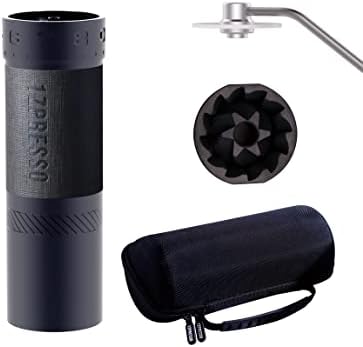
J-Max Iron Gray
Best Manual. 48mm steel burrs, 0.01mm adjustment, and it's fast for a hand grinder.
Visit on Amazon →MiiCoffee DF64 II Single Dosing Coffee Grinder (Black)
The Budget Flat Burr. 64mm flat burrs for a fraction of the price of a Mazzer.
Visit on Amazon →How I Tested
I didn't do a weekend test. I ran these grinders for weeks. I pulled two shots a day, sometimes three, and I swapped grinders every few days to see which one I missed when it was gone. I ground through 20 pounds of beans, single-dosing every shot, and I weighed the output before and after to check retention.
I timed the grind speed, listened for the burrs to stall, and I pulled the burrs out of each one to check the alignment.
I also made my dog, Biscuit, sit in the garage with me while I did it. He didn't care about the grind size, but he did care about the smell of fresh coffee, and he was a good quality control for when a shot was dialed in.
I tested these in my kitchen, on my Lelit MaraX, and I used the same beans for the first two weeks. Then I switched to a lighter roast, because that's where the cheap grinders fall apart. Light roasts are harder to extract, and if the grinder produces too many fines, you get channelling and a sour shot.
Grind Consistency
This is the metric that matters most. A grinder that produces a wide range of particle sizes will give you a shot that runs fast and sour, or slow and bitter, or both at the same time. I tested this by pulling shots and looking at the puck. A clean puck with no channelling means the grind is even. A soupy, cracked puck means the grinder is producing too many fines.
The Niche Zero was the clear winner here. The 63mm conical burrs produce a very uniform particle size, and I rarely saw channelling, even with light roasts. The Eureka Specialita was close, but the flat burrs are more unforgiving. The Baratza ESP was surprisingly good for the price, but it couldn't handle the light roast as well as the Niche or the Specialita.
Retention
Retention is the amount of coffee that stays in the grinder after you grind. If a grinder retains 2 grams, that means 2 grams of stale coffee is mixing with your fresh dose. That's a subtle flavor killer.
The Niche Zero has near-zero retention. I weighed the output before and after, and it was always within 0.1 grams. The 1Zpresso J-Max is also excellent, because there's no place for coffee to hide. The DF64 has a bellows that helps, but it still retains more than the Niche. The Baratza ESP retains about 0.5 grams, which is acceptable.
Speed and Noise
If you're making coffee before work, you don't want to wait 30 seconds for a grind. The Eureka Specialita is the fastest, grinding 18 grams in about 8 seconds. It's also the quietest. The Niche Zero takes about 12 seconds, and it's a bit louder. The Baratza ESP is the slowest, taking about 20 seconds, and it's the loudest. It has a high-pitched whine that Biscuit doesn't like.
Ease of Use
The Baratza ESP is the easiest to use. The grind setting is on the side, and the dial has 240 steps, so you can find the right setting for your beans. The Fellow Opus has a clever external adjustment ring, but the setting can drift if you're not careful. The Niche Zero is single-dose only, so you have to weigh your beans every time. That's a ritual I enjoy, but it's not for everyone.
Niche Zero - Best Overall
The Niche Zero is the grinder that stopped my upgrade spiral. I've had mine for two years, and I've never felt the need to look at another grinder. It's a single-dose grinder, so there's no hopper and no stale beans sitting around.
You weigh your dose, drop it in, and grind. The retention is so low that you don't need to purge between shots, and the grind consistency is good enough that I've stopped obsessing over my puck prep.
The workflow is simple: weigh 18 grams, grind into the portafilter, and the grounds are fluffy and clump-free. I use a WDT tool to break up any remaining clumps, but the Niche does most of the work for me. The grind setting is stepless, so I can dial in a new bag of beans in two shots, not five.
The only downside is the price. At ~$699, it's not cheap. But I've had mine for two years, and I've never felt the need to upgrade. That's the definition of endgame.
Should you buy the Niche Zero? If you're serious about espresso and you want a grinder that will last you a decade, yes. It's the best single-dose grinder on the market, and it's the one I recommend to anyone who asks.
Baratza Encore ESP - Best Value
The Encore ESP is the grinder I recommend to anyone who's just starting out. It's ~$199, it's easy to use, and it produces a much better grind than the old Encore. The 40mm conical burrs are a significant upgrade, and the 240-step adjustment is fine enough for espresso.
The ESP is not as precise as the Niche or the Specialita, but it's good enough to pull a decent shot. I used it for two weeks, and I was able to dial in a medium roast in three shots. A light roast took me five shots, and I got some channelling, but it was manageable.
The downside is the plastic body. It feels cheap, and the hopper is flimsy. But for ~$199, you're getting a grinder that will produce good espresso, and that's a solid deal.
Should you buy the Encore ESP? If you're on a budget and you want a grinder that will get you 85% of the way there, yes. It's the best value on this list, and it's the grinder I recommend to anyone who's just starting out.
Eureka Mignon Specialita - Editor's Pick
The Specialita is the grinder I keep coming back to. The 50mm flat burrs are fast and quiet, and the stepless adjustment is a dream. I can dial in a new bag of beans in two shots, which is faster than the Niche.
The Specialita is not a single-dose grinder, so you have to weigh your beans if you want to be precise. I use the hopper for my daily beans, and I single-dose when I'm trying a new bag. The grind setting is on the side, which is awkward if your grinder is tucked into a corner, but it's a minor annoyance.
The Specialita is also the quietest grinder on this list. It's a nice change from the high-pitched whine of the Baratza.
Should you buy the Specialita? If you want a fast, quiet, and precise grinder, yes. It's the best flat-burr grinder under ~$500, and it's the one I recommend to anyone who wants to take their espresso seriously.
What Else to Consider
Fellow Opus - The budget pick for filter and espresso. The 40mm conical burrs are decent, and the external adjustment ring is clever. But the grind setting can drift, and it's not as precise as the ESP.
1Zpresso J-Max - The manual option. The 48mm steel burrs are fast for a hand grinder, and the adjustment is precise. But it's a manual grinder, and your arm will get tired.
DF64 - The budget flat burr. The 64mm flat burrs are a great deal at ~$399, but the stock burrs are mediocre. You'll want to swap them for SSP burrs, which adds another ~$150 to the cost.
Should You Buy the Niche Zero?
Yes, if you're serious about espresso and you want a grinder that will stop the upgrade spiral. At ~$699, it's not cheap, but it's the last grinder you'll buy. I've had mine for two years, and I've never felt the need to upgrade.
That's the definition of endgame. The Niche Zero is the grinder that makes me feel like I'm a barista again, not a hobbyist.
It's the one that makes the morning ritual feel like a craft, not a chore. And it's the one that makes the shot taste like the cafe I used to manage, not the drive-thru that replaced it.