I have pulled somewhere north of 40,000 shots in my life, most of them behind a third wave bar, and the machine graveyard in my garage is proof that buying the wrong one is a rite of passage. The Breville that leaked, the Gaggia I modded into something unrecognizable, the ECM that is still going. Each one taught me the same lesson. So when people ask me to compare home espresso machines, I do not start with the spec sheet. I start with a question. What are you actually going to do at 6:40 on a Tuesday morning? These four machines answer that question in four very different ways, and one of them is a much better answer than the rest.
The short version: the De'Longhi La Specialista Arte Evo is the machine I would point a serious beginner toward, because it bundles a real grinder into the same purchase. If ritual is not your thing, the De'Longhi Magnifica Duo makes the coffee for you at the push of a button. If your budget tops out in the entry tier, the other two machines here will absolutely make espresso, and I will be specific about what you give up.
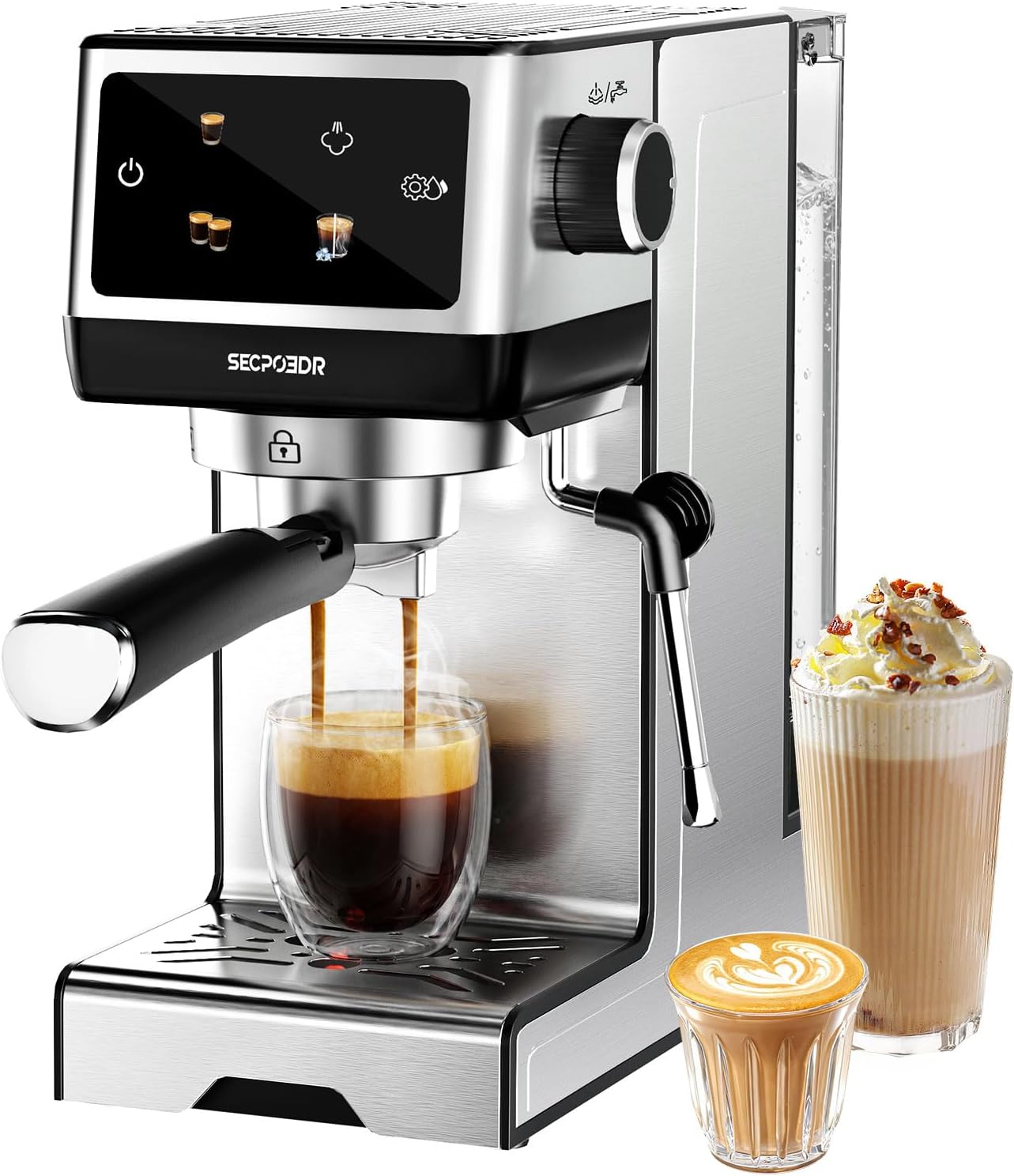
20 Bar Espresso Machine with Milk Frother, Cold Brew, Touch Screen
The longest feature list in the entry tier: frother, cold brew setting, touch controls, all in one box
No grinder in the box, and a big pump number is not the same thing as brew pressure
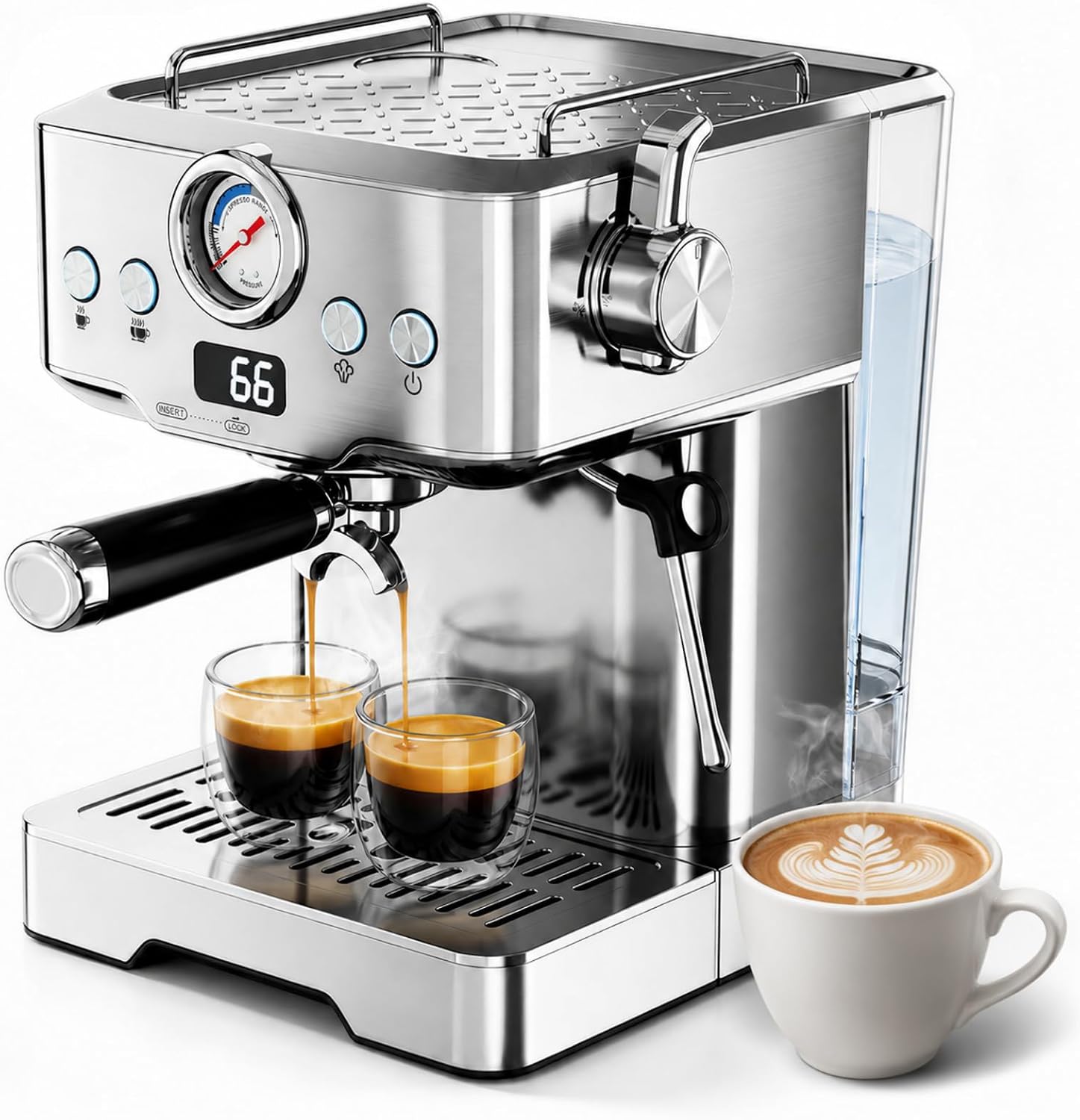
Beginner Espresso Machine, Barista Coffee Machine for Home Kitchen
The lowest-commitment way to learn the ritual, and it fits a small counter
Everything above the basket is on you, including the grinder you do not get
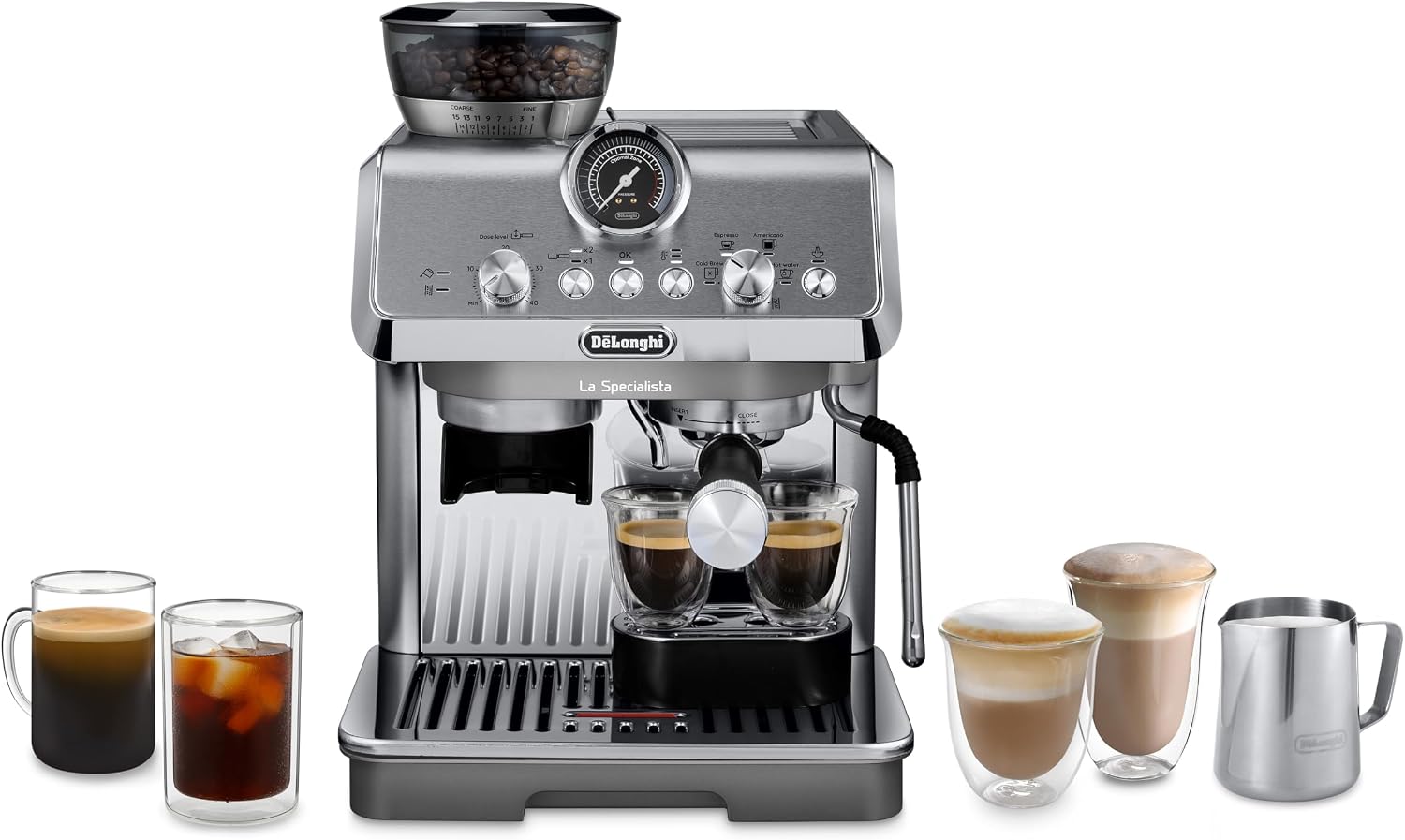
De'Longhi La Specialista Arte Evo Espresso Machine with Coffee Grinder
Grinder and machine in one purchase, which is the workflow I would actually keep
You are the automation, and there is still a real learning curve
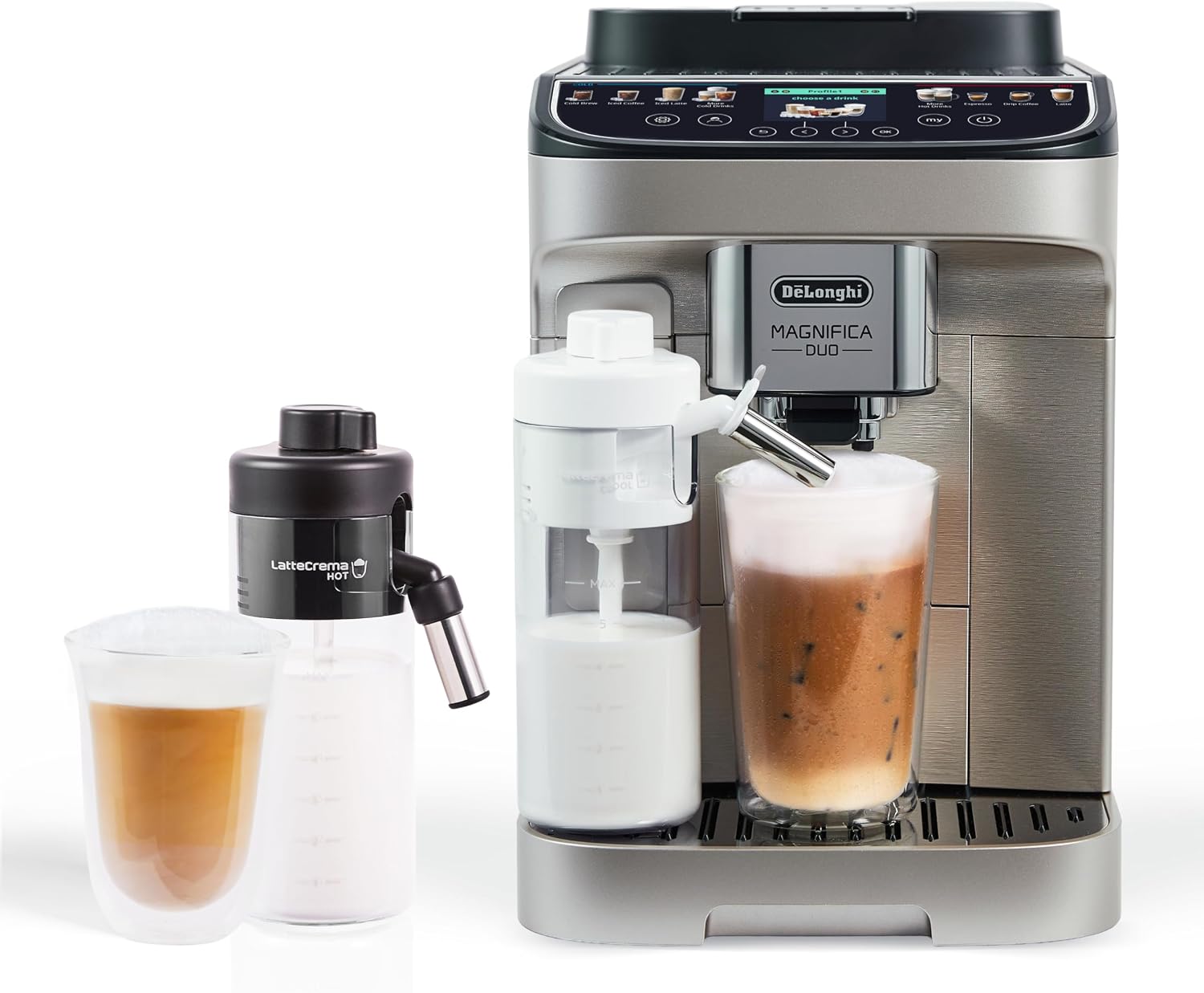
De'Longhi Magnifica Duo Automatic Espresso Machine, Milk Frother, Silver
Bean to cup with no ritual and a built-in milk frother, best for a household with mixed coffee drinkers
The least control over the shot and the most money of the four
Prices and availability were captured from Amazon Creators API and may change.
How I judge an espresso machine
Every machine that earns a recommendation from me goes through the same checklist, and none of it involves the words barista grade printed on a plastic panel.
Temperature stability first. This is the spec that shows up in the cup. A machine that holds steady brew water across the whole shot gives you consistent espresso. A machine that drifts gives you a shot that starts sour and finishes bitter, and no amount of technique fixes it. You feel this every single morning. Pressure profiling numbers, by contrast, you will use twice and forget.
The grinder second. This is the whole ballgame. If the machine has no grinder, you are buying a grinder too, and that purchase belongs in the machine's real cost. If the machine has a built-in grinder, the only question that matters is whether it grinds fine enough for a genuine espresso range.
Dead time third. That is the gap between the last drop of your shot and usable steam. On a small single boiler, that wait is where the workflow dies. If you drink milk drinks, time it before you buy.
Portafilter size fourth. The professional standard is 58mm for a reason: a wider, deeper puck is more forgiving and more repeatable. Anything smaller is a compromise you can live with, but you should know you are making it.
Month three last. Would I still enjoy using this thing after the novelty wears off? That is the test that killed half the machines in my garage.
The 20 Bar Espresso Machine with Milk Frother, Cold Brew, Touch Screen
The name of this machine is basically its feature list: a 20 bar pump, a milk frother, a cold brew setting, and a touch screen. For the least money of the four, that is a lot of boxes ticked, and I understand exactly why it sells.
Here is my problem with the number on the front. Twenty bar is pump pressure, not brew pressure, and those are not the same thing. Espresso extracts at roughly 9 bar at the puck. Most budget machines leave the factory with the over pressure valve set well above that, which is why one of the first questions I ask about any budget machine is whether that valve can be brought down. A big pump number is a marketing number. What you want to know is what pressure actually reaches the coffee.
The frother and the touch screen are genuinely useful conveniences. Cold brew is a nice extra, though I would treat any machine's cold brew button as a shortcut rather than the real thing. Real cold brew is a twelve hour steep, not a button.
What this machine does not include is a grinder, which means your true budget is this machine plus a burr grinder. Factor that in before you click. Visit on Amazon →.
The Beginner Espresso Machine, Barista Coffee Machine for Home Kitchen
This is the entry tier, and the word beginner in the name is doing honest work. It is the smallest commitment of the four, and that matters more than people admit. Learning espresso is mostly about making mistakes, and you want to make those mistakes on something you are not scared of.
My advice for shopping this tier: check the basket. A pressurized basket is marketed as a convenience feature, and it is a crutch. It hides stale beans and a bad grind by forcing everything through a single small hole, which means you can pull something that looks like espresso without ever learning to dial in. If the machine can run a non pressurized basket, run one. Your palate will thank you in a month, and your wallet will thank you when you skip the upgrade you would otherwise want.
The other thing to plan for is the grinder, because there is not one here either. I would rather see you spend less on the machine and more on a burr grinder than the reverse. A cheap machine with a good grinder beats an expensive machine with a bad one, every single time. Visit on Amazon →.
The De'Longhi La Specialista Arte Evo Espresso Machine with Coffee Grinder
This is the one I would buy. It is a semi automatic machine with a grinder built in, which means one purchase covers the two things that matter most, and the grinder is not an afterthought bolted on to hit a price.
The logic is the logic I repeat until people stop listening: the grinder is roughly seventy percent of the shot. A great machine fed by a bad grinder makes bad coffee. A mid tier machine fed by a good grinder makes coffee better than most cafes. Bundling both into one box is the smartest way to spend a mid tier budget, and it is why this machine sits at the top of my list for anyone who wants to learn properly.
The trade off is that you are the automation. You grind, you distribute, you tamp, you time the shot, you decide when to stop. That is either the entire point or the deal breaker, and only you know which. If you want a machine that rewards attention, this is it. If you want a machine that needs none, keep reading. Visit on Amazon →.
The De'Longhi Magnifica Duo Automatic Espresso Machine, Milk Frother, Silver
This is the most expensive machine of the four, and the least interested in your technique. It is a bean to cup automatic: fill the hopper, press a button, and a drink comes out. The milk frother is built in, the finish is silver, and nobody in the house needs a lesson to use it.
That is a real feature, not a cop out. I have set up enough home stations to know that a machine only one person can operate becomes a machine only one person uses. If your partner drinks lattes and has zero interest in grind settings, an automatic is how you both get coffee. This is also the pick if your mornings are genuinely tight, because the ritual that makes espresso enjoyable for me is the same ritual that makes it impossible at 6:40 with a toddler in the room.
The trade off is control. You get less say over grind, dose, and shot length, which means less room to chase the shot you want and less room to rescue a bag of beans that is not behaving. And any automatic with a milk system needs a rinse routine you will actually follow. Skip the rinse and the machine will remind you in a few weeks. Visit on Amazon →.
The grinder is the machine
I will say the unpopular thing plainly: two of these four machines ship without a grinder, and that is the single most important fact about buying them. A budget machine plus a cheap blade grinder is a worse setup than the same machine plus a real burr grinder, and it is not close. Blade grinders chop, they do not grind. The particle size spread they produce means your shot channels, gushes, and tastes simultaneously sour and bitter.
If you are choosing between a more expensive machine and a better grinder, choose the grinder. Every time. That advice has never once been wrong in twelve years, and I have watched a lot of people learn it the expensive way.
The La Specialista Arte Evo sidesteps the whole argument by including a grinder, which is exactly why it takes the top spot here for anyone who wants one purchase and one decision.
What the trade offs actually cost you
Ranked by how much control you get over the shot:
- De'Longhi La Specialista Arte Evo: the most control, grinder included, the steepest learning curve.
- 20 Bar Espresso Machine with Milk Frother, Cold Brew, Touch Screen: decent control over the shot, no grinder, and a feature list doing a lot of the marketing.
- Beginner Espresso Machine: a real machine to learn on, no grinder, the smallest footprint and the smallest commitment.
- De'Longhi Magnifica Duo: the least control, the most convenience, the highest cost.
Ranked by how much of the work the machine does for you, that list flips almost exactly. That is not a coincidence. It is the trade you are making.
Which one should you buy?
- You want one purchase and you are willing to learn: the De'Longhi La Specialista Arte Evo. It covers the grinder and the machine, the two decisions that matter.
- You want coffee with zero ritual: the De'Longhi Magnifica Duo. It costs the most and asks the least.
- You want the longest feature list for the least money: the 20 Bar Espresso Machine with Milk Frother, Cold Brew, and Touch Screen, with a burr grinder bought alongside it.
- You are not sure you will stick with it: the Beginner Espresso Machine. Small commitment, honest starting point.
Whatever you pick, budget for a grinder if the box does not include one, and buy fresh beans from a roaster who prints a roast date. The machine is the fun purchase. The grinder and the beans are the ones that decide what ends up in your cup.
What I am watching next
The feature I keep testing on 2026 machines is temperature stability at the group, not the pressure number on the box. Flow control kits keep showing up on more affordable machines, and my honest position has not changed: you will use it twice and then leave it alone, while you will feel a drifting brew temperature every single morning.
The other thing on my bench is the grinder question again. The gap between a cheap burr grinder and a good one is narrowing at the low end, and if that holds, the entry tier machines in this comparison get a lot more interesting. I will report back once I have enough shots behind me to say something useful.