Related: How to Dial In an Espresso Grinder Without Wasting a Bag of Beans
I spent twelve years behind a bar and the last several setting up espresso stations in kitchens the size of a closet. The lesson never changes: the machine is not the thing that makes coffee taste good. The grinder is. But the machine decides whether you keep the ritual going past February, and that is exactly why compact espresso machines are so hard to buy well. A machine that fits your counter but fights you every morning ends up in a cabinet next to the bread maker.
So this is not a spec-sheet roundup. Four machines, four different reasons to exist, and one question I ask about all of them: would I still enjoy this in month three? That is the test that matters. Not the box, not the badge, not the crema in the product photo.
One rule before anything else. If you are shopping for a compact espresso machine, you are also shopping for a grinder, and the grinder comes first. A modest machine paired with a burr grinder that can actually choke a shot will beat a beautiful machine fed pre-ground coffee every single time. Budget accordingly, then come back to this list.
What actually matters in a small machine
Temperature stability. This is the feature you feel every shot. If the brew water wanders, you get a great shot on Tuesday and a sour one on Wednesday and you will blame your beans. A machine that holds its temperature makes you a better barista than you are.
A real 58mm portafilter. The professional standard exists for a reason. A deeper, wider puck is more forgiving of small distribution mistakes. Smaller baskets can make good espresso, but they punish you for things a 58mm would shrug off.
Steam, not just froth. A frother heats and whips milk. A steam wand textures it, and texture is the difference between a drinkable cappuccino and a cafe cappuccino.
Dead time. On some small machines you pull your shot and then wait, sometimes a while, before the steam is ready. If you make two milk drinks every morning, dead time is where your workflow dies.
Footprint you can actually live with. Measure your counter before you fall in love. Include the clearance above the machine for a cup and your hand.
And skip the pressurized basket as your default. It hides stale beans and a bad grind. If a machine only works well pressurized, that tells you something.
The four machines worth looking at
These are the four I would point a friend toward right now, ordered roughly from simplest to most serious.
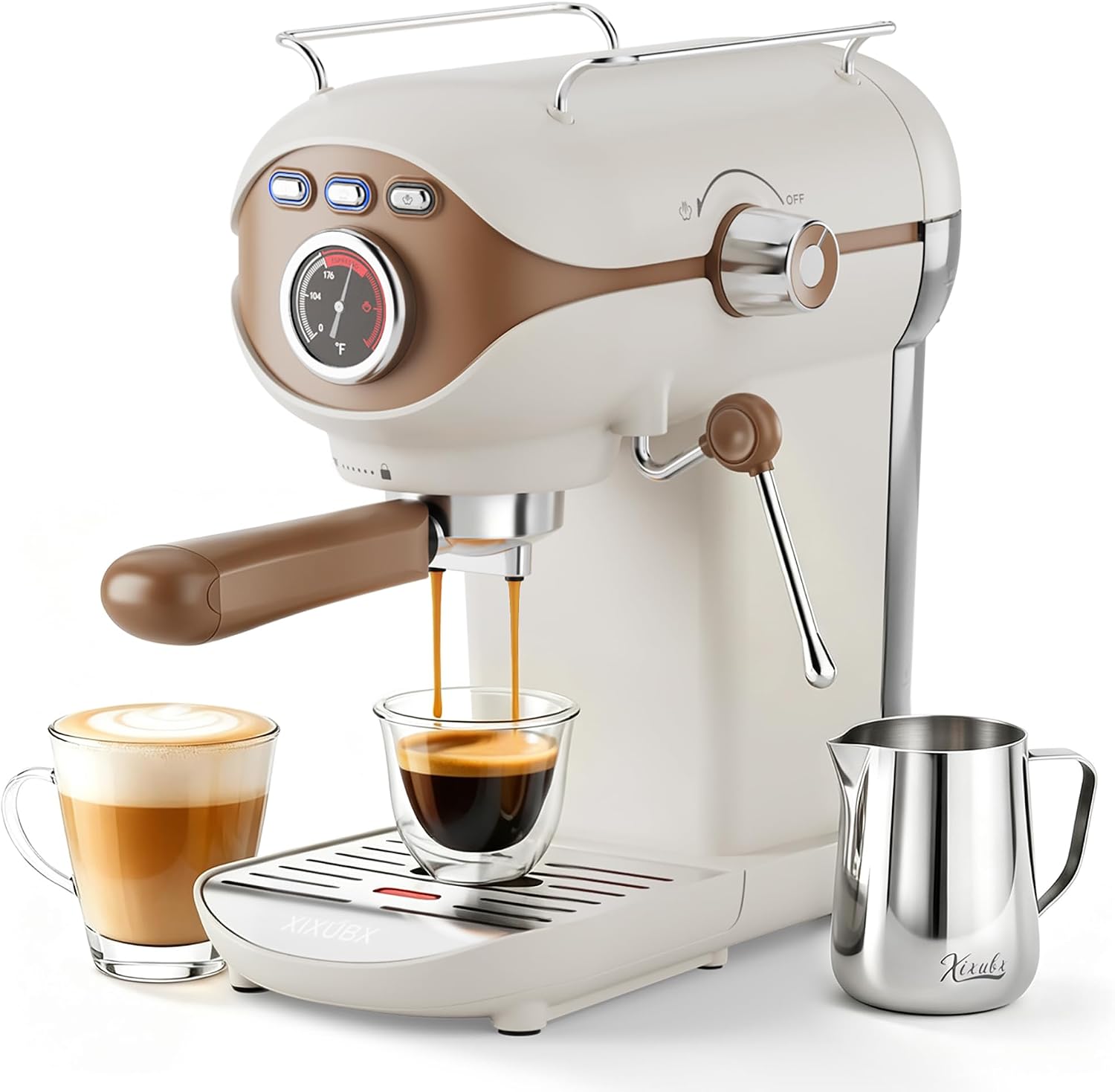
XIXUBX Espresso Machine, Compact Espresso Maker with Milk Frother, White
This is the smallest and simplest way onto this list, and the white body is the one that disappears against a bright kitchen wall. It is an espresso maker with a milk frother built in, which tells you the intended drink: a cappuccino or a latte without a separate pitcher-and-wand routine.
That frother is the honest trade. It heats and aerates milk, and for a casual milk drink that is genuinely enough. What it will not do is give you the glossy, paint-like microfoam you need for latte art or for a flat white that tastes like the ones you buy. If you drink your espresso straight or you just want a decent cappuccino at home, that is not a loss.
For a first machine in a small kitchen, this is the low-risk entry. It fits where a full-size machine will not, and it does not ask you to learn a steam wand before you have learned to dial in a grind.
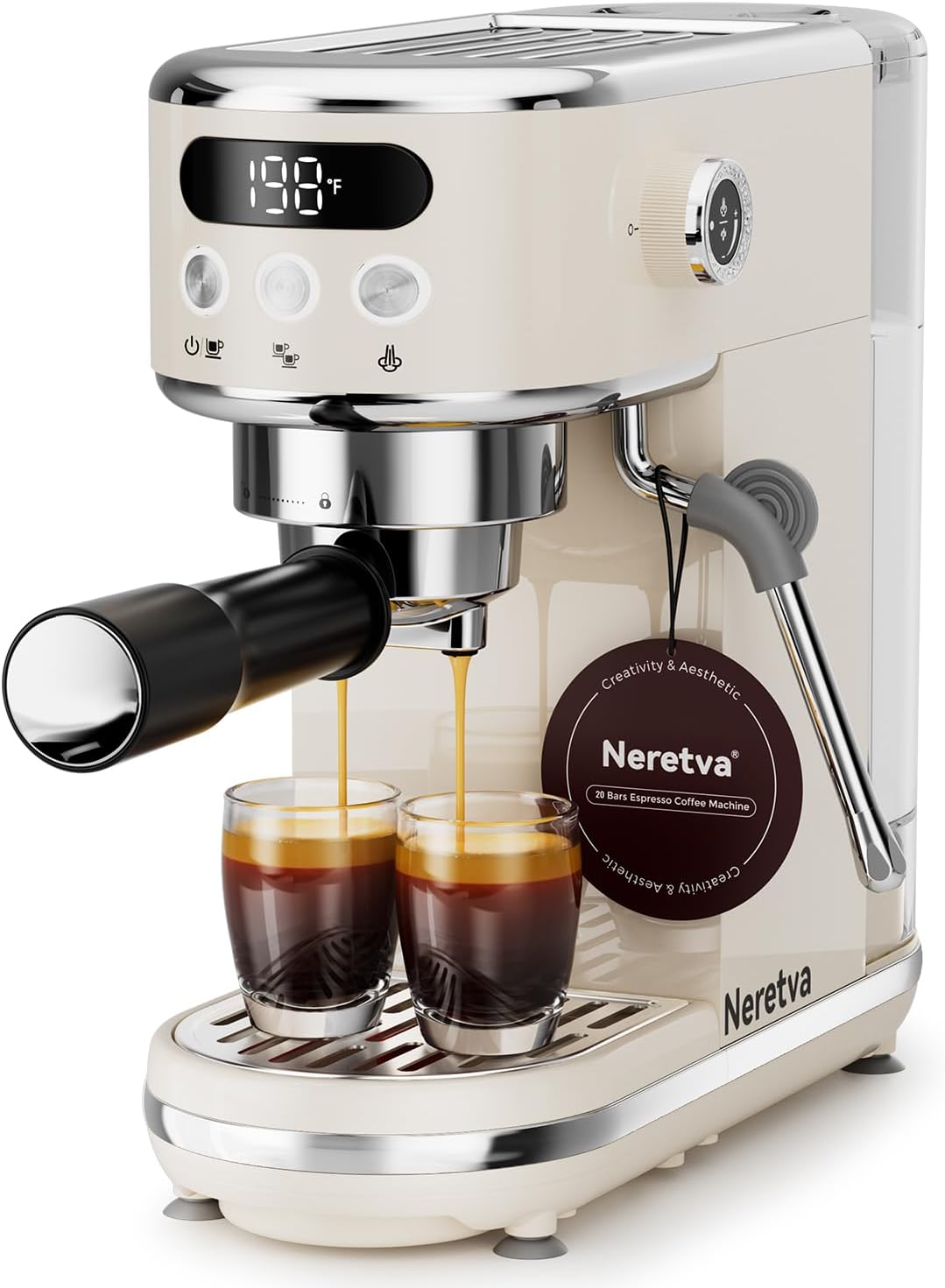
Neretva Espresso Machine 20 Bar Super Compact Espresso Coffee Machine, Beige
The name says super compact and the beige finish says you care what the counter looks like, which is a legitimate thing to care about. This is the pick for a genuinely tight space, the kind of kitchen where the machine lives beside the toaster and nothing else fits.
About that 20 bar claim: ignore it. Espresso is extracted at roughly 9 bar at the puck. Higher pump ratings on the box are marketing, and on budget machines the factory over-pressure valve setting is often what holds a shot back. If a machine pulls harsh, thin shots no matter what you do, the OPV is usually the culprit, and it is a known fix on the machines that support it.
What you are really buying here is size and a look. Judge it on whether the drip tray, the tank, and the portafilter are pleasant to handle every morning, because that is the part you touch daily. Beige is also a gift if you are tired of black plastic boxes.
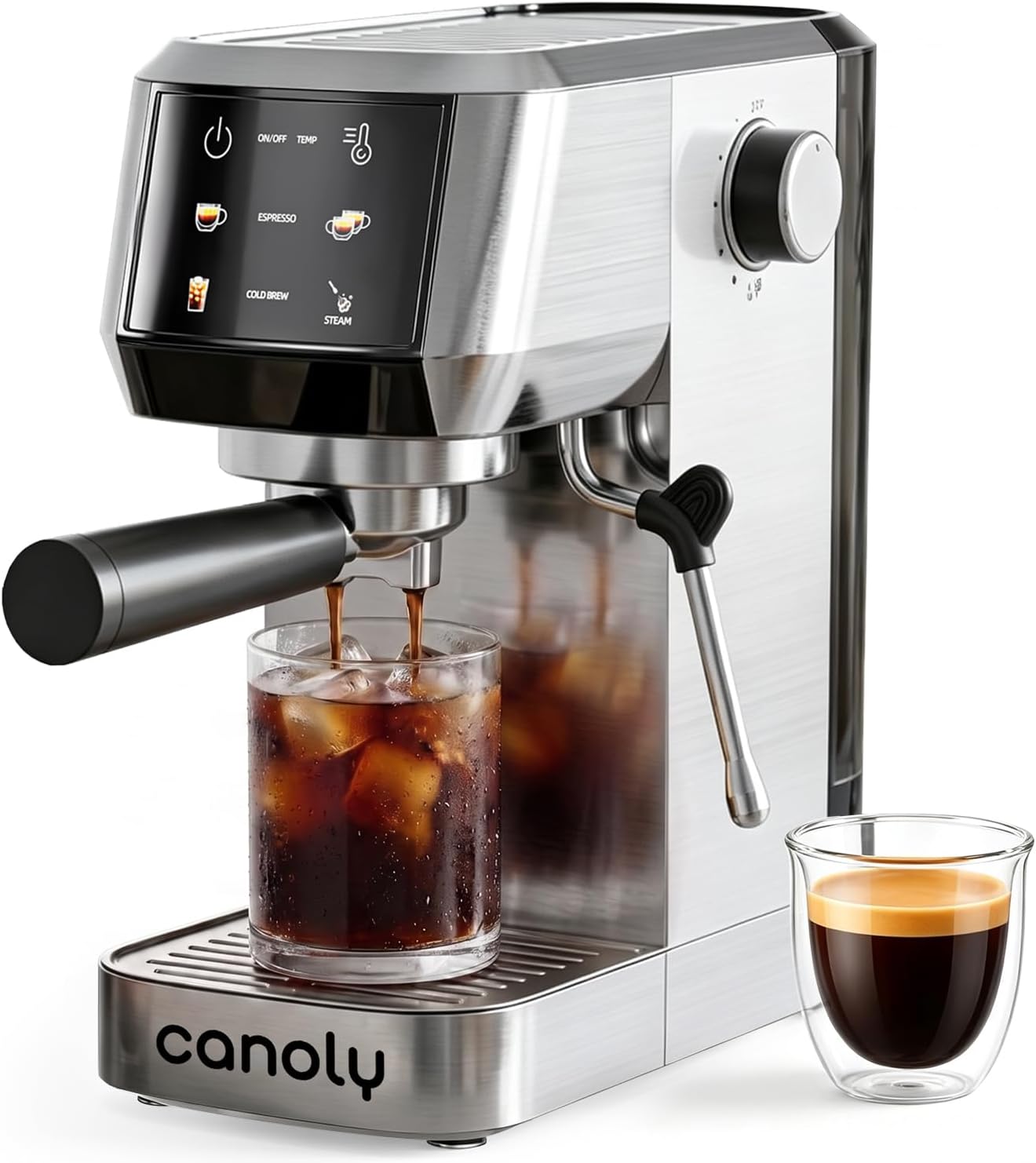
Canoly 2-1 Espresso Machine, Cold Brew & Milk Frother
Here is the odd one, and I mean that as a compliment. Most machines at this size do one thing. This one does espresso and cold brew, plus a milk frother, which covers the two ways a lot of households actually drink coffee: hot in the morning, iced in the afternoon.
If your house runs on iced lattes from June through September, that combination is worth more than any spec bump. Cold brew is a slow, forgiving method that does not care whether your grind is perfect, so it is a nice safety net while you are still learning to dial in the espresso side.
The trade is focus. A machine that does several jobs rarely does the espresso job as precisely as a machine that does only espresso. I would call this a flexibility pick. If you want one appliance to cover hot and cold drinks in a small kitchen, it earns its spot.
Gevi 58mm Commercial Espresso Machine with PID and NTC Temp Control, Steam Wand
This is the one on the list that reads like it was designed by someone who pulls shots. A 58mm portafilter is the professional standard, PID and NTC temp control means the brew water is held steady rather than guessed at, and a steam wand means you can texture milk instead of merely frothing it.
Those three things are exactly the three things I listed as mattering. Temperature stability is the feature you feel on every single shot. The 58mm basket gives you a deeper puck and more forgiveness. The steam wand is the difference between a latte and a latte you would pay for.
If you already own a capable burr grinder and you are ready to stop upgrading every eight months, this is where I would spend up. It is the pick on this list I would still enjoy in month three, and month three is where most budget machines get sold on a marketplace app.
The four machines side by side
| Machine | What it is | Milk | Best for |
|---|---|---|---|
 Visit on Amazon → XIXUBX Compact Espresso Maker |
Smallest, simplest, white | Built-in frother | First machine, tight counters, casual milk drinks |
 Visit on Amazon → Neretva 20 Bar Super Compact |
Very small, beige finish | Per machine design | Looks and size above all else |
 Visit on Amazon → Canoly 2-1 Espresso Machine |
Espresso plus cold brew | Built-in frother | Hot and iced drink households |
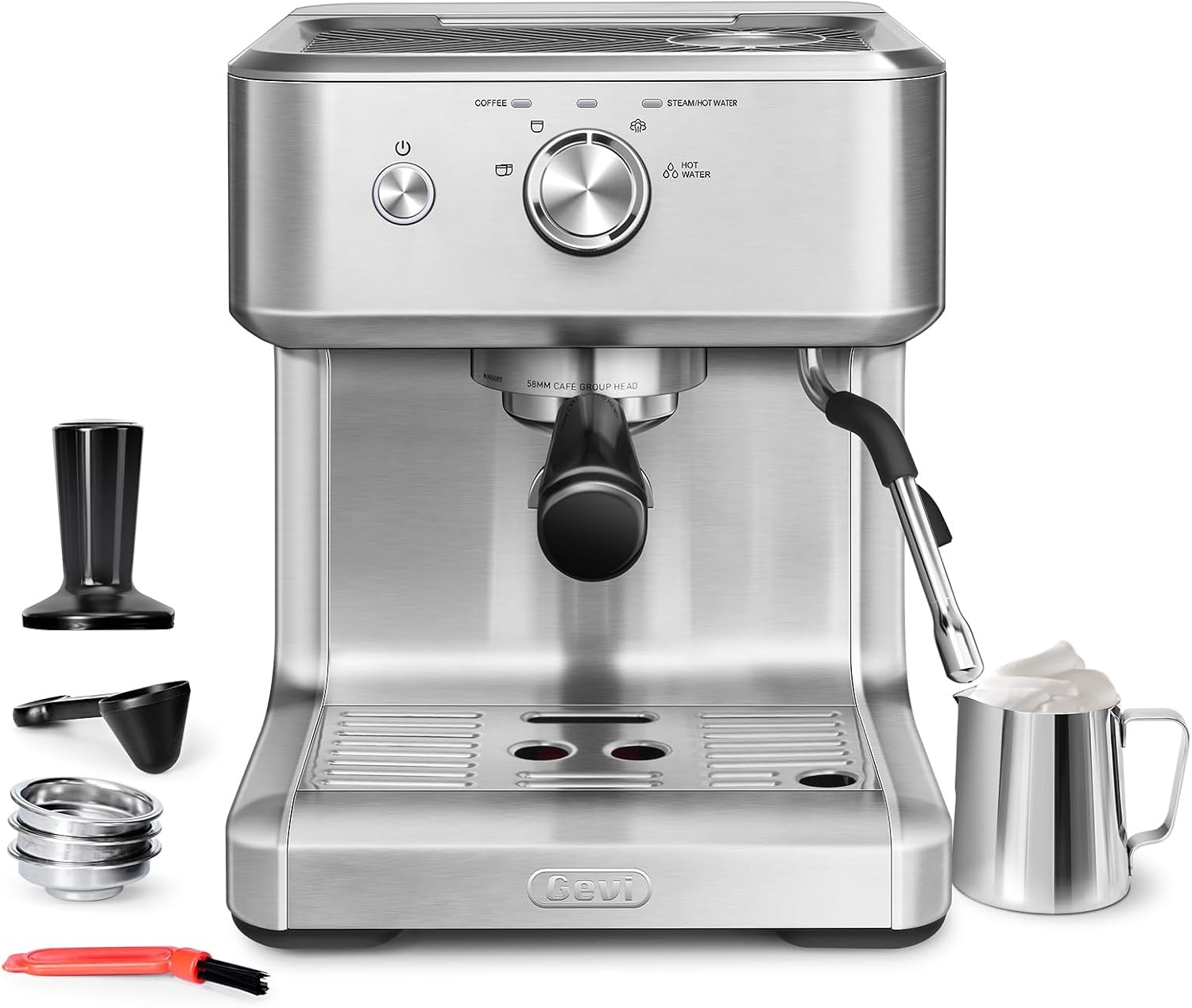 Visit on Amazon → Gevi 58mm Commercial |
PID and NTC temp control, 58mm | Steam wand | Serious home baristas, milk drinks, consistency |
What the table tells you
Read the milk column first, because it splits the list cleanly. A frother and a steam wand are different tools with different ceilings, and no amount of technique closes that gap. Frothers are fast and forgiving. Steam wands reward practice with texture you cannot fake.
Read the portafilter column second. The Gevi is the only one here advertising a 58mm basket, and that is not a vanity number. It is the same size the pros use, which means the pucks behave the way every guide, video, and forum post assumes they will. Smaller baskets are not broken, they are just less forgiving while you are learning.
Read the temperature column third. PID and NTC control on the Gevi is the single most consequential line in that table. Pressure profiling is a feature most people use twice. Temperature stability is the feature you feel every shot.
And notice what is not in the table: prices, because they move. Check current Amazon price on each listing before you commit, and remember that the grinder is still not in this table.
Do not skip the grinder
I will say it once more because it is the most common mistake I see. A capable burr grinder matters more than the machine. If your total budget is fixed, spend the larger share on the grinder and buy the simpler machine. A pressurized basket and pre-ground coffee will make every one of these four taste like the same mediocre cup, and then you will blame the machine.
If you already own a grinder that can choke a shot, all four of these make sense. If you do not, buy the grinder first.
Should you buy the XIXUBX Compact Espresso Maker?
Yes, if you want the smallest possible footprint and mostly drink milk drinks. It is the gentlest entry on this list, and the white body suits a bright kitchen. Just be clear-eyed about the frother. It will make you a good cappuccino. It will not make you latte art, and if that becomes the goal, you will want a steam wand.
Should you buy the Neretva 20 Bar Super Compact?
Yes, if space and appearance are your deciding factors. It is built to be small, and the beige finish is genuinely nicer to look at than most of what sits in this price bracket. Ignore the 20 bar headline. Espresso happens around 9 bar, and the number on the box will not change what is in your cup.
Should you buy the Canoly 2-1?
Yes, if your household drinks cold coffee as often as hot. Espresso and cold brew in one compact body is a real convenience, and cold brew is a forgiving method while you learn the espresso side. It is a flexibility pick rather than a precision one, and that is a fair trade for a lot of kitchens.
Should you buy the Gevi 58mm Commercial?
Yes, and it is the one I would choose. PID and NTC temp control, a 58mm portafilter, and a steam wand are the three features that decide whether a machine makes consistent espresso or occasionally great espresso. If you have a grinder worth the name and you are done upgrading every few months, this is where the money belongs.
Whichever you pick, buy the grinder first, measure your counter, and give yourself a month before you decide the machine is the problem. It usually is not.