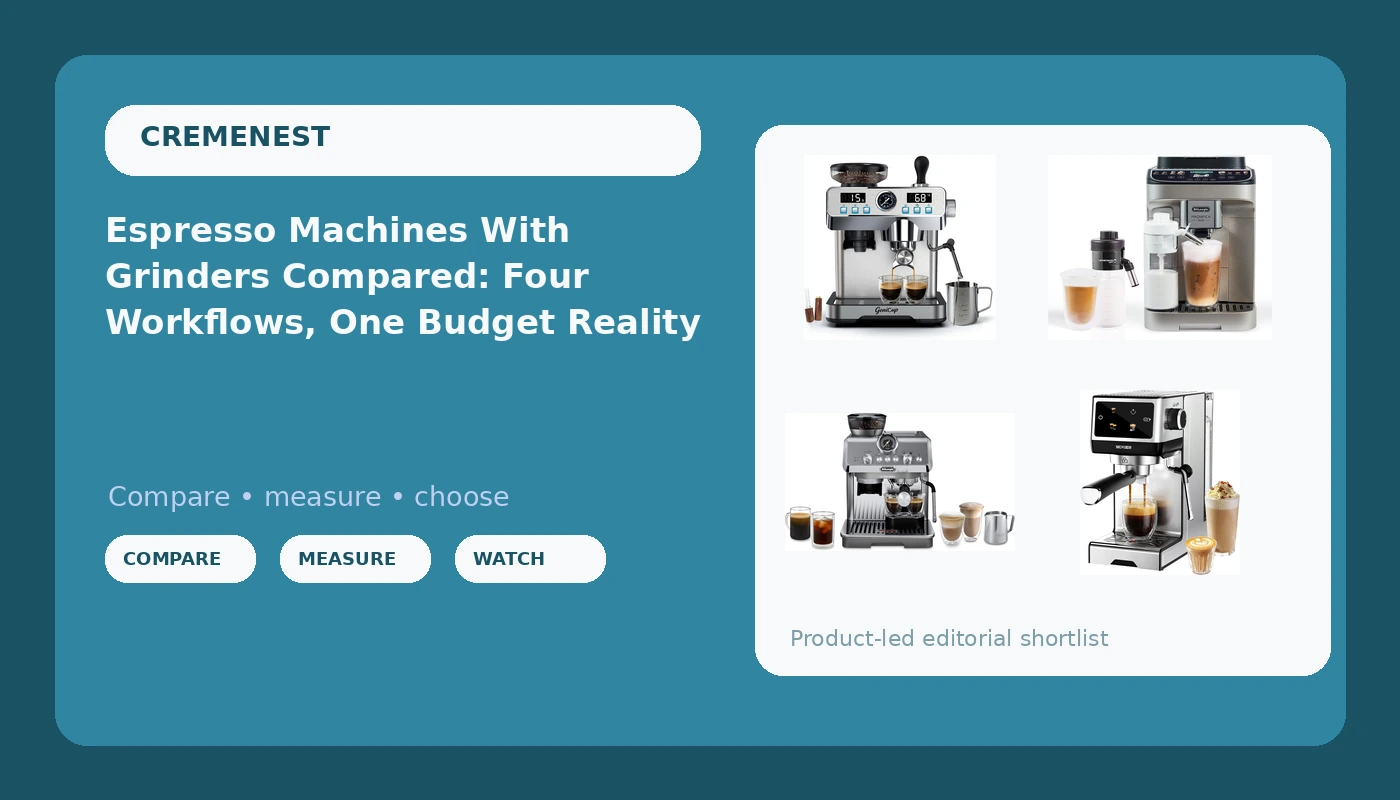
I have set up espresso stations in two cafes, a handful of friends' kitchens, and one very confused Airbnb. In that time I have learned to be suspicious of the machine itself. The grinder decides whether the shot is worth drinking. The workflow decides whether you are still pulling shots in month three. The machine only decides how much money you spend finding that out. That is the frame for this espresso machine with grinder comparison: four machines, four different answers to the same question, and no paragraphs about crema, which is decoration.
Related: Espresso Grinder Burr Types Explained
For most people reading this, the De'Longhi La Specialista Arte Evo is the pick, because it is the only machine in the group that pairs a real burr grinder with a manual workflow you can actually grow into. The De'Longhi Magnifica Duo is the right answer for a household that wants a button instead of a ritual. The two 20 bar machines are the value plays, and I will be specific about where that value stops.
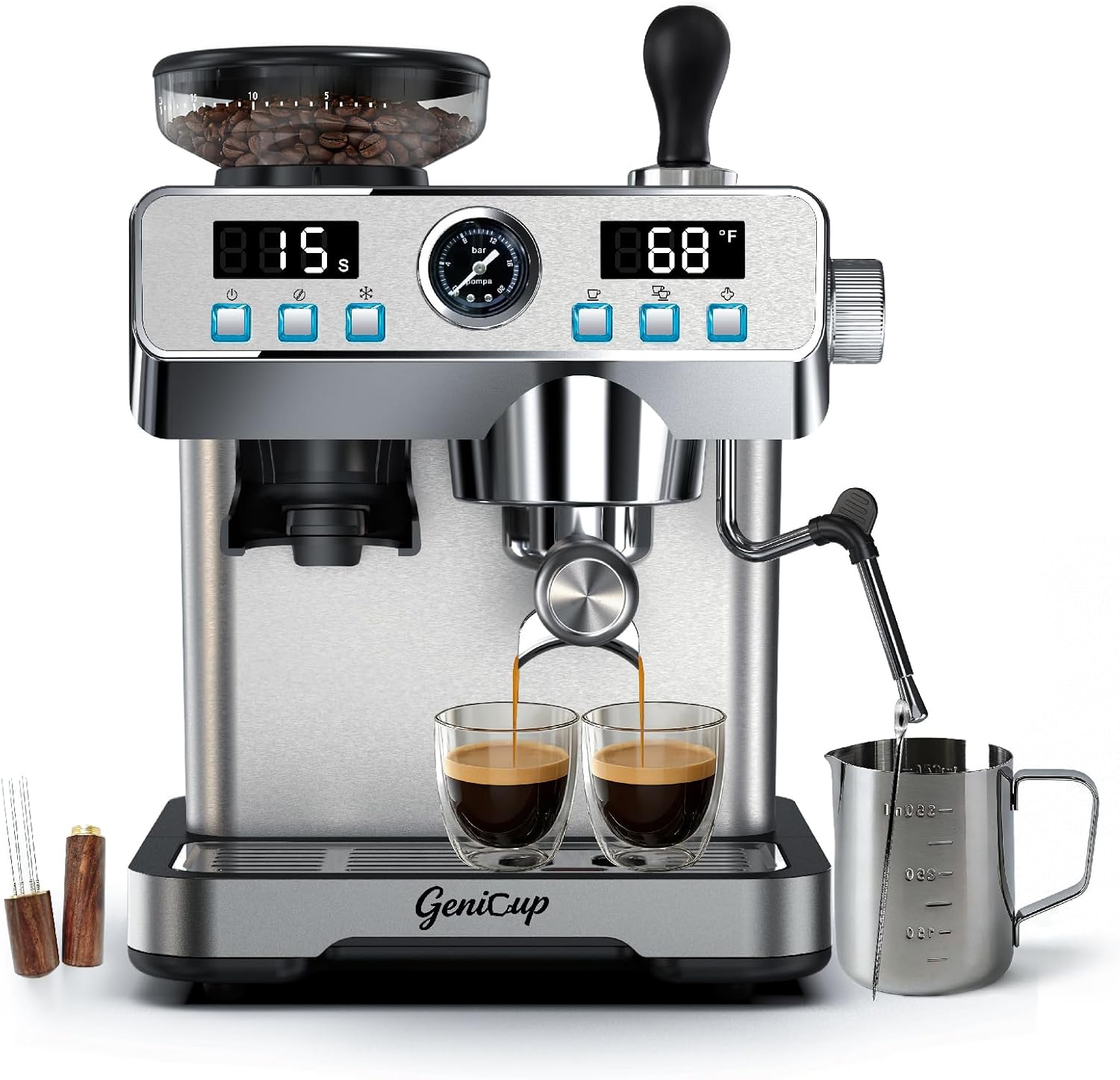
Espresso Machine with Grinder 20 Bar with 68oz Water Tank Cold Brew
The only entry-tier machine here that includes a grinder, plus a large water tank and cold brew on the side
The 20 bar headline is marketing, and the built-in grinder is the usual weak link at this tier
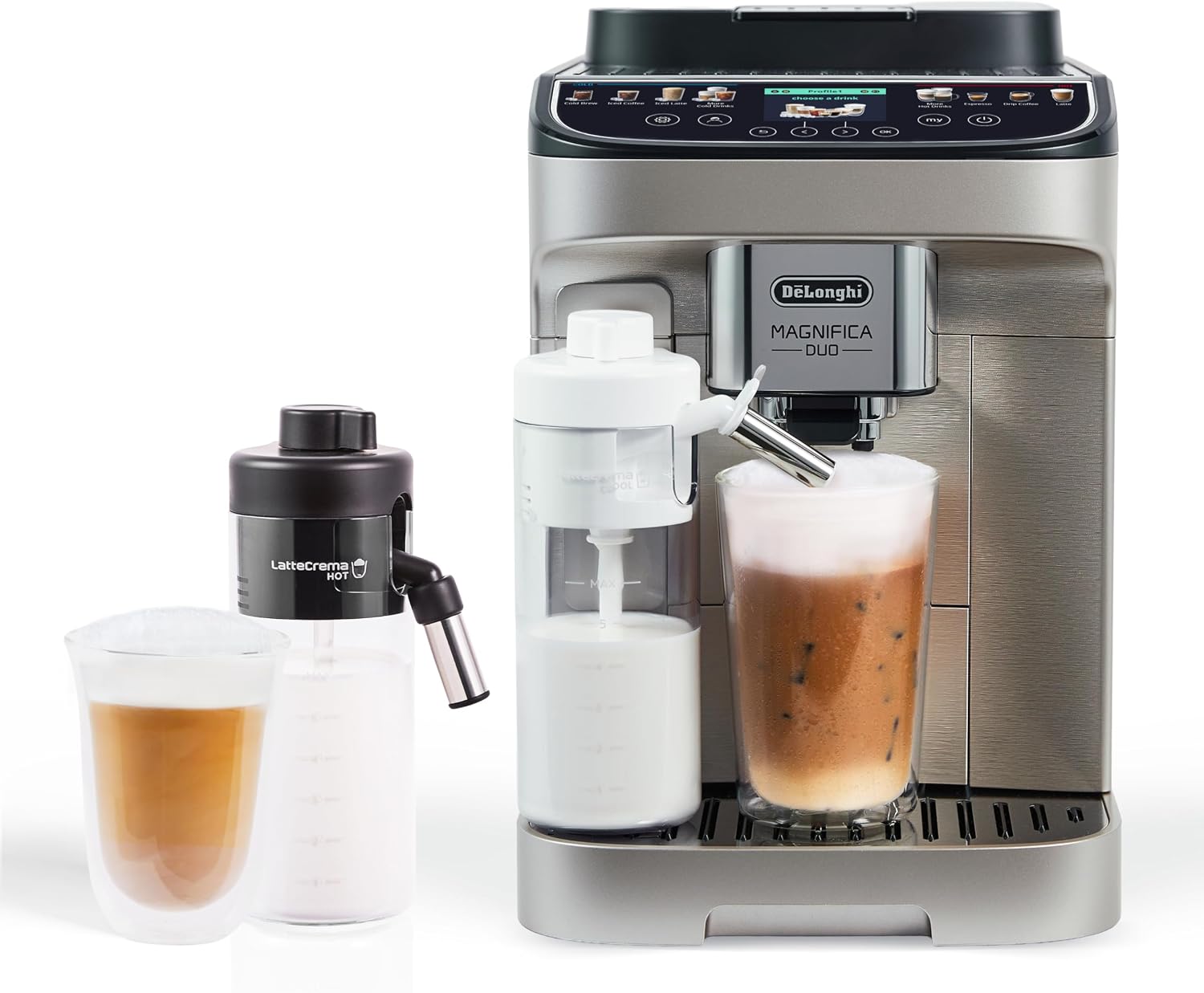
De'Longhi Magnifica Duo Automatic Espresso Machine, Milk Frother, Silver
Fully automatic, so the whole ritual is one button and the milk frother does the rest
You hand over control of dose and grind, which is a real loss if you chase single origins
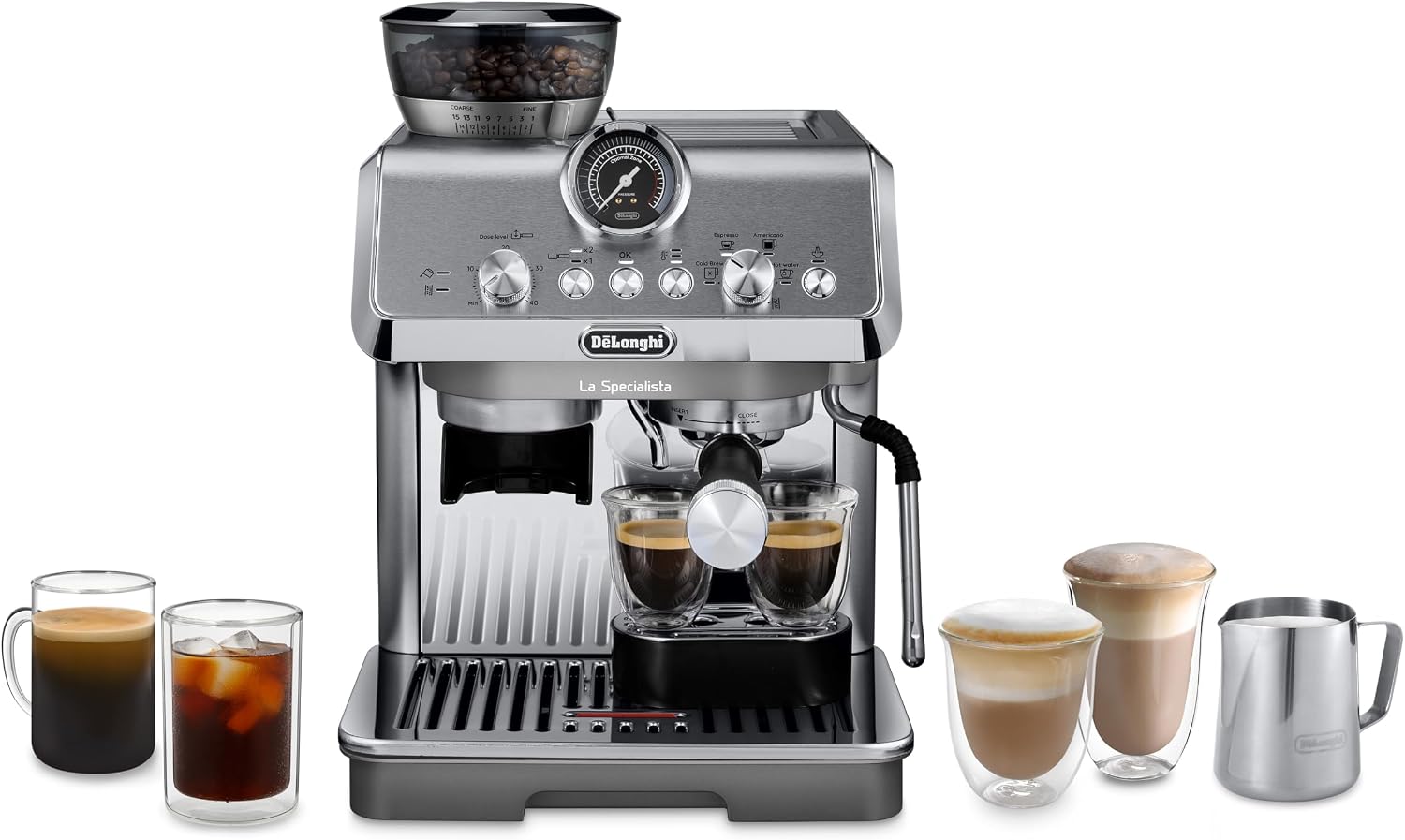
De'Longhi La Specialista Arte Evo Espresso Machine with Coffee Grinder
Manual workflow with a dedicated grinder, which is the combination that actually teaches you espresso
The most demanding machine here, and the one that punishes lazy puck prep
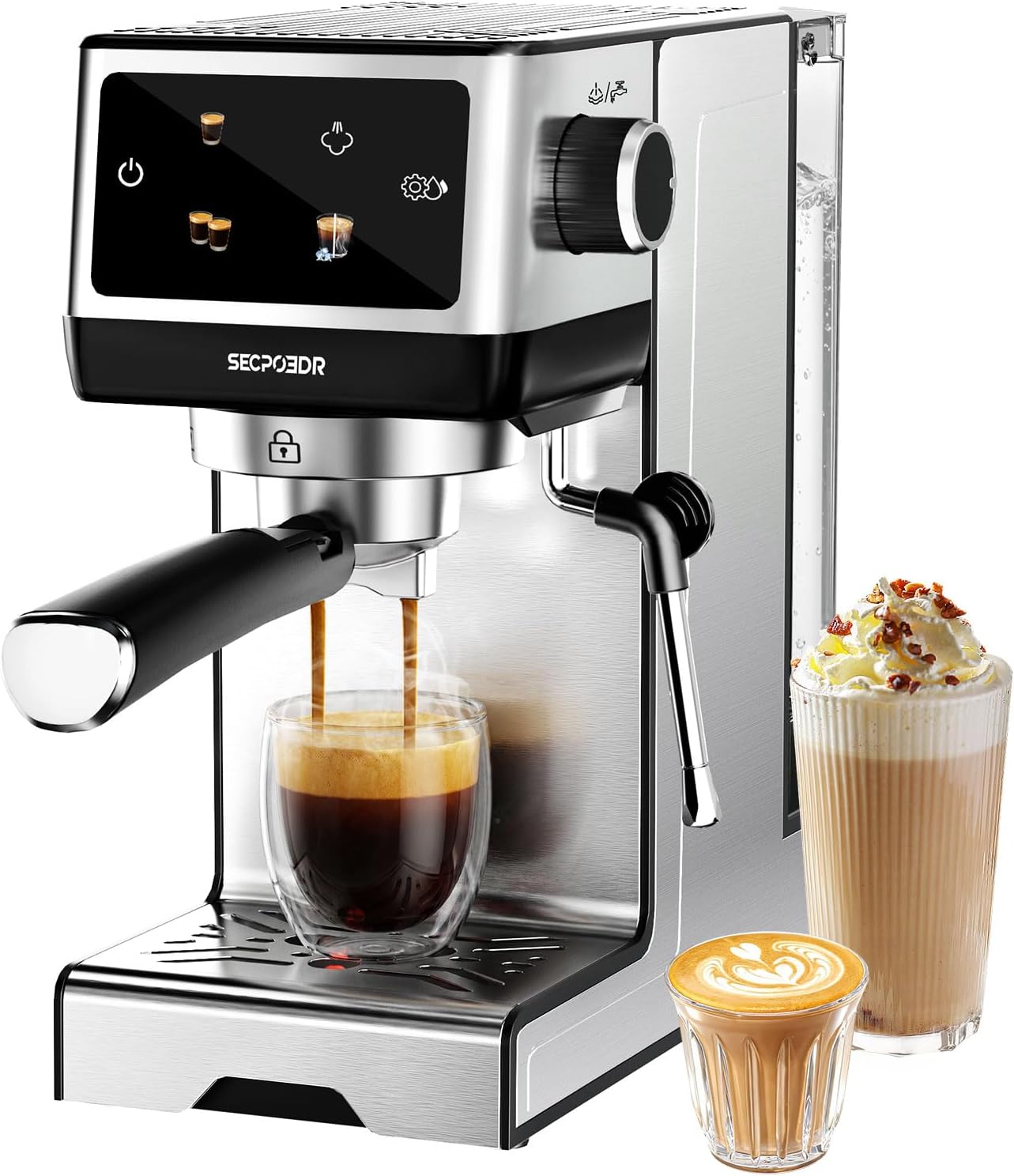
20 Bar Espresso Machine with Milk Frother, Cold Brew, Touch Screen
Milk frother, cold brew, and a touch screen at the lowest entry point in the group
No grinder included, so the real cost is higher than the listing suggests
Prices and availability were captured from Amazon Creators API and may change.
How I judge these four before they earn counter space
I have not spent a month pulling shots on all four of these, and I am not going to pretend I have. What I can tell you is the checklist every machine runs before it gets a spot on my counter, and how these four look against it.
Boiler and group design, where the listing actually documents it. Grinder adjustment range, if there is a grinder at all. Steam capability, because a wand that cannot texture milk is a dealbreaker in a house that drinks flat whites. Footprint, because most kitchens I work in are small. And dead time, the wait between the end of a shot and the start of steaming. That last number kills more home setups than stale beans ever will.
Show me the workflow, not the sticker.
The automatic versus manual split
This group splits three ways, not two.
The De'Longhi Magnifica Duo is the automatic. It grinds, doses, tamps, and brews inside the box, and the milk frother handles the rest. You press a button, you get a drink that is consistent every single morning. That consistency is worth real money to a household where one person leaves at 6:40 a.m. and nobody wants a hobby before caffeine.
The De'Longhi La Specialista Arte Evo is the manual of the group, and it is the only machine here that ships with its own coffee grinder as part of the design intent. You grind, you dose, you tamp, you pull. If that sentence sounds like a chore, buy the Magnifica. If it sounds like the interesting part, this is your machine.
The two 20 bar machines sit in a third category that marketing does not have a name for. They are semi-manual in shape but the listings sell pressure numbers, cold brew, and screen features rather than control. One includes a grinder. One does not. That single difference changes the math more than anything else on this page.
What a built-in grinder actually buys you
Here is the thing I say to every friend who asks me to help them buy a machine: the grinder is 70 percent of the shot. A great machine with a bad grinder makes bad coffee, every time, and no amount of technique rescues it.
So when a machine at the entry tier advertises a built-in grinder, like the Espresso Machine with Grinder 20 Bar with 68oz Water Tank Cold Brew does, the honest question is not "does it have a grinder." It is "does that grinder adjust finely enough to change the shot." On budget all-in-ones, the grinder is usually stepped coarsely and tuned for drip-adjacent coffee, which means you get one usable espresso setting and very little room to dial in a new bag of beans.
The La Specialista Arte Evo is a different conversation. A dedicated grinder paired with a manual machine is the combination that lets you learn. When a shot runs sour, you move the grind finer. When it runs bitter and slow, you go coarser. That feedback loop is the entire hobby. Without it, you are just pressing buttons and hoping.
The 20 Bar Espresso Machine with Milk Frother, Cold Brew, Touch Screen does not include a grinder at all. That is not a flaw in the machine, but it is a flaw in the budget plan. Add a burr grinder and the total climbs past the machine with the grinder included. Budget accordingly, because a cheap blade grinder is not a substitute. It will produce an uneven grind and an uneven shot, and you will blame the machine for it.
The 20 bar number and the pressurized basket question
Two of these listings lead with "20 bar." I want you to read that number the way a barista reads it: as a spec sheet flex, not a quality signal.
Espresso is brewed around 9 bar of pressure at the puck. Machines that ship set much higher than that usually pair the extra pressure with a pressurized basket, a dual-walled design that creates fake resistance and fake crema. It is a crutch. It hides stale beans and an uneven grind, which is exactly why it shows up on entry machines and exactly why it makes it hard to taste what you are doing wrong.
If you buy either 20 bar machine, check the listing and the manual for whether a non-pressurized basket is included or available. If it is, use it, and set your expectations for a learning curve. If it is not, understand that you are buying a machine that will make consistent, forgiving, mediocre espresso, which is a perfectly fine thing to want as long as you know it.
Temperature stability and dead time
Temperature stability is the feature you feel every shot, and it is the one nobody advertises. If the brew water swings several degrees across a single extraction, you get a shot that is sometimes great and sometimes sour, with no clear explanation. That inconsistency is what drives people to upgrade, not the pressure number on the box.
Dead time is the workflow killer. On a machine that brews and steams from the same boiler, you pull your shot, then you wait for the boiler to climb before you can texture milk. If that wait is long, your shot sits and cools while you steam, and your morning routine grows a dead spot you will resent by week two. Before you buy, look for how the machine handles brew and steam. If the listing does not say, ask.
And while you are checking the spec sheet: if a machine does not use a 58mm portafilter, you are fighting a slightly uphill battle on puck depth and forgiveness. That is not a reason to skip a good machine, but it is a reason to know what you are buying.
Cold brew, touch screens, and the milk frother
Both entry machines in this group lean on extras: cold brew on both, a touch screen on one, a milk frother on one.
Cold brew is a nice bonus and a terrible reason to choose an espresso machine. It is a different drink made a different way, and if you genuinely want cold brew, a jar and a fridge do the job for almost nothing. Treat it as a tiebreaker, not a feature.
The touch screen on the 20 Bar Espresso Machine with Milk Frother, Cold Brew, Touch Screen is the same story. Screens are more to fail, and they do not change what happens at the puck. A machine that pulls a better shot with a dial beats a machine that pulls an average shot with a display.
The milk frother on the Magnifica Duo is a different case. On an automatic, the frother is the point. It is what turns a machine into a one-button flat white, and if milk drinks are most of what your household drinks, that convenience is the whole argument.
The four machines, one at a time
Espresso Machine with Grinder 20 Bar with 68oz Water Tank Cold Brew
The value pick if you want everything in one box. A grinder, a large water tank that means fewer refills, and cold brew as a bonus. Buy it if your budget is tight and you accept that the grinder is the compromise. Visit on Amazon →
De'Longhi Magnifica Duo Automatic Espresso Machine, Milk Frother, Silver
The household machine. Automatic from grind to cup, with a frother that does the milk work for you. Buy it if you want the drink, not the process, and if more than one person will use it. Visit on Amazon →
De'Longhi La Specialista Arte Evo Espresso Machine with Coffee Grinder
The learning machine, and my pick for most people who actually want to make espresso. A grinder and a manual workflow in one package, which is the shortest path from bad shots to good ones. Buy it if you are willing to spend two weeks being bad at this. Visit on Amazon →
20 Bar Espresso Machine with Milk Frother, Cold Brew, Touch Screen
The cheapest way in, and the one that needs the most honesty about total cost. There is no grinder, so add one and the price advantage narrows fast. Buy it if you already own a burr grinder and want a second station or a small-footprint machine. Visit on Amazon →
Which one I would buy
The La Specialista Arte Evo, and it is not close for anyone who wants to learn. It is the only machine here built around the idea that you control the grind and the dose, and control is the difference between a machine you outgrow and a machine you keep.
The Magnifica Duo is the correct second answer, and for some households the correct first one. If two people are making drinks before work and neither wants a routine, automatic is not a compromise, it is a decision. Just know that you are buying consistency instead of ceiling.
The Espresso Machine with Grinder 20 Bar with 68oz Water Tank Cold Brew is the sensible entry point for a tight budget, as long as you go in expecting the grinder to be the limiting factor and the pressurized basket to be training wheels.
The 20 Bar Espresso Machine with Milk Frother, Cold Brew, Touch Screen is the one I would only recommend with a grinder already on the counter. Without one, its low entry point is an illusion, and the total cost lands above the machine that includes a grinder.
What I am testing next
I have a counter full of machines and one grinder I trust, which is the correct ratio. Next on the bench is a month of daily shots on a manual machine in this price band, same beans, same grinder, same test: does it make me want a second cup, and do I still like the workflow in week four. That is the only review that has ever mattered to me, and it is the one I will keep writing.