Most people building a first home setup make the same three decisions in the same wrong order. They pick the machine, then figure out the grinder, then learn that espresso equipment needs regular cleaning somewhere around month four. That order is backwards on all three counts. The grinder sets the ceiling on what a shot can taste like, the machine only extracts what the grinder gives it, and the cleaning routine decides whether the machine still performs the same way next year. This article covers three items that handle three different jobs on a home counter: an espresso machine with built-in grinder that folds two jobs into one purchase, a standalone machine for buyers who already own a grinder, and a cleaning powder that keeps either machine in the condition its owner paid for. No prices, no ratings, no invented test numbers, just the structure of the decision and where each product fits into it.
Related: How to Dial In a New Espresso Grinder →
Quick answer
If you want a single purchase to cover both grinding and brewing, the De'Longhi La Specialista Arte Evo Espresso Machine with Coffee Grinder is the option here whose own name specifies an integrated coffee grinder. If you already own a burr grinder capable of grinding fine enough for espresso, the Lelit PL41EM Anna is the machine-only option, which keeps your grinder budget separate and under your own control. Whichever machine you land on, plan for a cleaning consumable such as Urnex Cafiza Professional Espresso Machine Cleaning Powder, because backflushing is not optional on an espresso machine that sees daily use. The machines are not ranked best or worst here; they cover different jobs, and the right pick depends on which equipment you already own.
Three useful options
| Model | Best fit | What stands out |
|---|---|---|
| De'Longhi La Specialista Arte Evo Espresso Machine with Coffee Grinder | One purchase covering grinding and brewing | The product name specifies an integrated coffee grinder |
| Lelit PL41EM Anna Espresso Machine | Buyers who already own a capable burr grinder | Machine-only product, so grinder spend stays separate |
| Urnex Cafiza Professional Espresso Machine Cleaning Powder 566 grams (2 Pack) - Made in USA | Keeping whichever machine you buy in working order | Cleaning consumable named as a 566 gram two-pack, made in USA |
The all-in-one option: De'Longhi La Specialista Arte Evo Espresso Machine with Coffee Grinder
The argument for a combined machine and grinder is mostly about where the friction sits. Two separate appliances mean two things to buy, two things to fit on a counter, and two things to learn. A combined unit collapses that into one learning curve, which is why these machines are so common as first setups. The honest trade-off is on the other side: a built-in grinder is the grinder you have, not the grinder you upgrade later without replacing the whole machine. If the grinder in a combined unit cannot be adjusted finely enough for espresso, or if it gives up before the machine does, you are repairing or replacing a pair rather than one component. That is a real cost, and it is worth knowing before you buy rather than after. Confirm the grinder adjustments and the machine's specifications on the current product listing.
The machine-only option: Lelit PL41EM Anna Espresso Machine
Machine-only products are worth understanding as a category, because the total cost of the setup is not the same as the price of the box. If you buy the Lelit and you do not own a grinder, you have not saved anything; you have moved the grinder purchase to a separate line and made it visible. That visibility is the point. It lets you split your budget deliberately, put the larger share on the grinder, and later upgrade one component without retiring the other. It also means the workflow is entirely yours to design: which grinder, which scale, which tamper, which routine. For a buyer who has already been through one machine and knows what they want, that flexibility is worth more than the convenience of a combined unit. Confirm the machine's brewing specifications on the current listing before you commit.
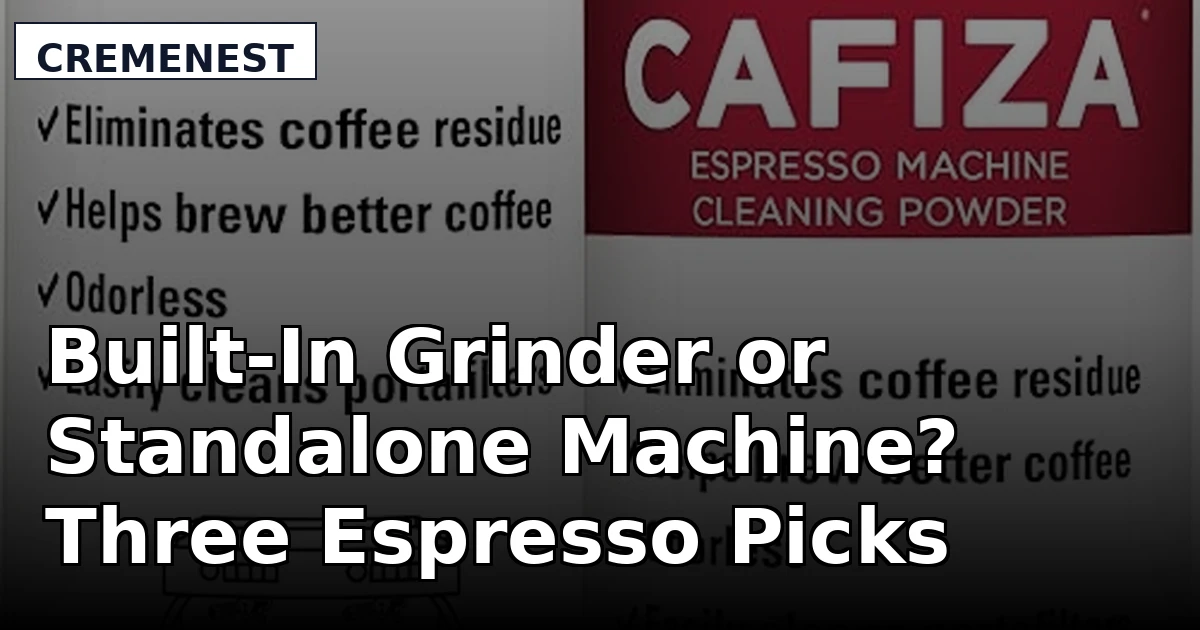
The maintenance item: Urnex Cafiza Professional Espresso Machine Cleaning Powder 566 grams (2 Pack) - Made in USA
Nobody enjoys this part of the hobby, and that is exactly why it gets skipped. Coffee leaves oils behind in the group, the screen, and the portafilter basket. Those oils go stale and bitter, and the next shot you pull tastes like the last one you pulled three days ago. Backflushing with a cleaning powder is how that residue comes out. The reason the cleaning product belongs in an equipment article is simple: a machine that is never cleaned does not perform like the machine you paid for, so the cleaning budget is part of the machine budget. On the timeline, a two-pack covers a long stretch of routine backflushing for most home setups, though the frequency you actually need depends on how many shots you pull per day. Match the powder to your machine's cleaning instructions, and buy descaler separately if your water is hard.
Prices and availability may change. Product images, names, and retailer links must be matched by verified ASIN. Do not state a current price, rating, stock status, or measured result without current evidence.
Why the grinder comes before the machine
Espresso is a narrow target. You are pushing hot water through a bed of finely ground coffee at pressure, and the whole thing either resists properly or it does not. Too coarse and the water races through, leaving a thin, sour, under-extracted shot. Too fine and the water stalls, leaving a bitter, over-extracted one. The grinder is the tool that moves you between those two failures, and it is the only tool that does, because no machine setting can fix a grind that is wrong.
This is why the budget split matters more than the machine's feature list. Burr grinders crush beans between two surfaces for a consistent particle size. Blade grinders chop, producing a mix of powder and boulders in the same dose, and that inconsistency shows up in the cup no matter how good the machine is. A modest machine paired with a capable burr grinder will outperform an expensive machine paired with a blade grinder, every time, because the expensive machine is only ever working with an inconsistent bed of coffee.
Two related traps are worth naming. The first is the pressurized basket, sometimes sold as a convenience feature. A pressurized basket adds resistance artificially, which lets coarse, stale, or poorly ground coffee produce something that looks like espresso. It hides the grinder problem instead of solving it. The second trap is buying the machine first and treating the grinder as an afterthought, which is how people end up with a capable brewer and a grinder that cannot feed it. Decide the grinder question first, then let the machine decision follow from it. That is where the combined unit on this page and the machine-only unit on this page split apart.
If you go with a combined machine and grinder, the grinder question is answered for you at purchase, and your job is to confirm it can grind fine enough for espresso and adjust in small enough steps to dial in a shot. If you go machine-only, the grinder question is yours to answer, and it deserves the larger share of the budget.
Cleaning, water, and year three
The second decision people make too late is what they will do to maintain the machine. Espresso equipment has two distinct maintenance jobs and they are often confused with each other.
The first is removing coffee residue: oils and fine particles that build up in the group head, the shower screen, the gasket, and the basket. This is what a cleaning powder like Cafiza is for, and it is done by backflushing on a machine that supports it, or by soaking removable parts. If this job is neglected, the residue goes rancid and every shot carries a stale background note. This is the maintenance task tied to the number of shots you pull, so a household pulling several shots a day needs it more often than a weekend-only setup.
The second is scale: mineral deposits left behind by water. This job is tied to your water, not your shot count, and hard water builds scale faster. Descaling is a separate product from cleaning powder, and the two should not be substituted for each other. The most effective thing you can do about scale is control the water going in. Filtered water with reasonable mineral content reduces how often the machine needs descaling, and it also tends to taste better in the cup, because the minerals that build scale are the same ones that flatten flavour at high concentrations.
Year three is where these two habits show up. Two machines bought on the same day can be in completely different condition by then, and the difference is almost never the price paid. It is whether the owner backflushed and whether the owner managed water. The cleaning products are the cheapest line item in the entire setup and the one with the largest effect on how the machine ages.
Here is a five-step way to work through the decision:
- Establish whether you already own a burr grinder that can grind fine enough for espresso, and be honest about it, because a blade grinder does not count.
- Decide the budget split before you shop. If you need both a grinder and a machine, expect the grinder to take a meaningful share, not a token one.
- Choose between combined and separate based on counter space, your upgrade plans, and how much you value one learning curve over two.
- Confirm the specifics that decide daily workflow on the current listing for whichever machine you are considering, including boiler type, portafilter size, and steam capability.
- Add the consumables to the same purchase: cleaning powder, and descaler or filtered water if your tap water is hard.
Practical guidance for a home espresso station
- Buy the grinder before or alongside the machine, never after. It is the component that determines what the shot can taste like.
- Treat pressurized baskets as a troubleshooting tool, not a default. If you need one to get a drinkable shot, the grind is the problem.
- Weigh your dose and your yield instead of judging by eye. Consistency is what makes a shot repeatable, and repeatability is what lets you improve.
- Backflush with a cleaning powder on a schedule tied to your shot volume, and keep descaler as a separate product for the water side.
- Change one variable at a time when you are dialling in. Adjust grind, then dose, then yield, and taste between changes so you know which one moved the cup.
Which option should you choose?
Choose the De'Longhi La Specialista Arte Evo Espresso Machine with Coffee Grinder when you want one purchase to cover grinding and brewing, and you would rather manage a single appliance than build a two-part station. Choose the Lelit PL41EM Anna Espresso Machine when you already own a burr grinder that handles espresso and you want your machine budget to go entirely to the machine, with the option to upgrade either half later. Choose the Urnex Cafiza Professional Espresso Machine Cleaning Powder 566 grams (2 Pack) - Made in USA when you want the maintenance side of the setup covered, which applies regardless of which machine you picked.
One caveat on evidence. This article does not rank these machines as the quietest, fastest, or best, because that kind of claim needs measurements and testing that are not part of the available product records. The specifications that decide daily workflow, including boiler type, portafilter size, grinder adjustment range, and steam performance, should be confirmed on the current Amazon listing for each machine before you buy. Prices and availability change, so treat any figure you see as temporary and verify it at the point of purchase. What does not change is the structure of the decision: grinder first, machine second, maintenance from day one.
The bottom line
There are two honest ways to build a home espresso setup, and the products here represent both. Buying a machine with an integrated grinder, like the De'Longhi La Specialista Arte Evo, gets you brewing and grinding in one purchase and one countertop footprint, at the cost of tying the two components together. Buying machine-only, like the Lelit PL41EM Anna, keeps the grinder decision in your hands and lets you put the larger share of the budget where it has the most effect, at the cost of sourcing and learning a second appliance. The Urnex Cafiza cleaning powder is not a third path; it is the part of the budget that decides whether either machine is still pulling the same shots in three years. Pick the structure that matches the equipment you already own, confirm the specifications on the current listings rather than on assumptions, and set aside a small amount for cleaning consumables from the start.