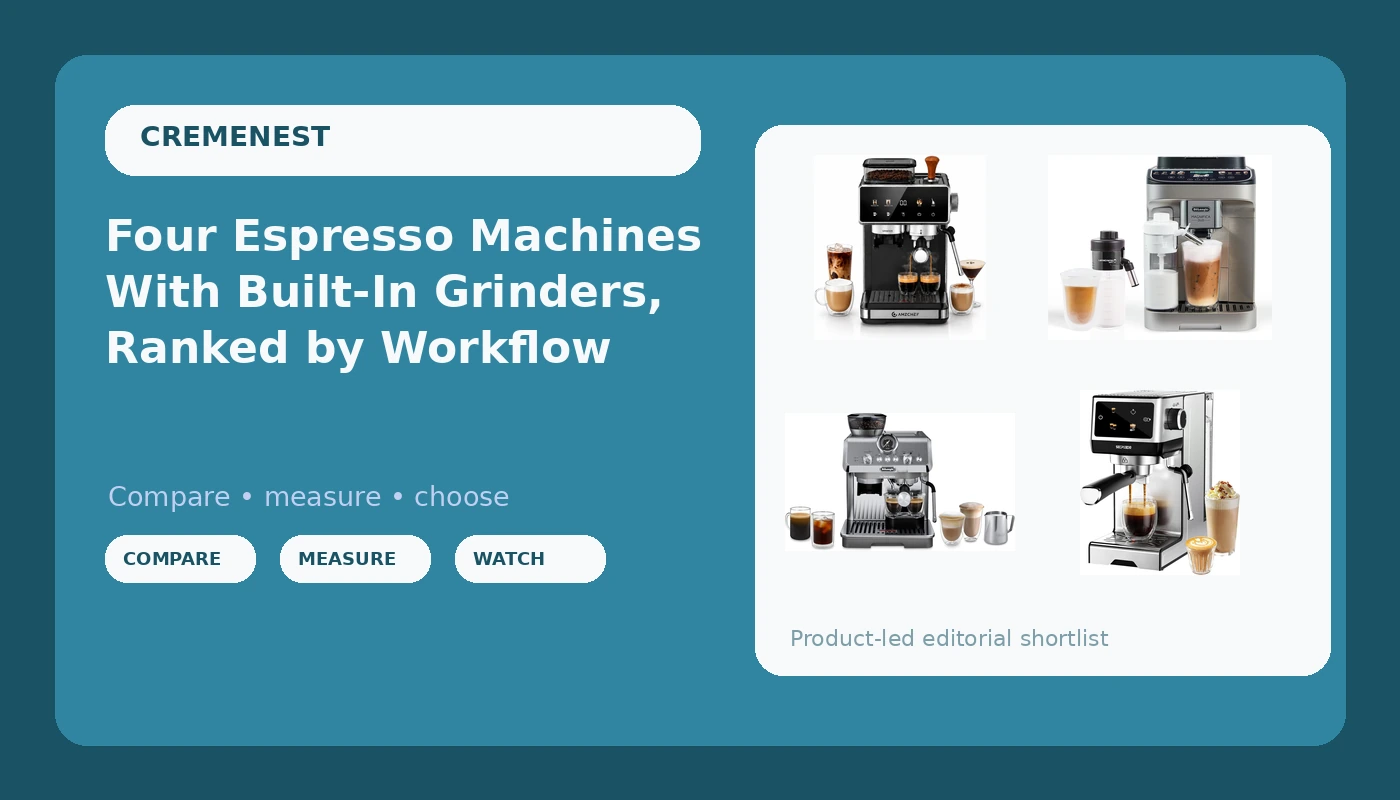
I keep a shelf in my garage that works as a warning label: a Breville that leaked from the group gasket, a Gaggia I modified until it stopped resembling a Gaggia, and an ECM that is still pulling shots for the friend who bought it off me. Twelve years behind a bar and another decade setting up home stations for friends, family, and two small cafes taught me that comparing espresso machines with built-in grinders is really a comparison of workflows. The machine is the easy part to shop for. The routine you keep at 6:40 on a Tuesday morning is the part that decides whether you love it or list it by March.
So here is the honest framing. This is a spec and workflow comparison of four machines at four very different tiers, not a lab report. I have not pulled thirty shots on every one of these units, and my rule is that I do not call something a review until I have spent a month with it. I would rather tell you what I can read from the bench than invent a taste test for you. What I can do is look at each machine the way I look at any station before I set it up: what is the boiler actually doing, is the grinder real, how long is the dead time between brew and steam, and would I still enjoy this in month three.
The best pick for most people here is the De'Longhi La Specialista Arte Evo, because it pairs a real burr grinder with a semi-automatic group, and semi-automatic is the workflow that teaches you something instead of hiding it. The Magnifica Duo is the better answer for a completely different buyer, someone who wants the coffee without the ritual. The two budget machines are a genuine question, and I will explain exactly where I think the money goes.
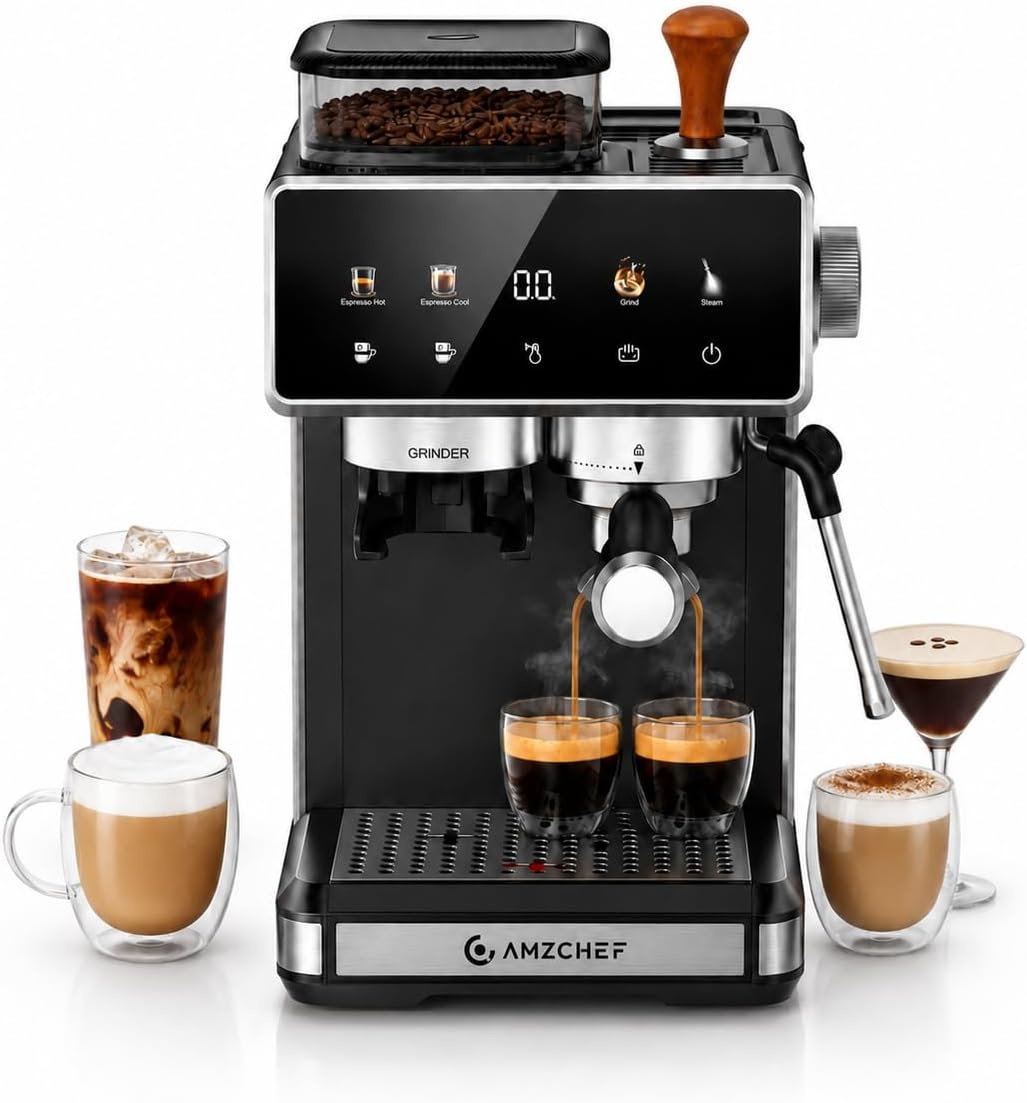
AMZCHEF Espresso Machine with Grinder, Latte & Cappuccino for Home Use
Grinder and brew group in one box at the entry tier, with a milk system aimed squarely at latte and cappuccino drinkers
An entry-tier all-in-one asks its grinder to do the hardest job in espresso on the smallest budget
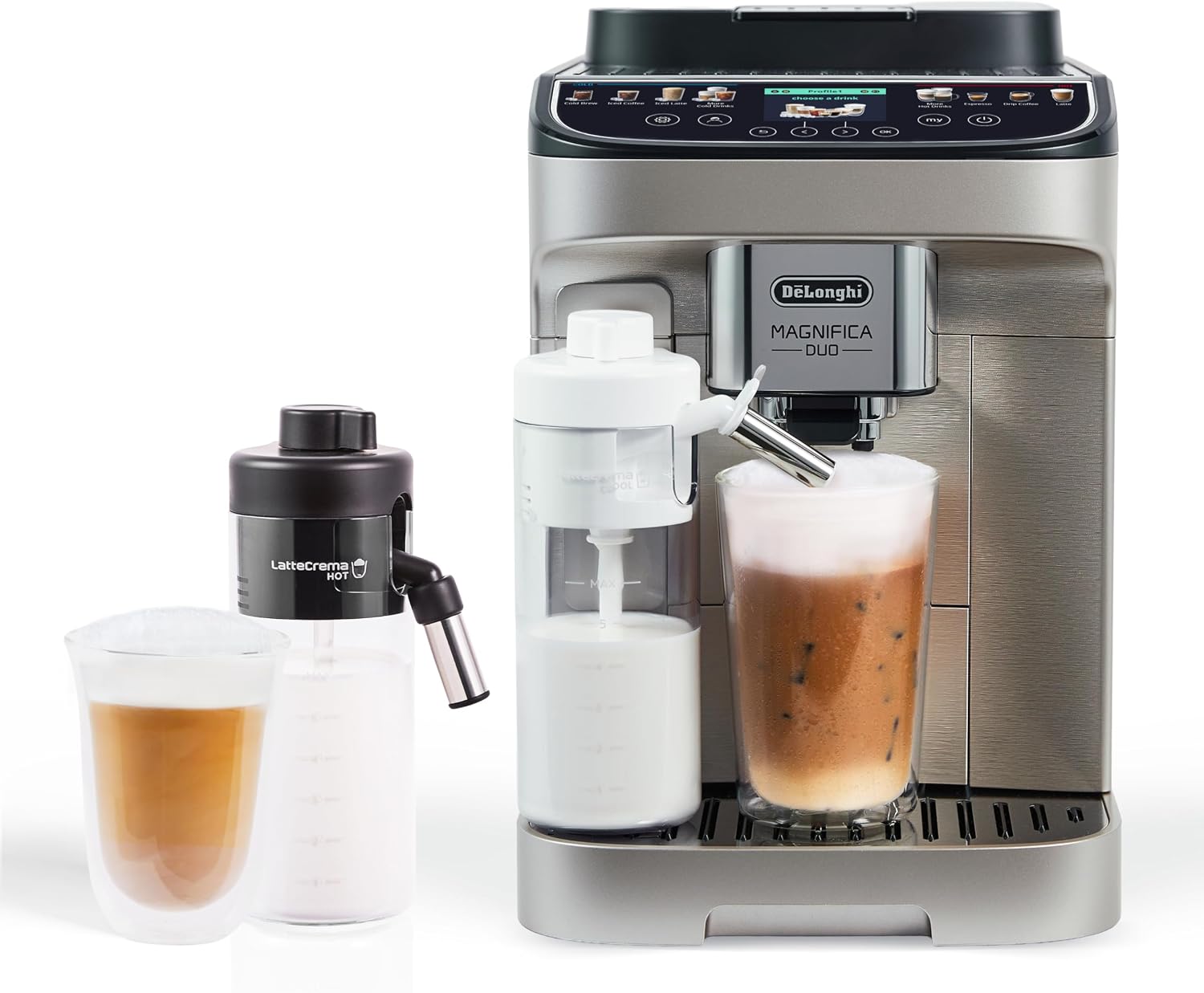
De'Longhi Magnifica Duo Automatic Espresso Machine, Milk Frother, Silver
Fully automatic, so the morning routine is press and walk away, and the built-in milk frother handles the latte side without a pitcher
Automation takes your hands off the puck, so a sour shot can only be fixed at the grind setting
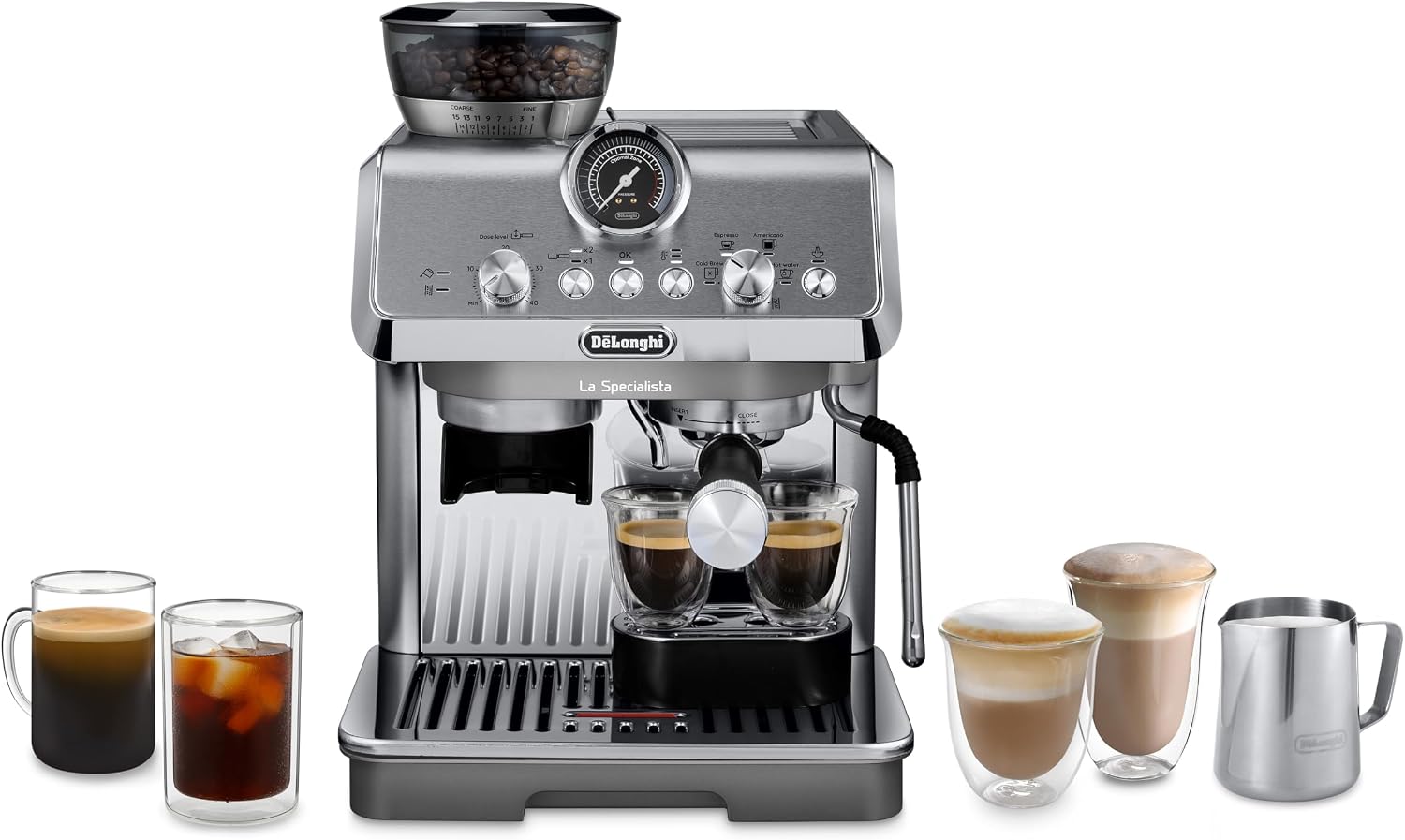
De'Longhi La Specialista Arte Evo Espresso Machine with Coffee Grinder
Semi-automatic group plus a built-in coffee grinder, which is the closest thing here to a real bar workflow at home
Semi-automatic demands puck prep, and the learning curve is the price of admission
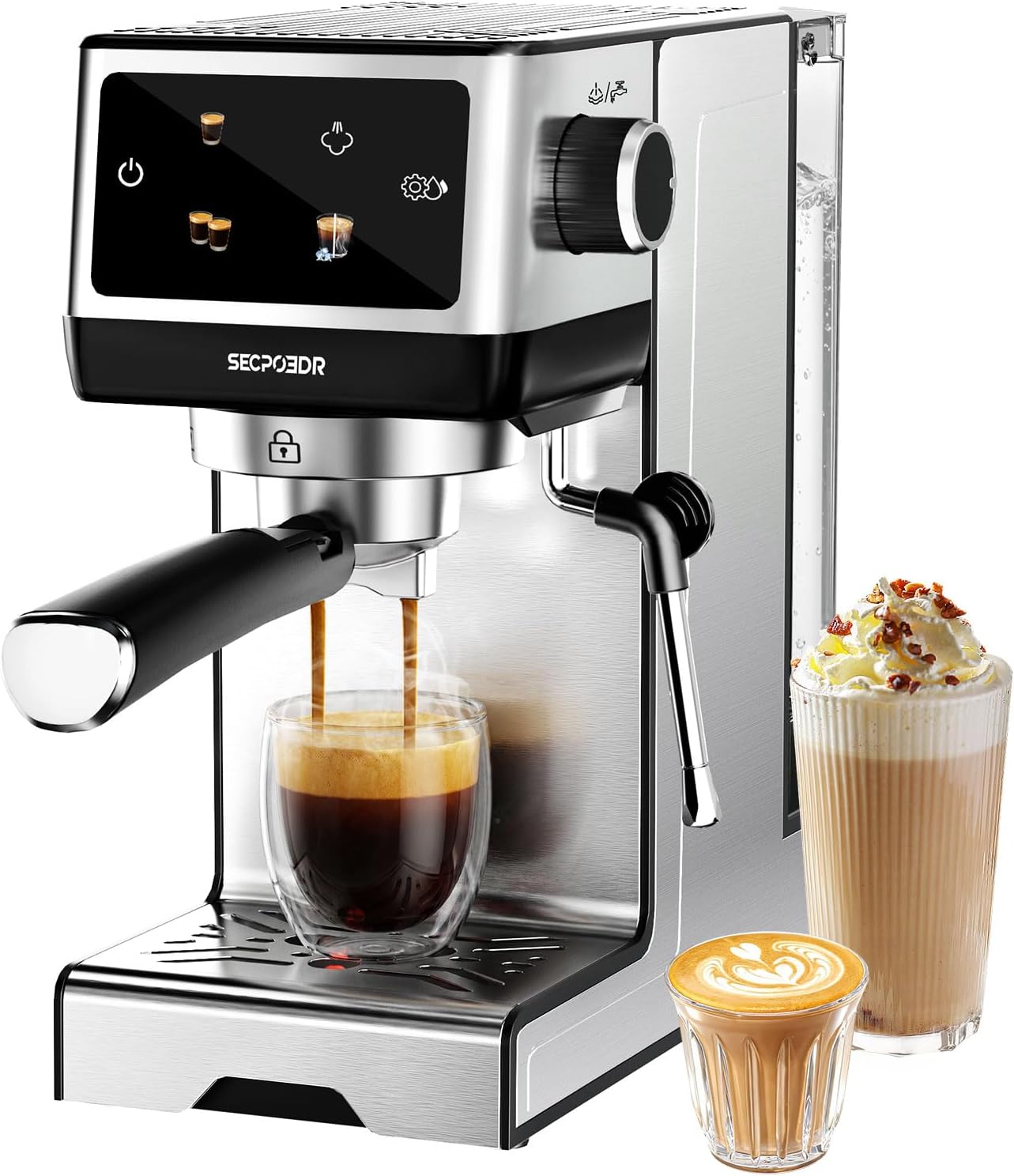
20 Bar Espresso Machine with Milk Frother, Cold Brew, Touch Screen
Cold brew and a touch screen at the lowest entry point, and the smallest commitment if you are not sure you want a hobby
Nothing in its listed feature set mentions a grinder, so you are budgeting for one separately
Prices and availability were captured from Amazon Creators API and may change.
How I judge a home espresso machine
Four questions, in this order, every time.
First, the boiler setup. Not the marketing name for it, the actual behavior. A machine that brews and then has to climb back up to steam temperature has dead time, and dead time is where a workflow goes to die. If you make two milk drinks back to back, that gap is the difference between a pleasant morning and a queue in your own kitchen. Machines that can brew and steam without that wait cost more for a reason, and it is a reason you feel every single day.
Second, the grinder. If a machine has one built in, the only question that matters is whether it can grind fine enough and adjust finely enough to move a shot. A built-in grinder that jumps from gusher to choke with one click is not a grinder, it is a decoration with burrs. This is the single most common place budget all-in-ones fall apart, and it is why I keep telling people that the grinder is seventy percent of the shot.
Third, the dead time, which I already mentioned and will mention again because it is the spec nobody prints on the box.
Fourth, the month three test. Would I still enjoy this after the novelty burns off? A machine can be clever and still be a chore. Clever is a feature. Chore is a habit, and habits stick.
The semi-automatic case: De'Longhi La Specialista Arte Evo
The De'Longhi La Specialista Arte Evo is the machine in this group I would put on my own counter, and the reason is not the badge. It is the combination: a semi-automatic brew group and a dedicated coffee grinder built into the same chassis. That means one footprint, one power cord, and one workflow where grinding, dosing, and pulling are all part of the same motion.
Semi-automatic is the right teacher. You grind, you dose, you tamp, you lock in, you watch the shot. When it runs fast and tastes thin, you have a lever to pull: grind finer. When it chokes, grind coarser. That feedback loop is how anyone actually learns espresso. Fully automatic machines break that loop, which is comfortable and also a little bit like learning to cook by watching a microwave.
The trade-off is honest and I will not pretend otherwise. Semi-automatic means puck prep, which means a tamper, a knock box, a scale, and about ninety seconds of attention per shot. If that sounds like a ritual you want, this is your machine. If it sounds like a chore you are already tired of, keep reading, because the next one is built for you.
The automatic case: De'Longhi Magnifica Duo
The De'Longhi Magnifica Duo is the other valid philosophy, and it is not a lesser one. Fully automatic means the machine grinds, doses, tamps, and brews while you stand there doing nothing useful. The integrated milk frother handles the latte and cappuccino side, so a milk drink is a button and a wait rather than a pitcher, a thermometer, and a prayer.
Who is this for? The person who wants cafe-quality consistency at 6:30 in the morning without becoming a hobbyist. The person whose partner drinks oat milk lattes and has zero interest in grind settings. The person who has already done the math and knows they will not clean a portafilter basket every day.
What you give up is control. When an automatic pulls a shot that tastes sharp and sour, your only real lever is the grind setting, because everything downstream of the grinder is handled for you. You also give up the thing I love most about semi-automatic machines, which is the ability to taste a change and immediately know which variable caused it. That is a fair trade for a lot of kitchens. It is just not the trade I would make, and you should know which side of that line you are on before you spend the money.
The budget tier: AMZCHEF and the 20 Bar machine
The AMZCHEF Espresso Machine with Grinder is the interesting one at the entry level, because it tries to do the thing I keep saying is hard: put a grinder and a brew group in one box for entry-tier money. The feature list is aimed at the latte and cappuccino crowd, which is the right call, since that is most of what people actually drink at home.
My caution is not about the concept, it is about the arithmetic. When a machine and a grinder share one entry-tier budget, the grinder gets the short end. That does not make it a bad purchase. It makes it a purchase with a known ceiling, and knowing the ceiling is the whole point. If you buy this, buy it for the workflow and the counter space, and accept that you may eventually want a separate grinder.
The 20 Bar Espresso Machine with Milk Frother, Cold Brew, Touch Screen is the lowest-commitment option here, and the cold brew function and touch screen tell you exactly who it is for: someone curious about espresso who is not ready to call it a hobby. Nothing in its listed feature set mentions a grinder, so plan for one separately, and plan for it seriously.
Here is the sentence I say more than any other: a three hundred dollar grinder on a two hundred dollar machine makes better coffee than a fifty dollar grinder on a two thousand dollar machine. If you are shopping the budget tier, buy pre-ground from a good roaster to start, save, and put the next money into the grinder rather than the machine. That order of operations is the single biggest upgrade available to you.
The grinder is seventy percent of the shot
I will keep saying this until it stops being true. Espresso is a grind problem before it is a machine problem. The grind sets the resistance, the resistance sets the flow, and the flow sets whether you get something sweet and syrupy or something that tastes like a lemon peel and regret.
Built-in grinders are a convenience, and convenience has a cost. The good ones, like the grinder sitting inside the La Specialista, let you make small, repeatable adjustments. The budget ones tend to have coarse steps, which means the difference between a fast shot and a choked one is a single click. That is survivable with fresh beans and a forgiving palate, and it is frustrating with anything else.
One more grinder note that matters more than people expect: stale beans hide in a coarse grind. A pressurized basket, the kind that ships with a lot of entry machines as a default, will make stale coffee taste vaguely like espresso. That is not a feature, that is a crutch, and it is the reason I tell everyone to move to a standard basket as soon as they have a grinder that can support it.
Pressure numbers versus temperature stability
The 20 Bar machine wears its pressure in its name, and I understand why. Twenty sounds like more than nine, and more sounds like better. It is not. Espresso is extracted in a fairly narrow pressure window, and the machines that push well past it are usually compensating for something else in the design. If you see a pressure number in the product name, read it as marketing, not as a spec sheet.
Temperature stability is the opposite: it is invisible on the box and it is the thing you feel every shot. A machine that holds steady brew temperature gives you the same cup at 7 a.m. and at 7 p.m., which is what consistency actually means. A machine that swings gives you sometimes great and sometimes sour, and you will spend weeks blaming your grinder for a problem that lives in the boiler.
That is why I rank the two De'Longhi machines above the budget pair even though all four will make coffee. The money at the higher tiers buys steadiness, not features.
Who each machine is for
Buy the De'Longhi La Specialista Arte Evo if you want to learn, if you like the idea of tasting a shot and knowing exactly which change to make next, and if you have the counter space for one box that does both jobs. This is the machine I would set up for a friend who asked me the question in this article.
Buy the De'Longhi Magnifica Duo if the ritual is not the point and the cup is. Two people, two different milk drinks, six in the morning, no interest in puck prep. That is a completely legitimate way to drink espresso, and this machine is built for it.
Buy the AMZCHEF Espresso Machine with Grinder if you want the all-in-one footprint and a gentle entry into the habit, and you are comfortable knowing you may outgrow the grinder before you outgrow the machine.
Buy the 20 Bar Espresso Machine with Milk Frother, Cold Brew, Touch Screen if you want to find out whether you even like this, and you want the cold brew option as a hedge. Pair it with a good grinder when you are ready, not before.
What I am watching next
The machine I want a full month with is the La Specialista Arte Evo, same beans, same scale, same "does it make you want another cup" test I run on everything that comes through my kitchen. A month is the minimum before I will call anything a review, because the first week is always flattering and the fourth week is where the truth lives.
If there is one thing to take from all of this, it is that these four machines are not really competing on the same axis. Two of them are selling you a workflow, one is selling you convenience, and one is selling you a low-stakes experiment. Pick the workflow you will actually keep, budget for the grinder before you budget for the badge, and you will end up with better coffee than the cafe down the street. I have watched that happen in a lot of kitchens, including a few of my own.