Related: Espresso Grinder vs Espresso Machine: Where Your Money Should Go First
Most people buy an espresso machine before they understand the workflow they just signed up for. They see a photo of a shot falling into a glass, they see a sale, and a week later the machine is sitting on the counter next to a bag of supermarket beans and a blade grinder. I have watched that happen in a lot of kitchens. The machine was never the problem.
This espresso machine buying guide starts from the other end of the question: what does a normal Tuesday morning look like in your kitchen, and which machine actually survives it? I spent twelve years behind a bar and now I set up home stations for friends and for two small cafes, and the same four questions decide almost every purchase. What is the real boiler setup, not the marketing version? Does the grinder, if there is one built in, actually grind fine enough? How long is the dead time between brewing and steaming? And would I still enjoy this thing in month three?
That last one is the test. Four listings landed in front of me this month. Three of them belong in a coffee conversation, and one of them belongs in a pool. Here is how I would sort them.
Best All-Around for a First Machine: Breville BES870BTR Barista Express
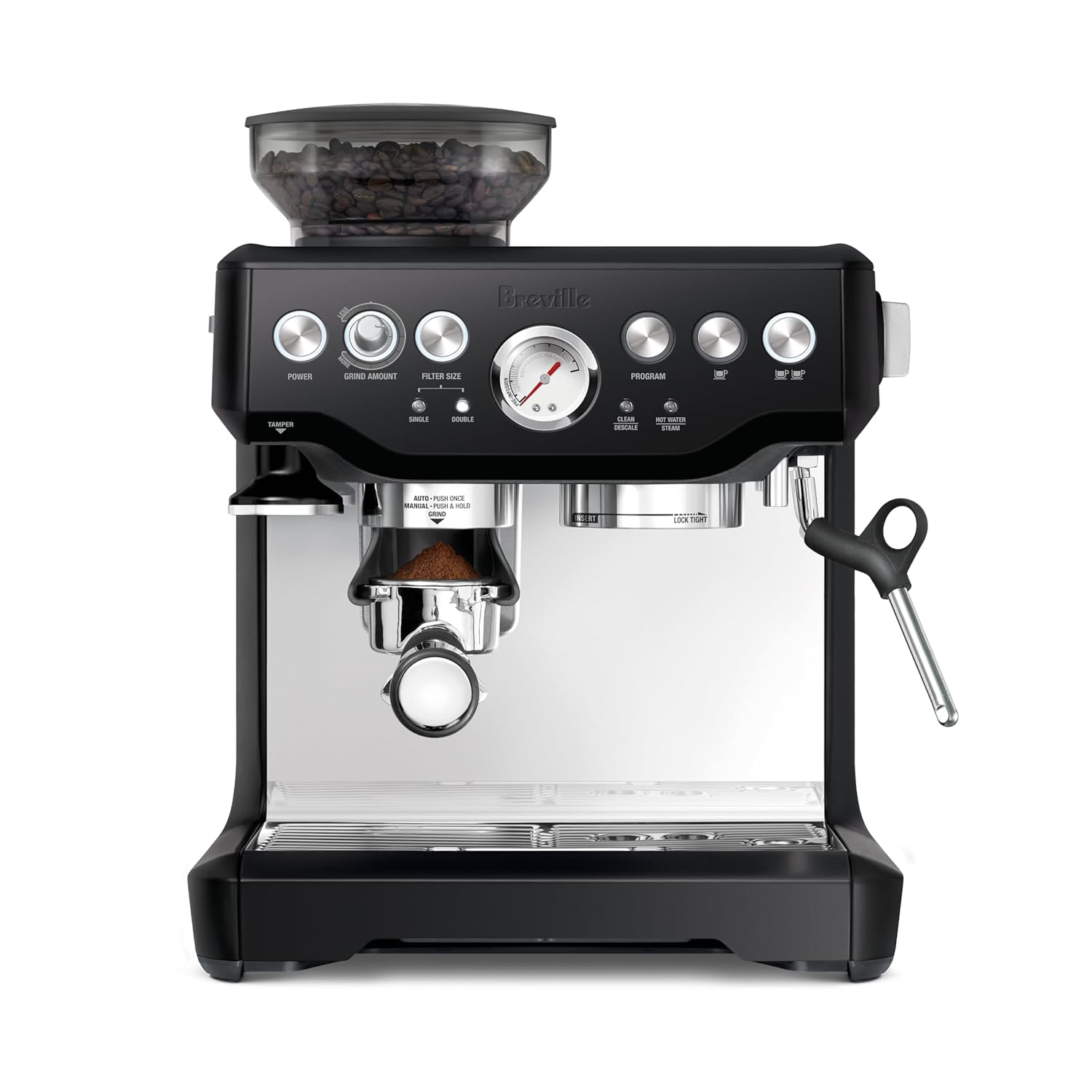
The Barista Express is the machine I recommend most often to someone who has never pulled a shot, and it is not because it wins at anything in particular. It is because it collapses three purchases into one box: machine, grinder, steam wand. The learning curve is gentle. You get a real portafilter, a steam wand that textures milk without a fight, and enough temperature consistency that your mistakes stay your mistakes instead of becoming the machine's fault.
The built-in grinder is the honest weak point. It is a conical burr grinder and it is workable, but it is mediocre next to a standalone grinder at the same money. If you already own a good burr grinder, buy the machine without one and put the difference into beans. If you do not own one, the built-in grinder is the reason you are drinking decent coffee on day one rather than waiting until you have saved for two separate purchases. That matters more than people admit, because the person who makes coffee on day one is usually still making coffee in month three.
The workflow is the part I would defend hardest. It is a single boiler, so you brew, then you wait, then you steam. The wait is short enough that it does not kill the ritual when you are making one or two drinks. If you are building four lattes back to back for a family, the dead time will find you, and you will feel it every morning.
One more detail worth knowing before you buy: Breville's baskets live in the 54mm family rather than the commercial 58mm standard. Smaller baskets are less forgiving of a sloppy puck, which is not a dealbreaker, it is a skill requirement. There is a cheap fix for it further down.
The Small-Counter, Small-Budget Pick: KEENSTAR 3.5Bar Espresso Machine
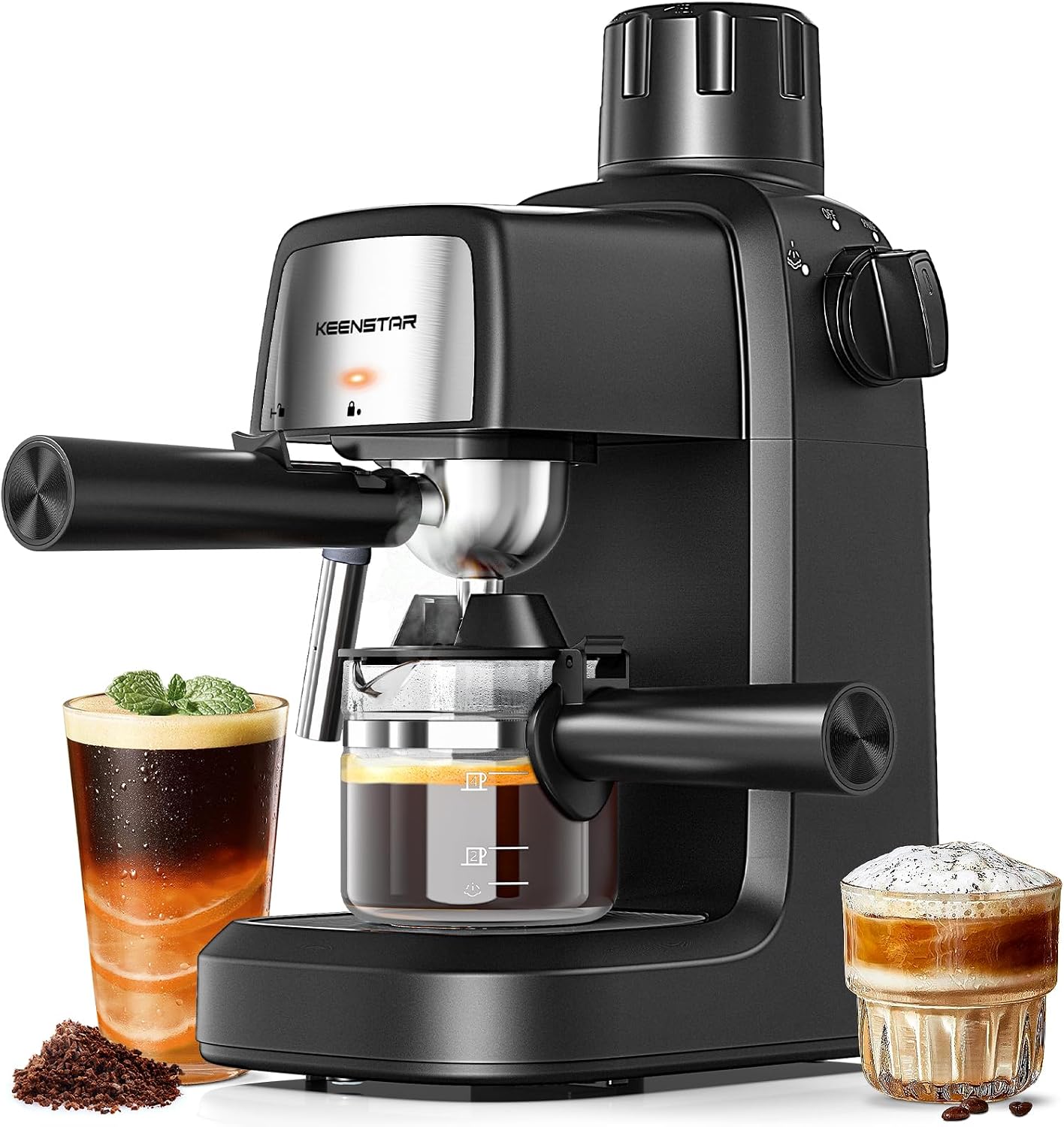
I have to be straight with you about this one. A 3.5 bar machine is not brewing espresso the way a cafe does. Espresso is a 9-bar process, and machines in this class build pressure with steam rather than pushing water through a puck at brew pressure. What you get is a strong, concentrated coffee, closer in character to a moka pot than to a shot pulled behind a bar. If you want to call that espresso, fine, but go in knowing what you bought.
What it is genuinely good at is being small, simple, and cheap to own. It has a preheat cycle, a compact footprint, and a 4-cup capacity that suits one or two people. It will happily work with pre-ground coffee, which means no grinder purchase, no dialing in, no scale, no distribution ritual before your first cup. For someone in a dorm, a small apartment, or an office kitchen who wants a hot, strong coffee drink before 8 a.m. with no learning curve at all, that is a legitimate use case, and I will not pretend otherwise.
Where it falls apart is where every machine in this class falls apart. The basket design hides stale beans and coarse grind, so the coffee never improves as you learn. There is no upgrade path. You will not mod this machine, you will not buy a better basket for it, and you will not notice the day your beans go stale. You drink what it makes until you replace it.
If your budget is genuinely fixed at the low end and your counter is genuinely tiny, this is a reasonable compromise, in the same spirit as the tiny-footprint machines I recommend to people with no space. If you can wait and save, wait and save. The gap between this and the Breville is the gap between a machine that makes coffee and a machine that teaches you how to make it.
The Upgrade That Saves Sloppy Pucks: IKAPE 53.3MM Distributor
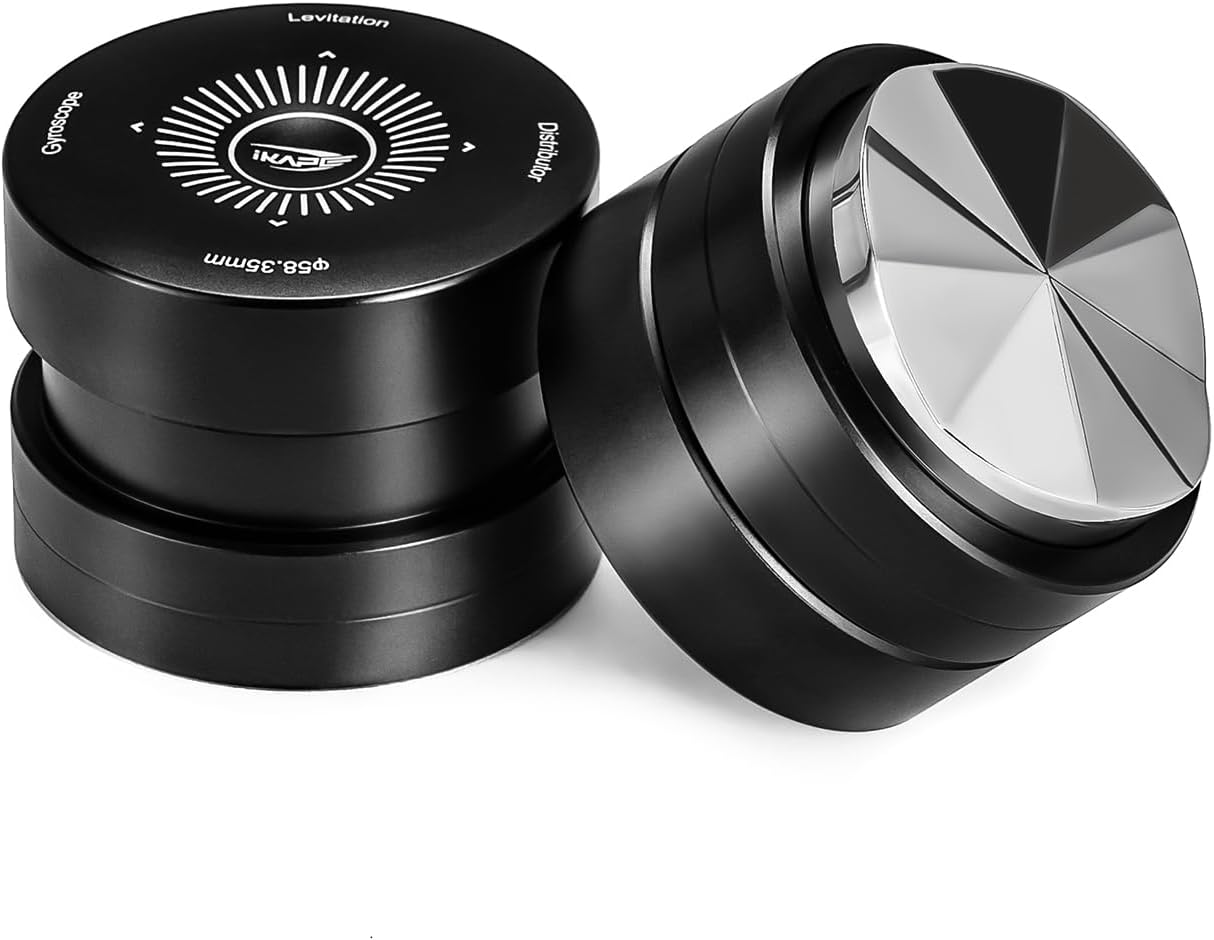
If you own a machine with a 54mm basket, buy this before you buy anything else. Distribution is the step most home baristas skip, and it is the step behind most of the bad shots I taste. You grind into the basket, you get a mound with clumps in it, and if you tamp that mound as it sits, you have built a puck with dense zones and loose zones. Water finds the loose zone. That is channeling: the shot runs fast, tastes sour and thin, and you blame the beans.
A distributor fixes it in about five seconds. This one is built for 54mm portafilters with an adaptive height collar, so it seats on the basket rim and spins instead of requiring you to guess a depth. The dual-bearing design keeps the spin smooth, which matters more than it sounds like it should, because a wobbly distributor digs one side of the puck deeper than the other and you are right back to uneven density.
I would rather see someone buy a good distributor and a mid-priced grinder than a much more expensive machine and skip both. Grind and distribution are the two things standing between you and a good shot, and neither one is solved by spending more on the machine itself. It is also the cheapest real upgrade you can make to a machine you already own. If your shots are inconsistent and your grind is already dialed in, this is the next thing to try.
The One Listing That Is Not Espresso Gear: Leslie's Power Powder Pool Shock
Every batch of listings I sort through has an outlier, and this is it. Leslie's Power Powder is a 25-pound bucket of granular pool shock, 70% calcium hypochlorite, which is a chlorine product for treating pool water. It is not a coffee descaler, it is not a cleaning powder for your machine, and it should never touch anything in your kitchen.
I am mentioning it because this is a mistake people actually make. Both jobs involve a white powder, both involve dissolving it in water, and both live near a word that starts with "desc." That is where the similarity ends. Descaling a coffee machine means citric acid or a dedicated descaler, run through the boiler and flushed thoroughly afterward. Pool shock is a strong oxidizer and belongs nowhere near a boiler you drink from. If your machine needs descaling constantly, the answer is better water, not a stronger chemical.
If you own a pool, buy it for the pool. If you do not, this is the row in the table below you can skip.
How I judge an espresso machine
Four things decide it, and none of them are on the box.
The first is the boiler setup. Marketing copy will tell you a machine has "professional pressure" and "barista-grade" internals, which usually means plastic where you cannot see it. What I want to know is whether the machine can hold brew temperature steady across a whole shot. Temperature stability is the feature you feel every single time, in every cup, more than any other spec on the page. A machine that swings a few degrees gives you espresso that is sometimes sweet and sometimes sour with no change on your end.
The second is the grinder, if there is one built in. A built-in grinder is a convenience and a ceiling at the same time. The question is whether it can grind fine enough and consistently enough for an unpressurized basket, because if it cannot, you are drinking from a pressurized basket forever and the coffee will taste the same whether your beans are three days old or three months old.
The third is dead time, the wait between brew and steam on a single boiler. Short is fine. Long kills the workflow, and a workflow you resent is a workflow you quit.
The fourth is the basket. If the machine does not have a real 58mm portafilter, you are fighting an uphill battle, and if it ships with a pressurized basket as the default, that is a crutch, not a feature. Smaller baskets can absolutely make good espresso. They just demand better distribution, which is exactly why the distributor above earns its place on this list.
The reference table
This is the table I would hand someone standing in a store aisle. Sort by what you actually own and how much counter you actually have.
| Product | What it is | Best for | Notes |
|---|---|---|---|
 Visit on Amazon → Breville Barista Express |
Machine with built-in grinder and steam wand | A first real machine, one or two drinks a day | Gentle learning curve, built-in grinder is the weak link |
 Visit on Amazon → KEENSTAR 3.5Bar Espresso Machine |
Compact steam-pressure coffee maker | Tiny counters, no-grinder setups, dorms | Strong coffee rather than a 9-bar shot, no upgrade path |
 Visit on Amazon → IKAPE 53.3MM Distributor |
Puck distribution and leveling tool | Anyone with a 54mm basket | Cuts channeling, cheapest real upgrade |
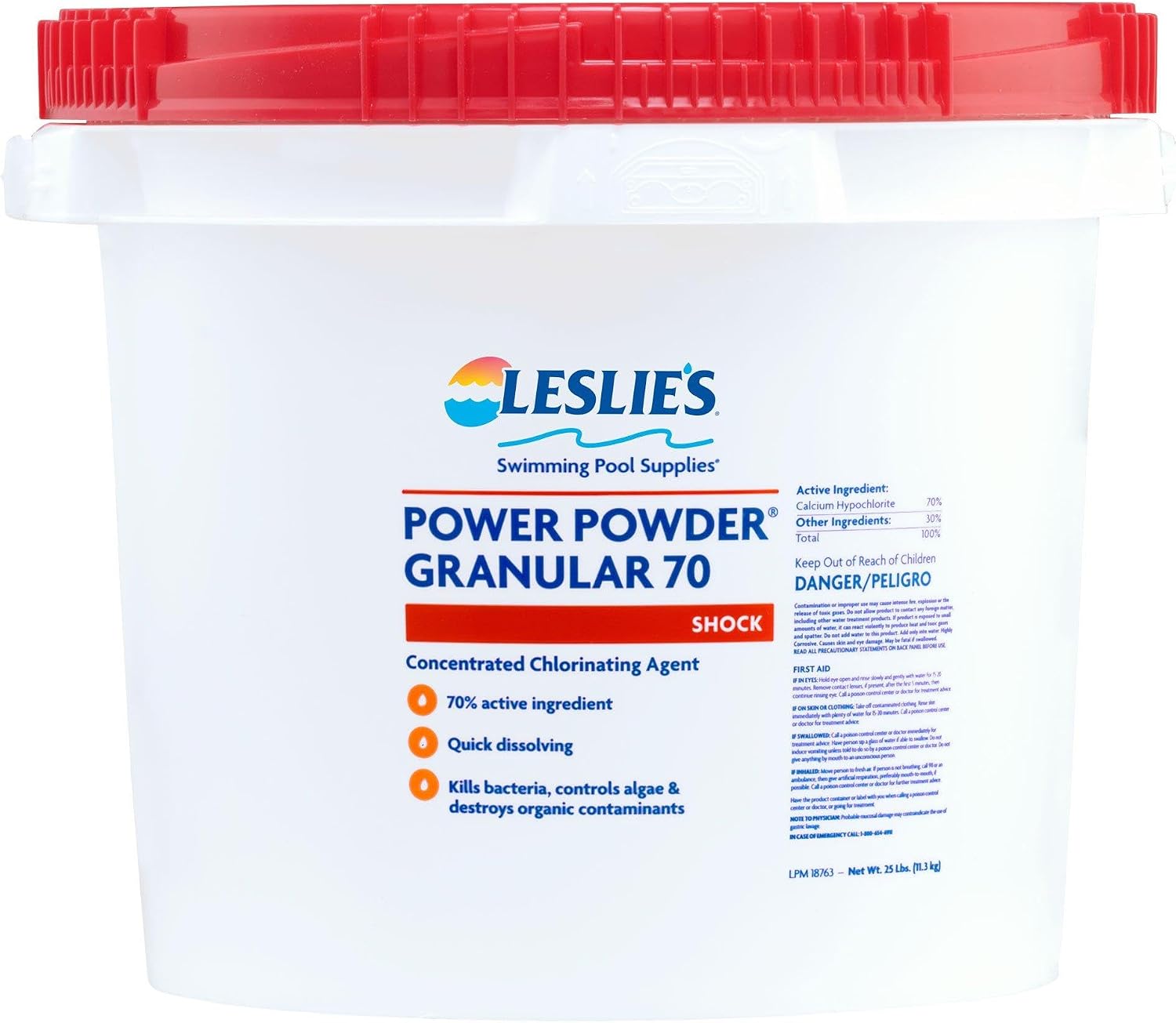 Visit on Amazon → Leslie's Power Powder Pool Shock |
Granular pool chlorine, 25 pounds | Pools | Not coffee gear, never descale with it |
Analysis and notes
The pattern in this table is the pattern I see in every kitchen I set up. The machine gets the budget and the accessories get ignored, when it should be the other way around for the first year. A distributor costs a fraction of a machine and changes the cup more than the machine does, because it removes a variable you were never controlling.
The Breville is the safest single purchase here because it solves the whole problem in one box, and because its limits are the limits of your own technique. When a shot goes wrong on that machine, you can usually find the reason. That is the property I value most in a first machine, and it is the property the cheapest machine in this table cannot offer you at all.
The KEENSTAR is a compromise, and I want to be fair to it. It is not pretending to be a cafe machine, and for the person it fits, it does the job without asking for a grinder, a scale, or a ritual. Just do not expect it to grow with you.
And the pool shock is a pool shock. It made it into the table because it made it into the batch, and because someone searching for a descaling powder deserves to be told plainly that chlorine is not it.
Should you buy the Breville Barista Express?
Yes, for most people buying their first real machine. It gives you a real portafilter, a steam wand that textures milk properly, and enough temperature consistency that you can taste your own progress. The built-in grinder is mediocre, and I would rather you upgrade it later than skip the machine entirely.
The tradeoff is dead time and basket size. You will wait between brewing and steaming, and you will need decent distribution on a 54mm basket. Neither is hard to live with, and both are fixable.
Should you buy the KEENSTAR 3.5Bar Espresso Machine?
Only if the constraints are real. Tiny counter, tight budget, no interest in grinding or dialing in. Under those conditions it makes a hot, strong coffee drink with no learning curve, and that is worth something.
If you are buying it hoping to learn espresso, you will be disappointed. It cannot grind, it cannot be modded, and its basket hides the very feedback you need to improve.
Should you buy the IKAPE 53.3MM Distributor?
Yes, if you own a machine with a 54mm basket. It is the cheapest upgrade in this article and the one that most directly fixes inconsistent shots. Level the bed, then tamp, then taste the difference.
Skip it if you are already using a 58mm basket, because it is sized for 54mm portafilters, not yours.