Related: Best Espresso Machines for Small Kitchens
I have set up espresso stations in two cafes, in friends' kitchens, and in one apartment so small the machine lived on top of a mini fridge. Every single time, the same mistake shows up first: the machine gets bought before the workflow is understood. A home espresso setup is a system, not a box. The machine, the grinder, the scale, and the cleaning kit all have to work together, and the machine is only one of the four.
I pulled shots behind a bar for twelve years before I started doing this for other people, and the pattern has not changed. The people who end up happy are the ones who bought for the workflow they would actually keep on a Tuesday morning, not the one they imagined on a Sunday. A machine that needs twenty minutes of ceremony before the first cup gets abandoned by week three, no matter how good the first cup was.
So this is the setup I would put on a normal kitchen counter. A first serious machine for the person who wants to learn, a compact machine for the counter that has no room, a scale because nothing else fixes a bad shot faster, and the brushes that nobody buys until the group head is a horror show. Four pieces, four different jobs.
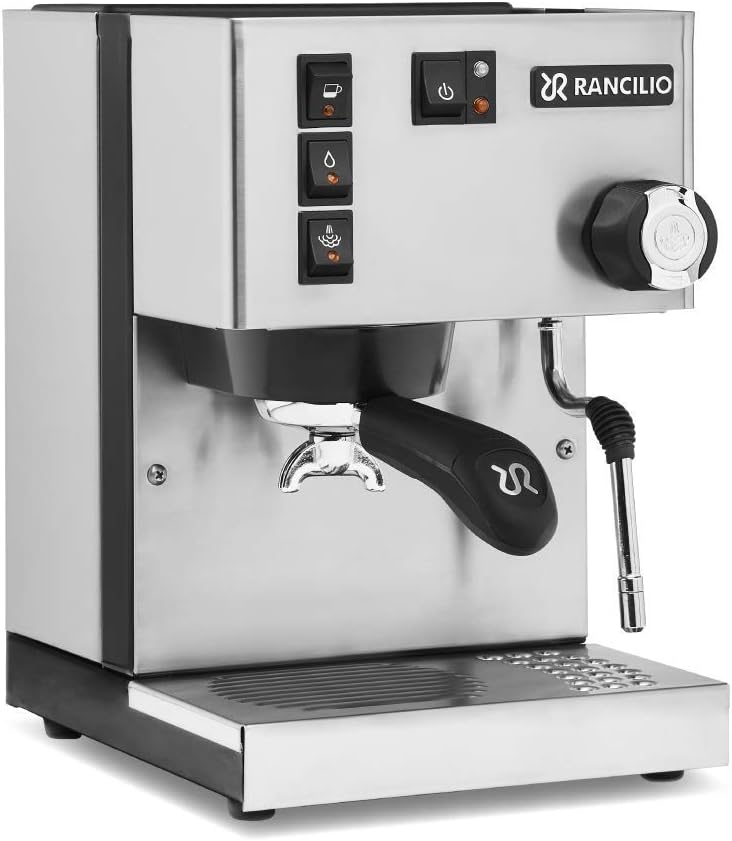
Best First Serious Machine: Rancilio Silvia Espresso Machine
This is the machine I point people to when they say they want to get serious. Stainless steel body, a single boiler, and a parts chain that will outlive the kitchen it sits in. It is the one that gets recommended in the same breath as buy once, cry once, and for once that phrase is not marketing. It is repairable, it is heavy in the way that matters, and it is the machine a home barista keeps for a decade and then hands to a friend when they finally upgrade.
The tradeoff is the single boiler, and you should understand it before you buy. Brew and steam share one boiler, so there is dead time between pulling your shot and steaming your milk. You pull the shot, you wait for the boiler to climb, then you steam. If your morning is one milk drink, that wait is nothing. If you are making four lattes back to back for a family, you will feel every second of it, and you will start to resent the machine around shot three.
What it rewards is patience and a real grinder. This is not a machine that hides a bad grind behind a pressurized basket. Feed it a coarse, uneven grind and it will tell you the truth immediately, which is exactly what you want if you are trying to learn. Temperature stability comes from a real boiler and a heavy group rather than from a preset on a screen, and that consistency is the thing you feel on every shot, not just the first one.
If you do not own a grinder that can grind fine enough for espresso, buy that before you buy this machine. A machine like this with a weak grinder is a frustrating, expensive lesson. I have watched it happen more than once, and the machine always gets blamed.
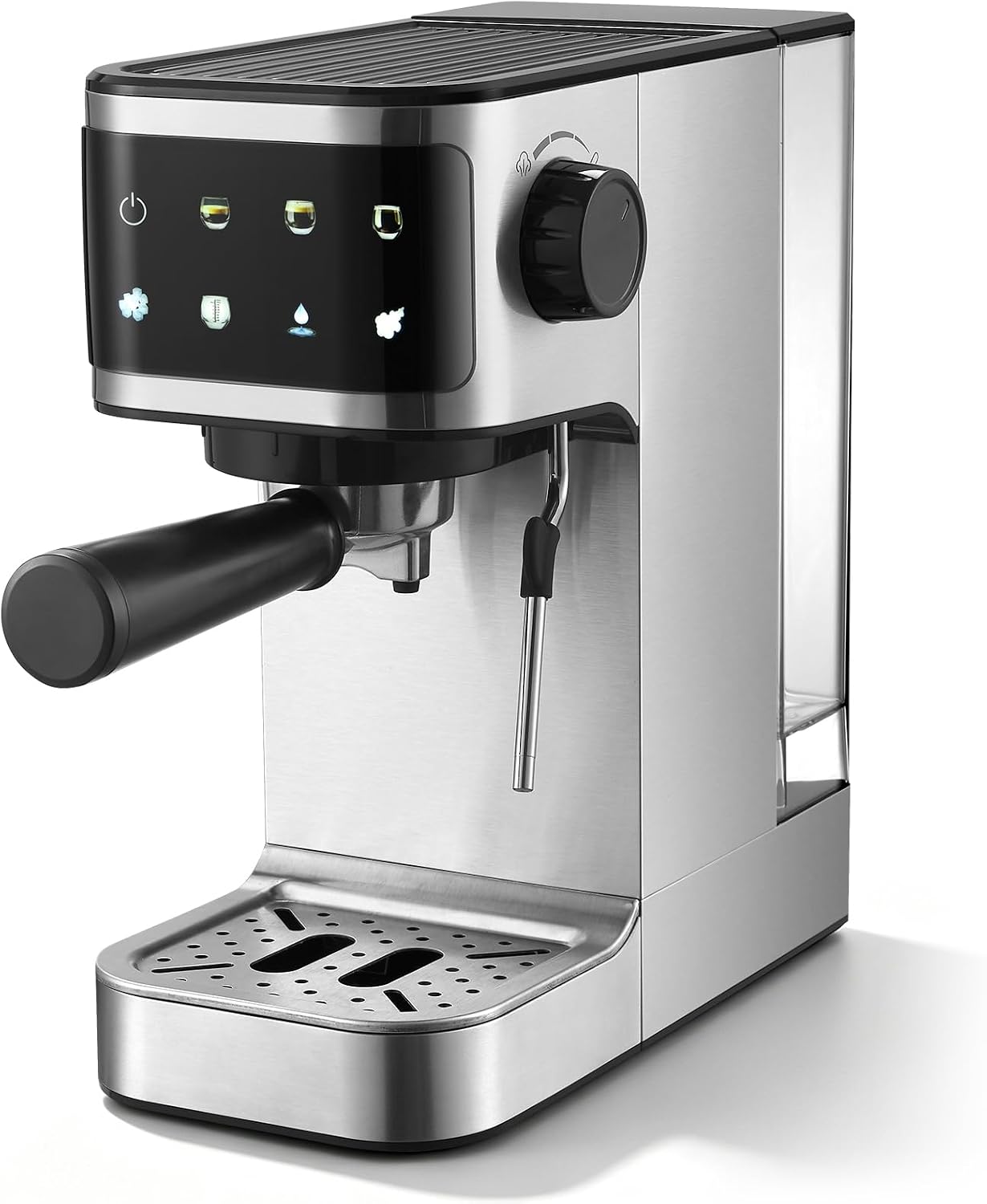
Best Compact Pick: Espresso Machine 20 Bar with Touch Color Display
Not every counter can host a serious machine, and not everyone wants to wait for a boiler to come up to temperature while a toddler is climbing their leg. This one is built for that kitchen. 1350W with instant heating means no fifteen minute warm up ritual. The 1.3L tank lifts out so you can carry it to the sink instead of pouring water at an angle and hoping. The steam wand is stainless steel, the body is stainless steel, and the whole thing stays compact enough that it does not eat the counter.
About that 20 bar number, because it is the first thing on the box and the least important thing in the cup. Pump pressure and brew pressure are not the same measurement, and most budget machines ship running well above the roughly 9 bar that actually tastes right. A high pump rating is a headline, not a flavor. What matters is whether the machine holds a steady brew temperature across the shot and whether the wand can texture milk instead of blowing bubbles into it. On this machine the wand is stainless, not a plastic sleeve with a hole in it, and that is the detail I check first on any compact unit.
The touch color display runs six presets, which is genuinely useful for the person who wants a drink before work without thinking about ratios. It is a low friction machine. It is not a tinkering machine. If your idea of a good Sunday is pulling the OPV apart and chasing the last five percent of a shot, this is not the machine for you, and I say that with affection for the people who do that.
Who it is for: small kitchens, first machines, one or two drinks a day, and anyone who wants the workflow to be short. Who it is not for: the person who already owns a good grinder and wants to grow into a machine.
The Scale: KitchenTour Coffee Scale with Timer
If you take one thing from this article, take this one. Dose by weight, not by scoop, and stop your shot by weight, not by color. A 0.1g resolution scale with a 3kg capacity covers everything you need at the counter: a portafilter on the scale, a cup on the scale, and enough headroom left over for a pitcher when you are weighing milk. The back-lit LCD matters more than it sounds like it should, because most of us make coffee before the sun is fully up.
The built-in timer is the part that turns a scale into a tool. A shot is a ratio with a clock attached. You dose 18 grams, you start the timer, you watch the yield climb, and you stop when the numbers line up. Without the timer you are guessing at two variables at once, and guessing is how people end up blaming the machine for a shot that a scale would have fixed in a week. Batteries are included, which is a small thing until you are standing in the kitchen at 6 a.m. with a dead scale.
There is no cleverness here and there does not need to be. It weighs, it times, it reads in the dark. That is the entire job.
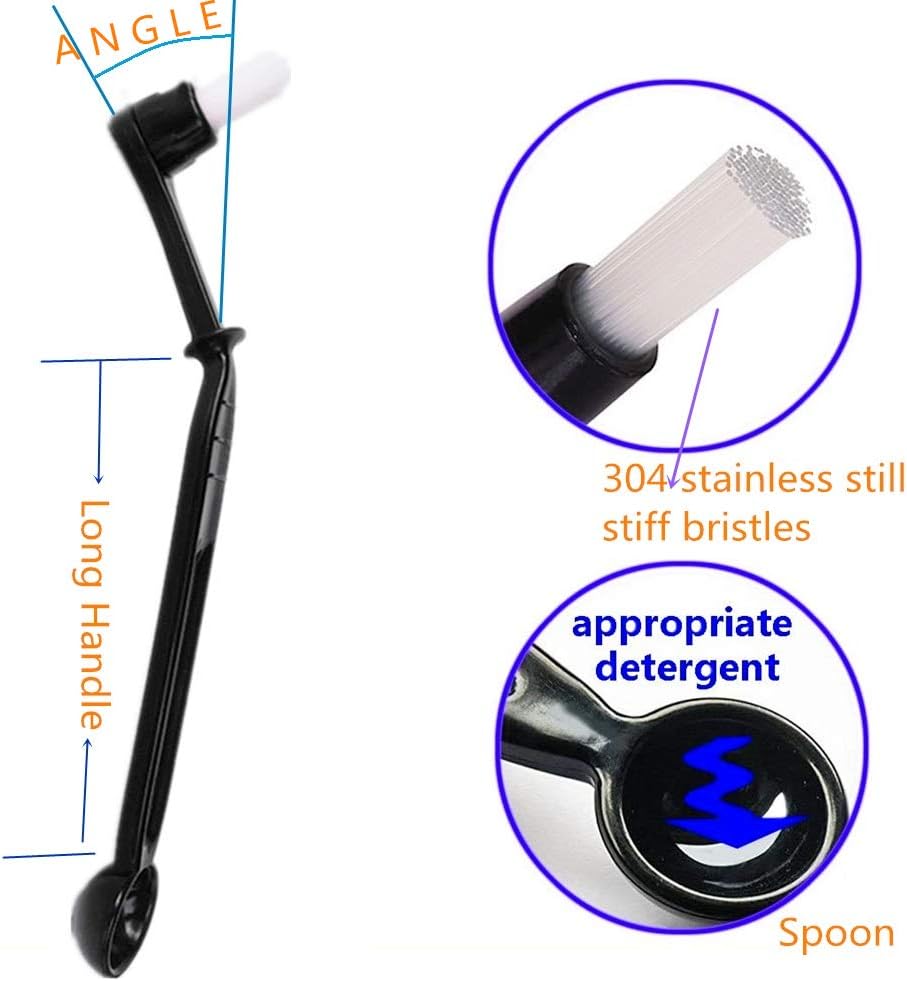
The Cleaning Kit: Coffee Machine Cleaning Brush Set
The group head is where old coffee goes to live. Two pieces here: a group head brush with nylon and stainless steel bristles, and a smaller brush with a spoon tool on the end. The small brush is the one that gets into grinder burrs and the corners of a basket. The spoon tool handles dosing and levelling without you reaching for a knife, and it fits the same hand as the brush.
Brush the group head after your last shot of the day, while it is still warm and the grounds have not set. Backflush on whatever schedule your machine's manual gives you. Descale based on your water, not the calendar. I have seen more machines killed by scale and old grounds than by hard use, and the fix costs less than one bag of beans.
This is the least exciting purchase on the list and the one that decides whether your machine is still pulling good shots in year four. Machines do not usually die. They get neglected until they taste bad.
How I judge a home espresso setup
Every machine I recommend has to clear the same four questions, and they are the same four questions you should ask during the return window while the box is still in the garage.
What is the real boiler setup, not the marketing? A single boiler, a thermoblock, and a dual boiler produce very different mornings. Marketing copy will not tell you. The manual and the parts diagram will.
Does it grind fine enough, or are you buying a grinder too? If the machine has a built-in grinder, that is a real question, because a mediocre built-in grinder caps the quality of every shot you pull, no matter what you spend on the machine. If there is no grinder, budget for one before you budget for anything else.
How long is the dead time between brew and steam? Pull a shot, then immediately try to steam. Time it with the scale. If the wait is long enough that you start checking your phone, the machine will lose that argument by month two.
Would you still enjoy it after month three? This is the one that kills most purchases. The machine that is fun on a Sunday and a chore on a Tuesday ends up in a garage, and I say that as the owner of a small machine graveyard.
Run those four during the return window. If the machine passes, you keep it. If it fails on the fourth question, no amount of crema is going to save it.
Analysis: what actually matters
Pressure ratings are the most advertised number and the least useful one. A pump rated at 20 bar is telling you what it can produce at the outlet, not what reaches the puck. Machines that ship over-pressure tend to make shots that taste harsh and thin, and the fix on a moddable machine is a cheap valve spring. On a sealed machine, you live with the factory setting, which is a reason to care about the design rather than the number on the box.
Temperature stability is the feature you feel every shot. Pressure profiling is a feature most people use twice. I installed a flow control kit on my own machine out of curiosity and I will say the same thing I always say: consistency beats novelty. If the brew water wanders across a shot, you get sometimes great and sometimes sour, and you will never be able to dial in a coffee because the machine keeps moving the target.
Dead time is the workflow killer. A machine that pulls a beautiful shot and then makes you wait a minute and a half to steam is a machine that will make you skip milk drinks. Buy for the workflow you will actually keep, which usually means the one that fits the time you have before work.
Water and cleaning decide the machine's lifespan. Filtered water, a brush after the last shot, and descaling on your water's schedule will keep a mid-priced machine pulling good shots longer than an expensive machine that never gets cleaned.
The home espresso setup reference table
Read this as a workflow, not a ranking. Each piece solves a different problem, and the order in the table is the order I would buy them in if I were starting from nothing.
| Piece | Role in the setup | Best for | Price |
|---|---|---|---|
 Visit on Amazon → Rancilio Silvia Espresso Machine |
The machine you keep for a decade | One or two milk drinks a day, with a real grinder and some patience for steam | $995.00 |
 Visit on Amazon → Espresso Machine 20 Bar, 1350W Instant Heating |
The compact counter machine | Small kitchens, fast mornings, one or two drinks a day | $130.99 |
 Visit on Amazon → KitchenTour Coffee Scale with Timer |
Dose, yield, and shot time | Every machine on this list, including the ones you already own | $19.99 |
 Visit on Amazon → Coffee Machine Cleaning Brush Set |
Group head and grinder upkeep | Anyone who wants the machine to still taste right in year four | $6.99 |
The piece that is not in the table
The grinder. It is not on this list because the right grinder depends on your budget and your counter, but it belongs in the conversation before the machine does. A mid-priced machine with a serious grinder beats an expensive machine with a cheap one, every single time. If you are splitting a budget, split it toward the burrs. The machine controls temperature and pressure. The grinder controls everything you can actually taste.
Should you buy the Rancilio Silvia?
Yes, if you want one machine that you keep. It is a stainless single boiler with a parts chain that will outlast the kitchen, it is repairable, and it tells you the truth about your grind instead of hiding it. The dead time between brew and steam is the honest tradeoff, and it is a tradeoff worth making for one or two milk drinks a day.
Buy it with a grinder that can actually grind for espresso. Buy it knowing that it asks you to learn. If you want a machine that is friendly on day one and still interesting in year three, this is that machine.
Should you buy the 20 Bar espresso machine with the touch display?
Yes, if your counter is small and your mornings are short. Instant heating removes the warm up ritual, the 1.3L tank lifts out for refilling, the steam wand is stainless rather than a plastic sleeve, and the presets keep the workflow to a couple of button presses. It is the machine I would hand to someone who wants better coffee before work without turning coffee into a project.
If you already own a serious grinder and want to grow into a machine, spend your money elsewhere. This one is built for a fast start, not for the long chase.
Should you buy the scale and the brushes?
Yes to both, and sooner than you think. The scale is the cheapest upgrade in espresso and it fixes more bad shots than any machine upgrade will. The brushes cost almost nothing and they decide whether the machine you bought this year still tastes right in year four. Neither one is exciting. Both of them are the reason the rest of the setup works.