Related: Grinder Budget vs Machine Budget: Where the Money Actually Goes
I have pulled somewhere north of 40,000 shots in my life. I managed a third wave coffee bar in Seattle before I moved into home espresso consulting, and I have set up home espresso setups for friends, family members, and two cafes. I also keep a machine graveyard in my garage: the Breville that leaked, the Gaggia I modded until it was unrecognizable, the ECM that is still going. That history is exactly why I am going to start this guide with the grinder instead of the machine.
The most common mistake in a home espresso setup is buying the machine first. People see a pressure number, a touch screen, a milk frother, and a shiny body, and they order it before they have thought about who is going to grind the beans. Then they pull sour, thin, inconsistent shots for six months and blame the machine. It was never the machine.
Here is the rule I build every setup around: the grinder is about 70 percent of the shot. A $500 machine with a $300 grinder beats a $2,000 machine with a $50 grinder every single time. So the four products below are ordered the way I would buy them, grinder first, then the machines, then the unglamorous thing that keeps all of it tasting right.
Start Here: MiiCoffee DF64 II Single Dosing Coffee Grinder (Black)
Single dosing changed home espresso for me, and it is the one workflow upgrade I would push on almost anybody. With a hopper grinder you fill the hopper, the beans sit there going stale, and you adjust the grind chasing a target that keeps moving as the coffee ages. Single dosing means you weigh out one shot's worth of beans, grind all of it, and start the next shot from the same place. The DF64 II is built around that idea, so you are not guessing how much coffee is sitting in the chute.
What I check on any grinder before I recommend it: can it go fine enough for a real espresso range, are the adjustment steps small enough to move the shot a few seconds, does the setting hold once you find it, and how much coffee stays inside the machine between doses. Retention is the quiet killer. If a grinder holds three grams of yesterday's coffee, you are drinking a blend whether you meant to or not.
A single dosing grinder also forces a habit that makes you better at this. You weigh the dose, you note the grind setting, you taste the shot, and you change one variable at a time. That is the whole game. If you take one thing from this guide, take that.
The Compact Machine: CASABREWS CM5418 Compact Espresso Machine with Milk Frothing Steam Wand
The word that matters in that product name is not compact. It is steam wand. A machine that can texture milk with actual steam, the way a cafe does it, is a different category of appliance from one that aerates milk with a whisk inside a plastic housing. Microfoam is texture, not foam, and you only get it from steam you can control.
Compact is the second thing, and it is a real advantage in a Seattle apartment kitchen where the counter is already full. The tradeoff with a small single boiler machine is dead time, the gap between pulling your shot and having enough steam pressure to texture milk. It is not a dealbreaker, it is a scheduling problem. Pull the shot, purge the wand, start steaming, and you will have a drink assembled before the crema falls apart.
The steam wand is also the part people neglect. Wipe it and purge it after every single use. Milk residue baked onto a wand is the fastest way to make a machine smell like a bad diner, and it is the first thing I look at when someone hands me a used machine to evaluate.
The Small Footprint Pick: Arecovas Espresso Machine, 20 Bar Pressure, Touch Screen, Milk Frother
Let me be direct about the pressure number, because it shows up on nearly every budget machine and it misleads nearly everyone. Espresso is brewed at roughly 9 bar. A machine advertised at 20 bar is not making stronger coffee, it is describing the pump's ceiling, and what actually matters is whether the pressure at the group is controlled and stable rather than whatever the pump can produce at full tilt. Most budget machines ship running well above 9 bar, which is why so many of them taste harsh and thin at the same time.
So when you look at a machine like this one, with its touch screen and its frother, the question is not how big the number is. It is whether the machine gives you a repeatable result, whether it holds temperature across a shot, and whether the basket is a real one or a pressurized crutch. Pressurized baskets are the thing I complain about most in this category. They hide stale beans and a bad grind by forcing pressure through a tiny hole, and they teach you nothing. If the machine comes with one, use it for a week, then move to a standard basket as soon as your grinder can handle it.
The touch screen and the frother are conveniences, and there is nothing wrong with that. If you want a small machine with a guided routine and a milk function that does not require a technique lesson, this is the lane it competes in. Pair it with a grinder that can actually dial in, and it will make you a better cup than the cafe down the street.
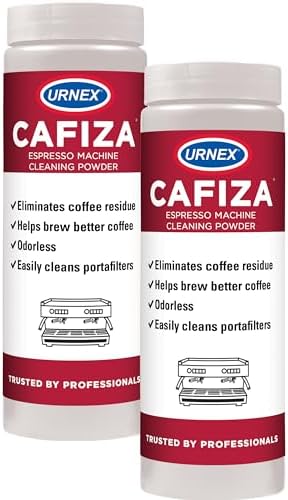
The Boring Essential: Urnex Cafiza Professional Espresso Machine Cleaning Powder 566 grams (2 Pack) - Made in USA
Nobody puts a cleaning powder on a wish list, and it is the item that decides whether your machine tastes good in month twelve. Coffee leaves oils behind in the group head, the shower screen, and the baskets. Those oils go rancid, and rancid oil tastes like the burnt, bitter edge people blame on cheap beans or a weak machine.
Cafiza is the cleaner cafes use, and it is the one I keep on my counter. You backflush the group with it, you soak your baskets and portafilter in it, and you rinse thoroughly afterward. Once a week for a home machine is the rhythm I use, more often if you are pulling several shots a day with dark roasted coffee. A 566 gram container goes a long way, and a two pack means you are not ordering a refill in the middle of a good coffee streak.
The rule I will not bend on: if a machine needs descaling every two weeks, something else is wrong, usually your water. Fix the water and cleaning stops being a monthly crisis.
How I test espresso gear
Every machine and grinder I write about gets the same treatment: same beans, same grinder when possible, same basket size, and the same question at the end of the month, which is whether it makes you want another cup.
I start with the grinder because it is the variable that moves the most. If the grinder cannot hit the espresso range, nothing downstream matters, so I check whether it can choke the machine and whether it can be backed off into a normal flow. Then I dial in a dose that fits the basket, keep the yield consistent, and only change one thing at a time.
On the machine side, I care about temperature stability before anything else. Pressure profiling is a feature most people use twice. Temperature stability is the feature you feel in every single shot, because a machine that swings a few degrees across a brew gives you one great shot and one sour one from the same beans and the same grind.
Then there is workflow, which is where most buying decisions actually go wrong. How long is the dead time between brew and steam? Does the drip tray fit a scale? Can you fit a mug under the group, or only a demitasse? Does the machine need to be moved to refill the reservoir? Those questions decide whether you keep using the thing after month three, and month three is the real test.
What actually matters more than the spec sheet
The portafilter size is the spec I check first, and it is the one buyers skip. The professional standard is 58mm, and smaller baskets mean a thinner puck and less forgiveness when your distribution is imperfect. If a machine does not use a 58mm basket, know what you are trading away before you buy, not after.
Water matters more than people want to hear. The old roaster who taught me this said water makes or breaks a shot, and he was right. If your water is hard, you will be descaling constantly and your shots will taste flat. Filtered water and a proper cleaner solve more problems than an upgrade ever will.
And budget accordingly. The machine is the part you look at, so it is the part people overspend on. I would rather see a modest machine paired with a single dosing grinder and a tub of cleaning powder than a flagship machine fed by pre-ground coffee and never backflushed. That is the difference between owning an espresso machine and making espresso.
The home espresso setup reference table
This is the buying order I use, and the same four items I tell friends to start with. Prices move constantly, so check the current listing before you commit.
| Product | Role in the setup | What to check | Price |
|---|---|---|---|
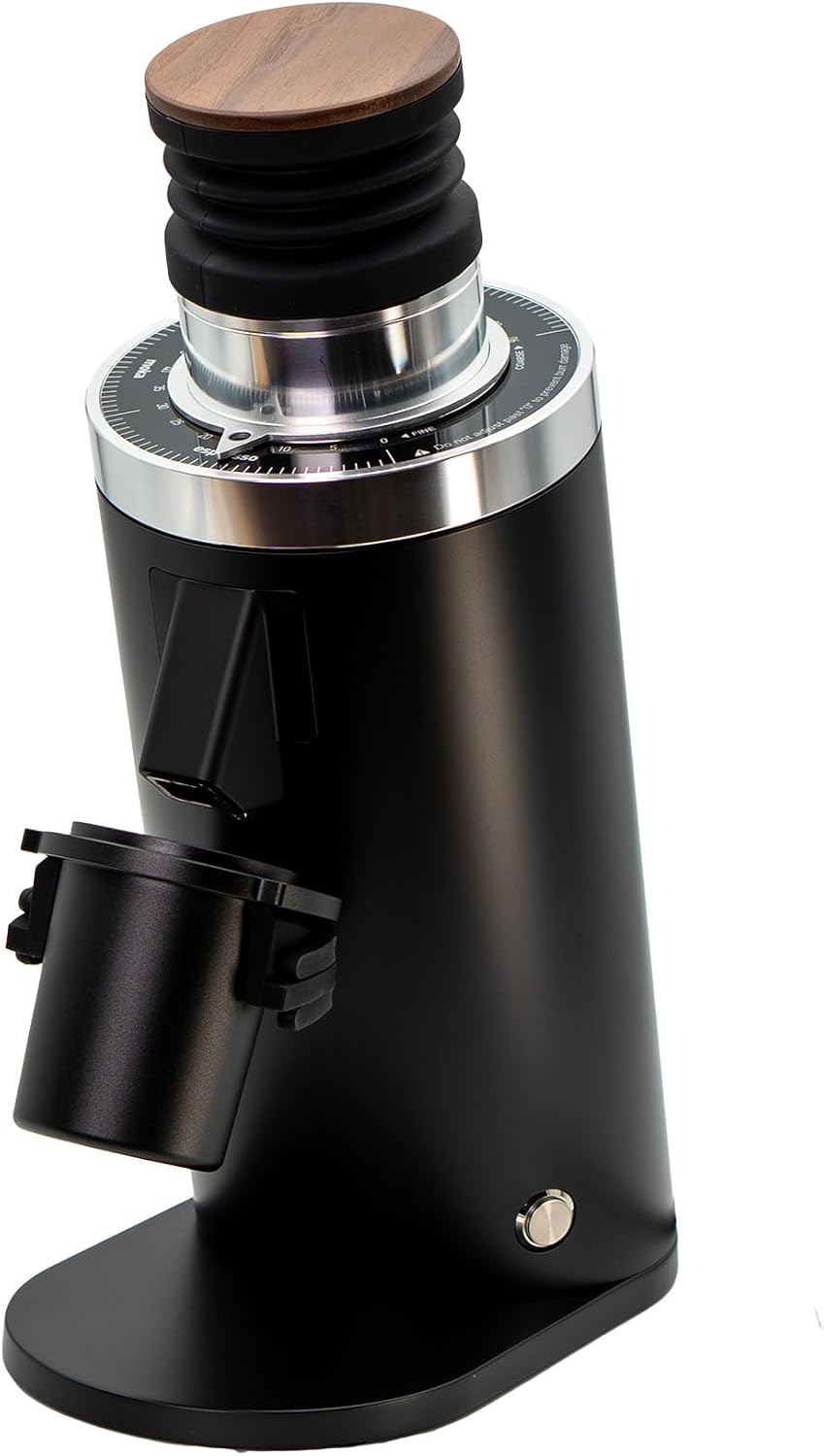 Visit on Amazon → MiiCoffee DF64 II Single Dosing Coffee Grinder (Black) |
Grinder, buy this first | Whether it holds an espresso setting and how much coffee stays inside | $399.00 |
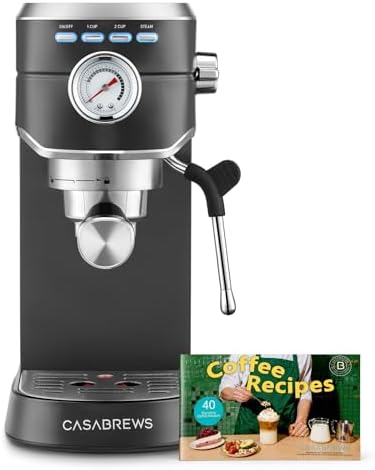 Visit on Amazon → CASABREWS CM5418 Compact Espresso Machine with Milk Frothing Steam Wand |
Compact machine with a real steam wand | Steam wand type and how long the boiler takes to recover | $139.99 |
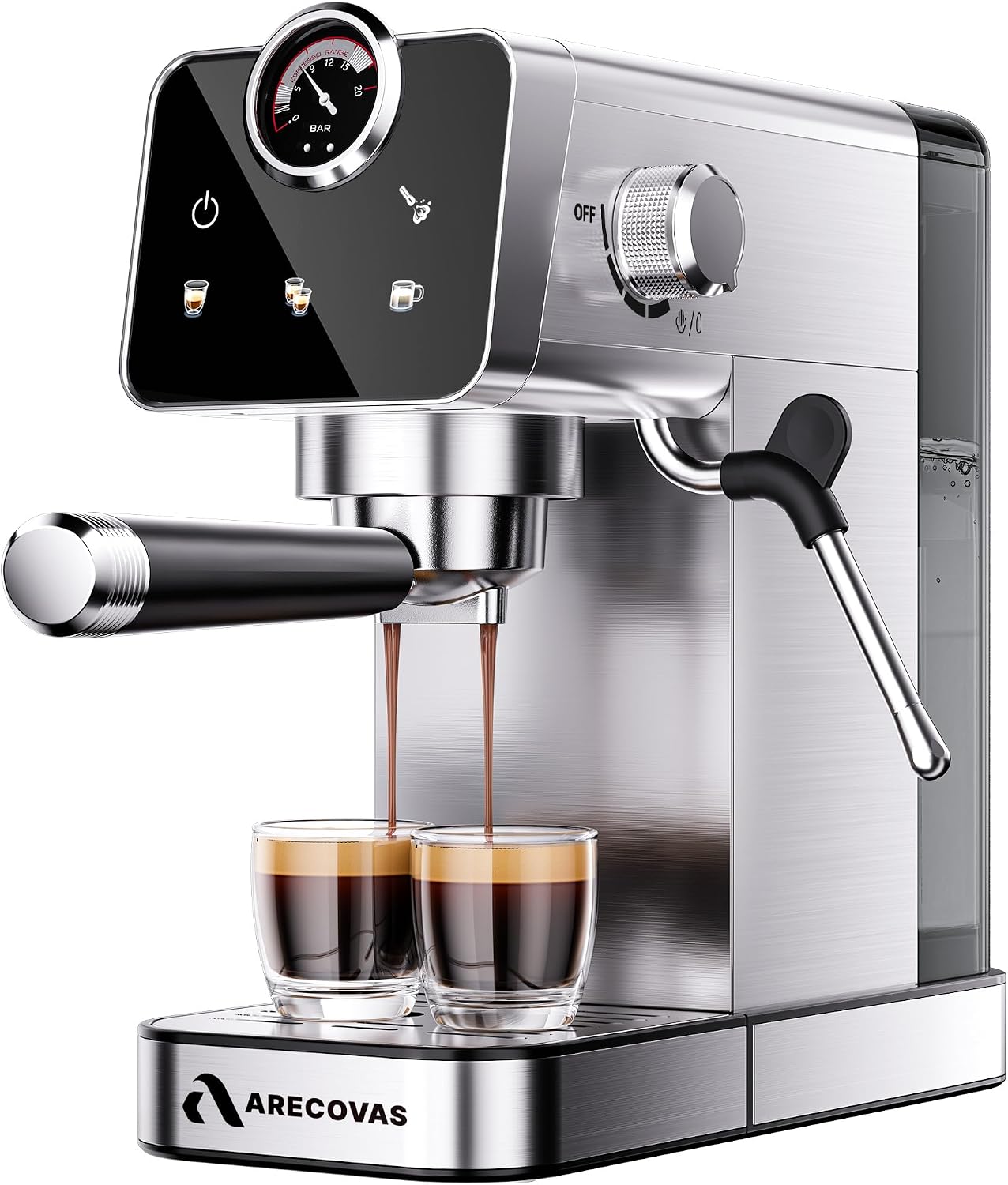 Visit on Amazon → Arecovas Espresso Machine, 20 Bar Pressure, Touch Screen, Milk Frother |
Small footprint, guided routine | Whether pressure is controlled and whether the basket is standard | Check current Amazon price |
 Visit on Amazon → Urnex Cafiza Professional Espresso Machine Cleaning Powder 566 grams (2 Pack) - Made in USA |
Weekly cleaning | Whether you actually backflush on a schedule | $32.00 |
Should you buy the MiiCoffee DF64 II grinder?
Yes, if you are starting from nothing, and yes even if it means the machine waits another month. Single dosing is the workflow that makes dialing in possible, because every shot begins with the same weighed dose instead of beans that have been sitting in a hopper losing their character. It is the purchase that decides how good the next several years of coffee taste.
Should you buy the CASABREWS CM5418?
Yes, if your counter is tight and milk drinks are part of your routine. A real steam wand is the line between texturing milk and pretending, and a compact body is not a compromise in a small kitchen, it is a feature. Just plan for the dead time between the shot and the steam, and purge the wand every single time.
Should you buy the Arecovas espresso machine?
It is a fair pick for a small kitchen and a guided routine, as long as you read the pressure claim for what it is. Espresso is brewed around 9 bar, so a bigger number on the box is not a better shot. What you want is a machine that repeats itself, and a grinder next to it that can actually dial in. Once you can grind fine enough, move off the pressurized basket and never look back.
Should you buy the Urnex Cafiza cleaning powder?
Yes. It is the least exciting item on this page and the one that protects everything else. Backflush weekly, soak your baskets, rinse well, and your machine will taste the same in month twelve as it did in month one. If you are going to spend money on espresso gear, spend some of it on keeping the gear clean.