I have pulled somewhere north of 40,000 shots in my life. Twelve years behind a bar in Seattle, most of it running a third-wave shop where we weighed every dose and logged every change, then a slow slide into consulting for people who want cafe-quality coffee in a kitchen that also holds a toaster. My garage has turned into a machine graveyard: a Breville that leaked from a seal I ignored for a year, a Gaggia I modded until it stopped resembling a Gaggia, an ECM that still works and probably always will.
This home espresso machine comparison covers four products that sit at very different points on the price and convenience curve: two budget machines with built-in milk frothers, one superautomatic that costs more than my first car, and a box of cleaning tablets that belongs on your counter no matter which machine you end up with. I have not spent a month with all three machines, and I am not going to pretend otherwise. What I can do is tell you what each one is actually built to do, where the workflow breaks, and which one I would put my own money on.
The short version: if you want the machine to disappear into your morning, the Jura E8 is the only product here that does that. If you want to learn espresso, the Pantrymade's pressure gauge teaches you more per dollar than anything else on this list. And whatever you buy, buy the cleaning tablets, because a dirty group head makes every machine taste identical.
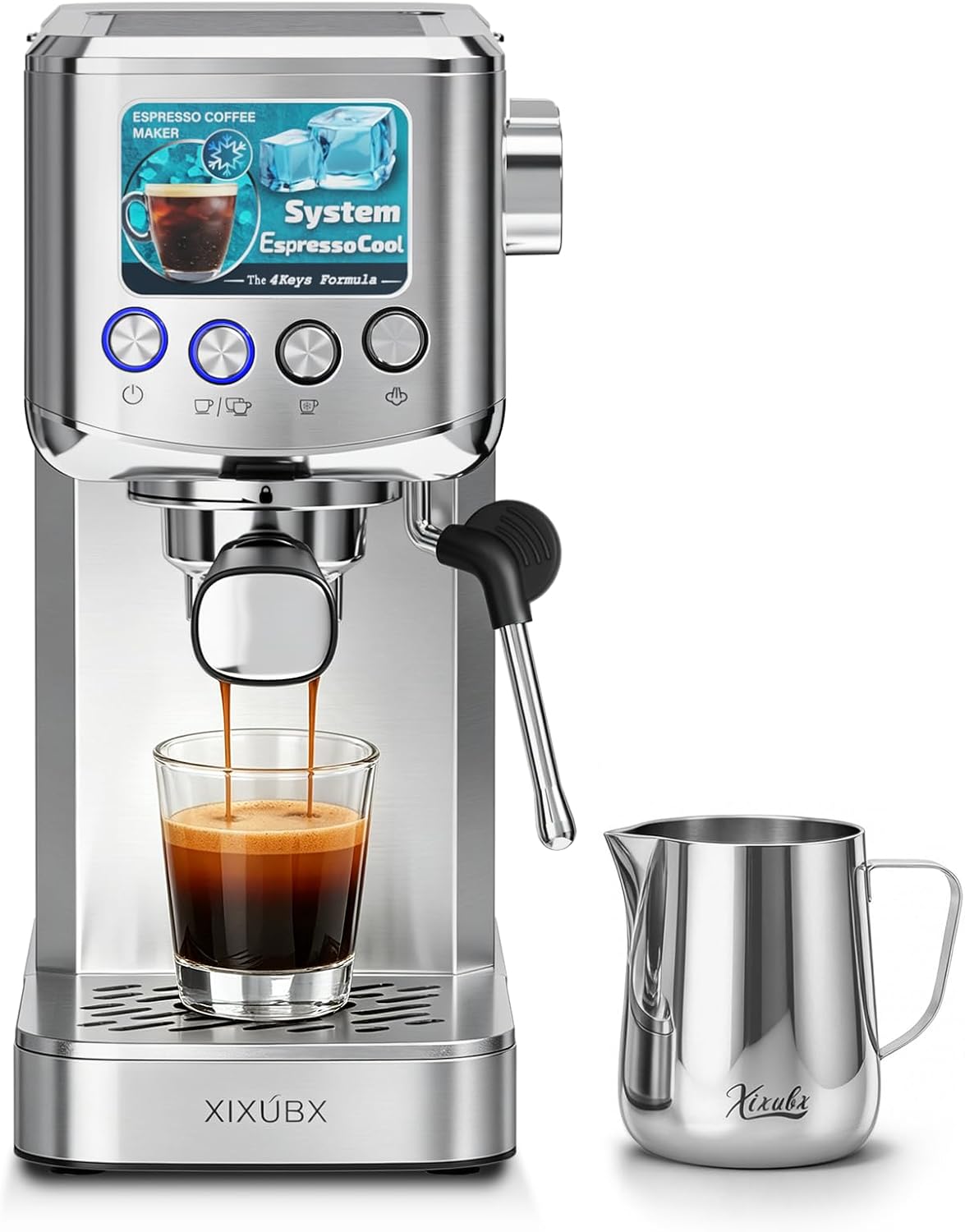
XIXUBX Cold Brew Espresso Machine with Milk Frother, Grey
Lowest barrier to entry here, covers hot espresso and cold coffee in one footprint, frother included
A cold brew mode is not a 14-hour steep, and the frother is a convenience tool, not a steam wand
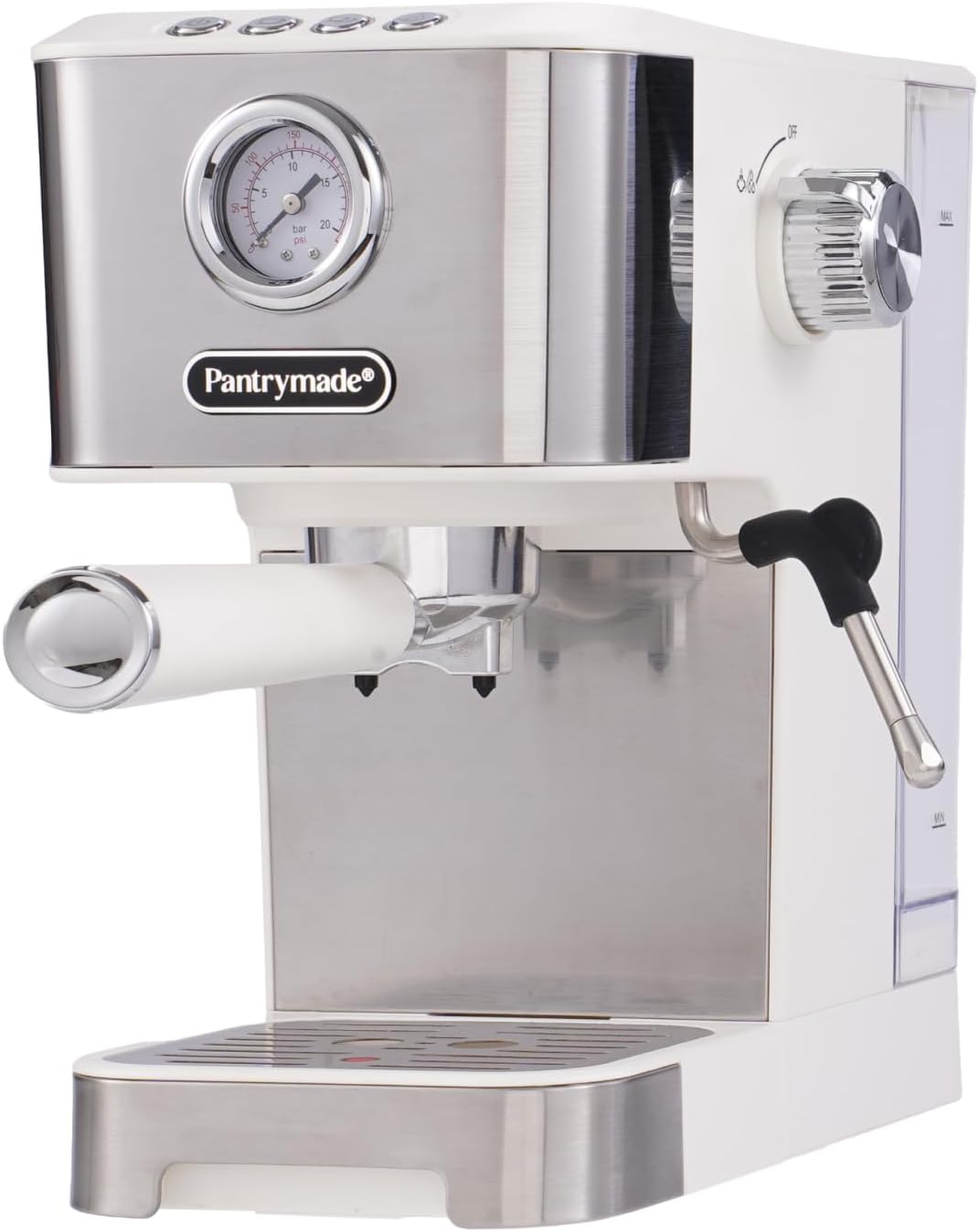
Pantrymade 20 Bar Espresso Machine with Milk Frother and Pressure Gauge
A visible gauge is a genuine diagnostic tool, and it is the only machine here that shows you what the pump is doing
Pump rating is not brew pressure, and you will still want a real grinder before you blame the machine

Jura E8 Chrome 15646
Bean to cup with no puck prep, no scale, no timer, and consistency that survives a house full of guests
You give up the 58mm portafilter, manual control, and the ability to fix a sour shot by adjusting grind
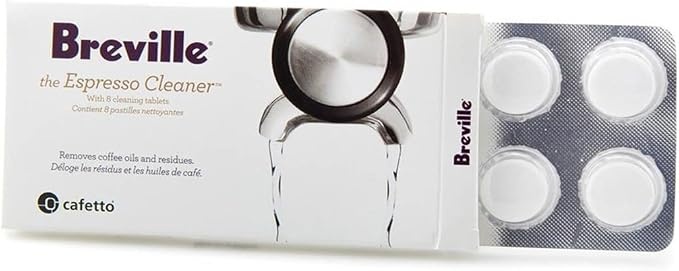
Breville BEC250 Espresso Machine Cleaning Tablets, 8 Pack
The cheapest upgrade on this page, and the one that changes how your coffee tastes after week three
Only useful on machines that support group backflushing, so check your manual before you order
Prices and availability were captured from Amazon Creators API and may change.
How I judge a home espresso machine
Five things matter, and almost none of them are on the box.
Temperature stability is how steady the brew water stays across a shot. This is the difference between consistent espresso and a machine that is sometimes great and sometimes sour for no reason you can find. It is the feature you feel every single shot, and it is the one budget machines cut first.
Pressure at the puck, not at the pump. A machine advertised at 20 bar is quoting the pump, not the coffee. Espresso wants roughly 9 bar at the group. Most budget machines ship running well above that, which makes shots harsh and channels the puck. If a machine has an over-pressure valve you can adjust, that single change can transform the cup.
Portafilter size. The professional standard is 58mm. Anything smaller means a thinner puck, less forgiveness with your grind, and a much smaller world of aftermarket baskets and tampers. It is not a dealbreaker at the entry level, but it is a ceiling.
Dead time is the wait between pulling a shot and steaming milk. On single boiler machines it can run long enough to kill a breakfast workflow. If you drink milk drinks, this matters more than any spec sheet number.
The basket. If the default basket is pressurized, the machine is compensating for stale beans and a bad grind. It is a crutch, and a crutch you will not want to remove until someone tells you it is there.
And above all of it: the grinder is about 70 percent of what ends up in your cup. A $500 machine with a $300 grinder beats a $2,000 machine with a $50 grinder every single morning. Budget for the grinder first, even if it means a cheaper machine.
XIXUBX Cold Brew Espresso Machine with Milk Frother, Grey
This is the entry point, and it is honest about being one. The name promises two jobs: hot espresso and cold coffee, plus a frother so you can build milk drinks without learning to steam.
Read the cold brew claim carefully. True cold brew steeps for 12 to 18 hours at room temperature or in a fridge. A machine with a cold brew mode is usually brewing coffee at a lower temperature over a much shorter window, which gives you a smoother, less acidic iced coffee, not the concentrated syrup you get from a overnight steep. That is still a perfectly good thing to have in July. It is just not the same product, and the marketing rarely says so.
Where this machine wins is footprint and friction. One small unit on the counter, hot coffee in the morning, iced coffee in the afternoon, a frother for the occasional latte. For a first machine, a small apartment, or someone who drinks two cups a day and does not want a hobby, that is a rational set of trade-offs. It is also the machine I would hand to a friend who has never tamped a puck and does not want to start.
Where it loses is everything that makes espresso interesting. Frothers heat and aerate milk, but they do not texture it the way a steam wand does, so you are not pouring latte art out of this. The brew control is limited, the ceiling on grind adjustment is low, and if you catch the bug, you will outgrow it inside a year.
Pantrymade 20 Bar Espresso Machine with Milk Frother and Pressure Gauge
The gauge is the reason this one is on the list.
Most budget machines hide the pump behind a plastic housing and a marketing number. A visible pressure gauge tells you what is actually happening at the group: whether you are choking the basket with too fine a grind, whether the puck is channeling, whether the machine is pushing far past 9 bar and needs an adjustment. It turns a guessing game into feedback, and feedback is how people learn.
The 20 bar figure in the name is a pump rating, not a brew pressure target. Do not read it as twice as good as a 10 bar machine. Read it as a pump with headroom, and use the gauge to see what is reaching the coffee. If the needle sits high and the shot tastes harsh and thin, you have a pressure problem, not a bean problem.
It also carries a milk frother, which puts it in the same convenience category as the XIXUBX, but with better instrumentation. That combination makes it the machine I would recommend to someone who wants to learn without spending real money yet. Pair it with a decent burr grinder, weigh your dose, and you can pull shots that embarrass a cafe that does not care.
The trade-offs are the usual budget ones. Smaller portafilter, less temperature stability across back-to-back shots, and a frother instead of a steam wand. It is a learning machine. It is a very good learning machine for the money, but it is not the machine you keep for a decade.
Jura E8 Chrome 15646
The E8 is a superautomatic, which means the grinder lives inside the machine and the puck is out of your hands entirely. You fill the bean hopper, fill the water tank, press a button, and coffee comes out. Chrome finish, one-touch milk drinks, and a workflow that does not require a scale, a timer, or a tamper.
I will be blunt about who this is for. It is for the household where two people want a good cup at 6:40 a.m. and neither of them wants to think about grind size. It is for the office kitchen. It is for the person who has already decided that puck prep is not a hobby they want. On that brief, nothing else on this list competes. The consistency is the point, and consistency is what a superautomatic buys you.
What you give up is control, and that trade is bigger than the price tag suggests. There is no 58mm portafilter, so no aftermarket baskets, no precision tampers, no bottomless portafilter to diagnose your technique. When a shot runs sour, you cannot simply grind finer and try again. You adjust a setting, hope the internal grinder responds, and drink the result. For someone who has spent years learning to dial in, that is genuinely frustrating.
The other thing you give up is repair simplicity. A semi-automatic machine is a collection of parts you can replace. A superautomatic is a system, and systems need servicing. Budget for that, and use the cleaning program the manufacturer specifies rather than assuming a generic tablet will do the job.
Breville BEC250 Espresso Machine Cleaning Tablets, 8 Pack
Nobody wants to read this section, and it is the most important one.
Coffee leaves oils behind in the group head, the shower screen, and the dispersion block. Those oils go rancid. Rancid oils taste like the smell of an old diner urn, and they will make a great machine and a great grinder produce a cup that is flat and bitter no matter what you do to your grind. I have watched people chase a grind problem for two weeks when the answer was a backflush.
These tablets are for machines that support group backflushing, which covers most semi-automatic machines with a three-way solenoid. You drop a tablet in the blind basket, run the pump in short bursts, let it sit, then flush. An eight pack is roughly a season of monthly cleaning if you are pulling a few shots a day, and more often if you are pulling a lot of milk drinks, because milk residue is worse than coffee oil.
One caution: a superautomatic like the E8 does not backflush this way. It runs its own cleaning cycle with its own consumables. Check your machine's manual before you order, because a tablet you cannot use is not a bargain, it is clutter.
If you take one thing from this entire comparison, take this: cleaning is not maintenance, it is part of the recipe.
The trade-offs, side by side
The XIXUBX and the Pantrymade are the same decision made twice, with the Pantrymade adding a gauge and a higher pump rating. Choose the XIXUBX if cold coffee and the smallest possible footprint matter. Choose the Pantrymade if you want to learn and you want the machine to tell you what it is doing.
The Jura is a different decision entirely. You are not buying better espresso than a well-tuned budget machine with a good grinder. You are buying a workflow that survives a busy morning, a house full of guests, and a partner who has no interest in learning to tamp. That is worth real money to some people and worth nothing to others.
The tablets are the only item here that every machine needs, and the only one that pays for itself in taste.
What I would actually buy
If you are starting from zero and you want to learn, buy the Pantrymade and put the savings into a burr grinder. The gauge will teach you faster than any video, and a good grinder will still be on your counter when you upgrade the machine.
If you drink mostly milk drinks and you have a small counter, the XIXUBX covers the morning and the afternoon without asking you to learn anything.
If nobody in your house wants a workflow, buy the Jura and stop reading reviews. It solves a problem that no semi-automatic solves.
And in all three cases, add the cleaning tablets to the order. The best upgrade in espresso is not a new machine. It is a clean one.