I pulled my first shot on a machine older than I was, and I have spent the twelve years since managing a third-wave bar and setting up espresso stations for friends, family, and two cafes. My garage is a machine graveyard: the Breville that leaked, the Gaggia I modded into something unrecognizable, the ECM that is still going. So when someone asks me for a home espresso machine comparison, I do not start with the machine. I start with the grinder, the counter space, and the drink they actually make on a Tuesday morning.
The short answer: if you want one machine that is still on your counter in five years, the Rancilio Silvia is the pick. If you are not ready to spend real money on a grinder, buy the KitchenTour scale first and spend three months learning what a 0.1 gram change does to your shot. The two 20 bar machines in this comparison are fine first steps, and I will tell you exactly where they stop being enough.
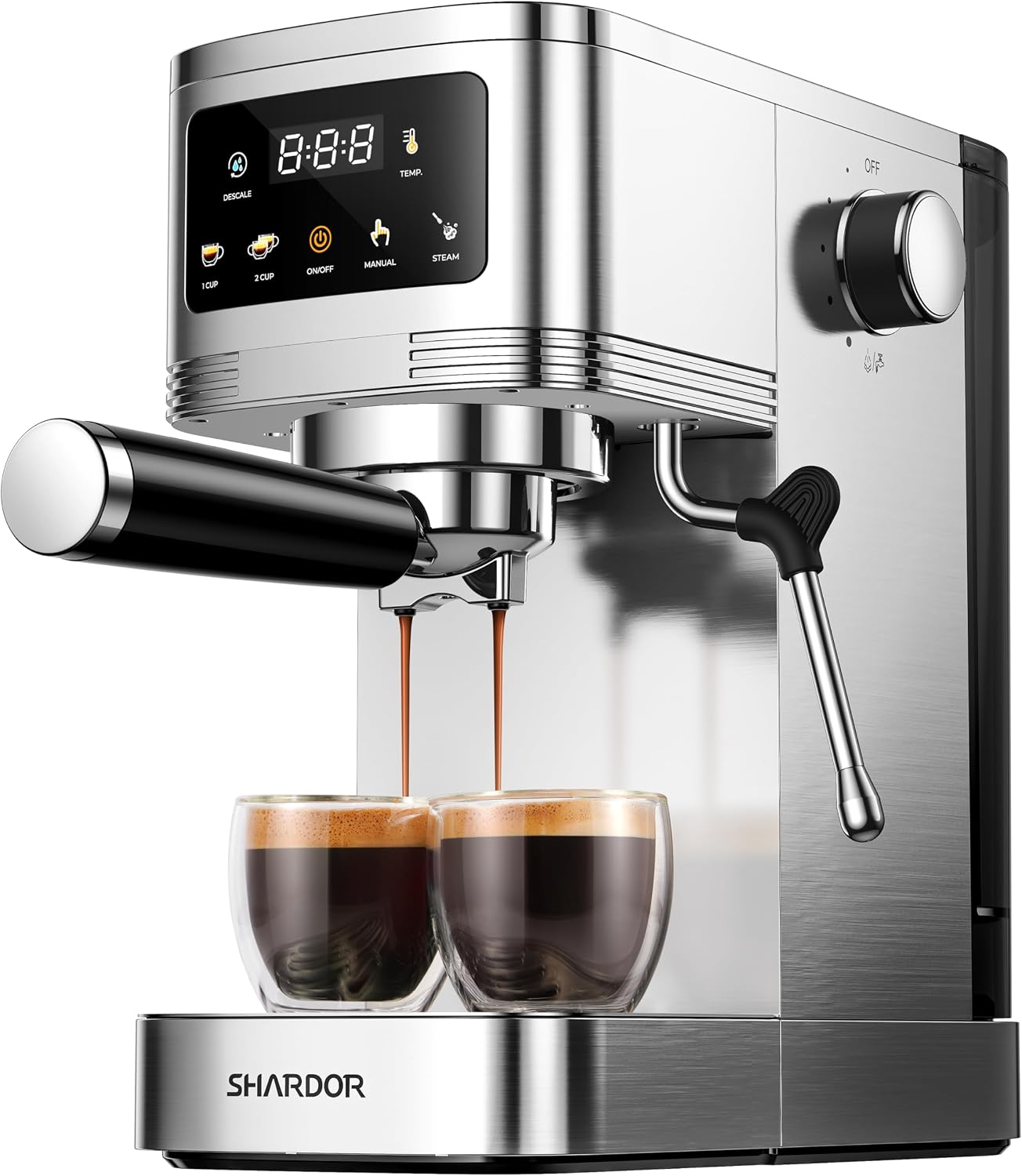
SHARDOR Espresso Machine 20 Bar
Touchscreen, adjustable brew temperature, and a milk frother at the entry price point
A 20 bar number is marketing until the over-pressure valve is set to 9 bar, and there is no professional-size portafilter here

KitchenTour Coffee Scale with Timer
0.1 gram precision, a built-in timer, and batteries in the box, the cheapest real improvement to any setup
It is a scale, so it cannot rescue stale beans or a grinder that will not go fine enough
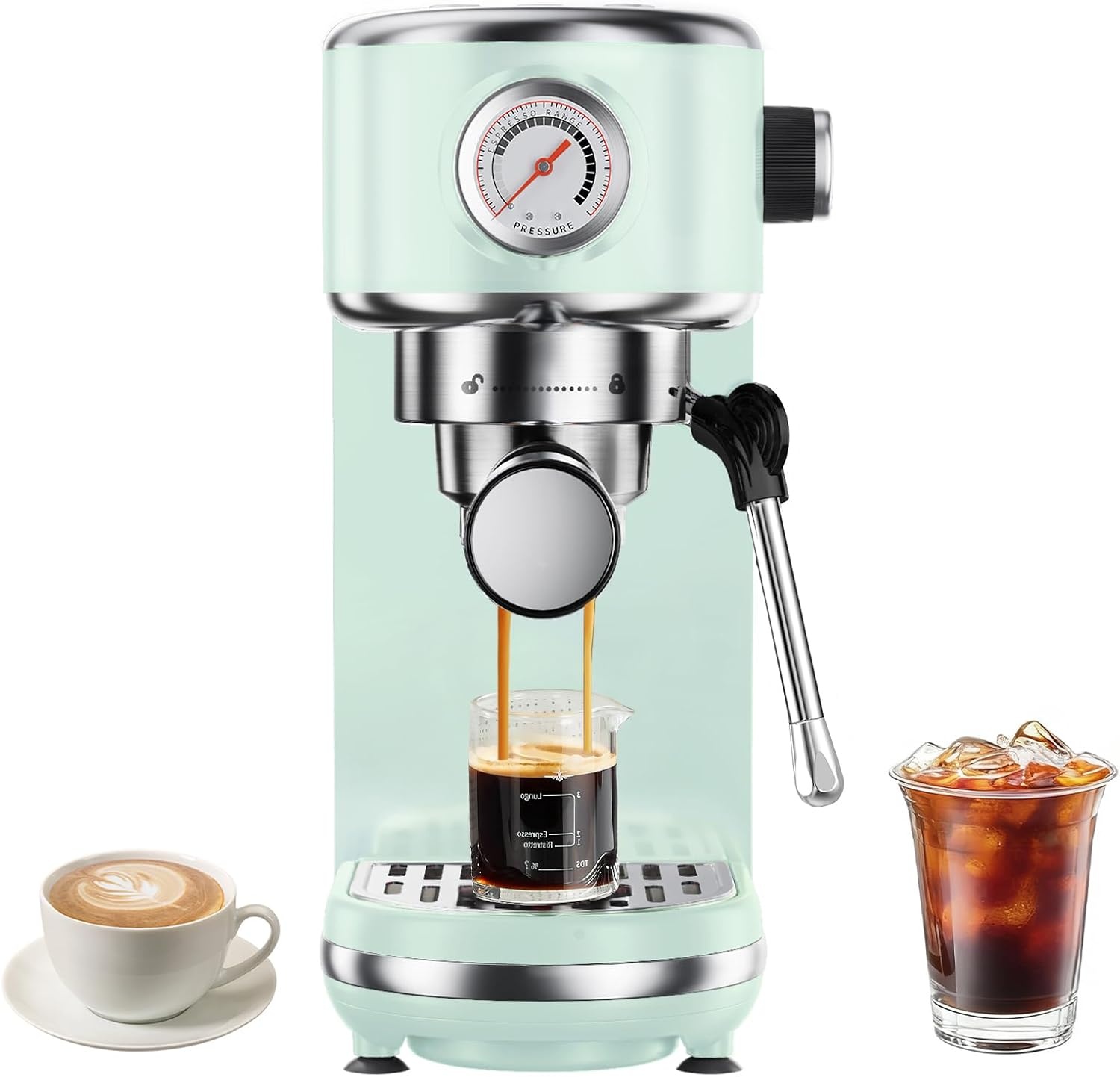
atatix Espresso Machine with Milk Frother
20 bar pressure and a milk frother in a compact stainless package, a small step up in presence
Same class of machine as the SHARDOR, so the compromises on puck size and steam are the same
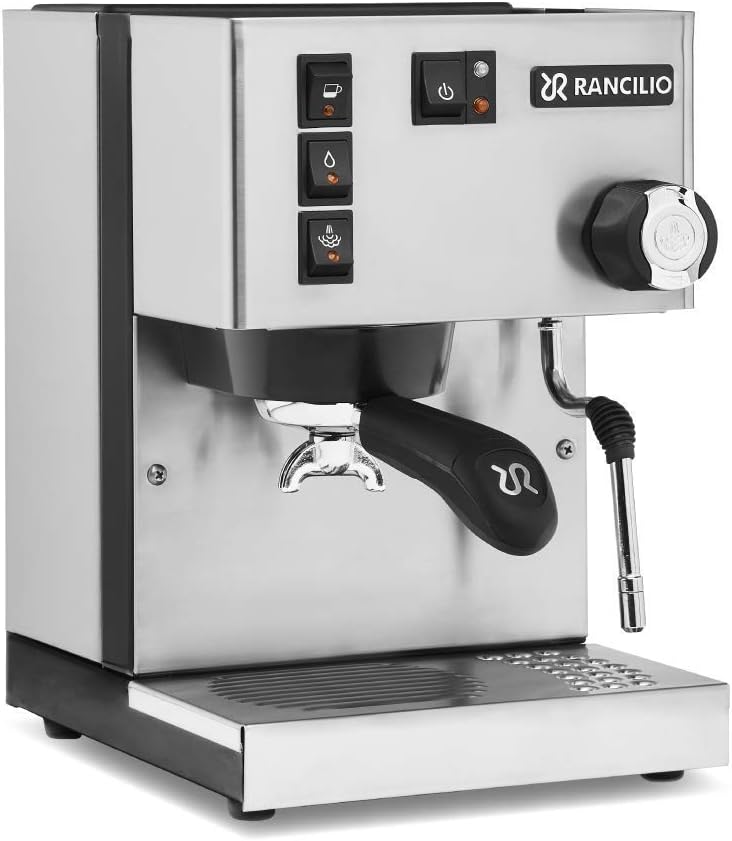
Rancilio Silvia Espresso Machine
Stainless steel body, commercial-style group, and parts and mods available forever
Single boiler means dead time between brew and steam, and it demands a grinder that costs real money
Prices and availability were captured from Amazon Creators API and may change.
Why a scale is sitting in an espresso machine comparison
Fair question. A coffee scale is not a machine, and I am not padding the list. In twelve years of setting up other people's kitchens, the single most common problem I see is not a weak machine, it is a barista who has no idea how much coffee is in the basket. Eighteen grams in, thirty-six grams out, in about thirty seconds, is the baseline every other decision hangs off. You cannot hit that by eye, and you cannot hit it with a kitchen scale that rounds to the nearest gram.
The KitchenTour scale does the two jobs that matter at the same time: it weighs to 0.1 gram and it counts the shot for you, so you are not holding a phone in one hand and a portafilter in the other. It runs on batteries that come in the box, which sounds trivial until you have a scale die mid-shot. If you already own a machine, budget or serious, this is the first thing I would add. Visit on Amazon → and compare it to whatever you are using now. If your current scale rounds to whole grams, the upgrade pays for itself in wasted beans inside a month.
The budget 20 bar machines: what the SHARDOR and atatix actually give you
Both of these machines lead with the same number: 20 bar. Understand what that number is. Espresso extracts at roughly 9 bar at the puck. Anything above that gets bled off by an over-pressure valve, and on a budget machine the valve is often set high, which makes the shot harsher and less forgiving. The 20 bar figure describes what the pump can do, not what the coffee wants. It is not a lie, exactly, but it is not the spec you should shop on.
What the SHARDOR genuinely offers is convenience: a touchscreen, adjustable brew temperature, a milk frother, and a stainless steel finish. Visit on Amazon → and you are looking at a machine that gets a beginner from zero to drinkable cappuccino without a class. The adjustable temperature is the part I care about most, because temperature stability is the feature you feel in every single shot, not just the first one. If you can nudge the brew temperature and you are weighing your dose, you are already ahead of most people who own a machine three times the price.
The atatix is a similar proposition: 20 bar, a milk frother, a compact stainless body, and a design that will not embarrass you on the counter. Visit on Amazon → if you want the same category of machine with a slightly different look and feel. Between the two, I would pick on price and counter fit rather than on specs, because the specs are close enough that the difference will not show up in the cup.
Where both of them stop: the portafilter. Once you have used a real 58mm basket, going back to a smaller one feels like brewing through a thimble. A thinner puck means less forgiveness, more channeling, and a narrower window between sour and bitter. Neither of these machines is built to fix that, and no amount of technique will. They are also frothers, not steam wands, so the milk texture tops out below what you get from a proper wand. If you drink lattes and you are not chasing latte art, that is fine. If you are, you will outgrow these in a year.
The Rancilio Silvia: the machine you keep
The Silvia is the one in this comparison that people keep. Stainless steel body, commercial-style group, and a parts and modification ecosystem that has been alive for decades. My standing recommendation to anyone moving past the beginner stage is the Silvia, because it is the best first serious machine you can buy: bombproof, repairable, and honest about what it is. Visit on Amazon → and you will see it is not a casual purchase, which is exactly the point.
The trade-off is the single boiler. Brew and steam share one boiler, so you pull your shot, then wait for the machine to climb to steaming temperature, then steam. That wait is the dead time, and it is where workflow goes to die when you are making four drinks for guests. There is a temperature surfing ritual that experienced owners learn, and it works, but you should know going in that you are signing up for a rhythm, not a push-button routine.
The second cost is the grinder. A Silvia with a $50 blade grinder makes worse coffee than the SHARDOR with a decent burr grinder, and I will say that to anyone who asks. Budget for the grinder first. If that means buying the budget machine now and the Silvia in two years, that is the smarter order of operations, and I will defend it all day.
How I judge a machine before I recommend it
Four questions, in order.
What is the real boiler setup, not the marketing name for it? A single boiler, a thermoblock, and a dual boiler are three different workflows wearing similar badges.
Will the grinder I own actually grind fine enough for this basket? If the answer is no, the machine purchase is premature, no matter how good the machine is.
How long is the dead time between brewing and steaming? This is the number nobody prints, and it decides whether you enjoy making two drinks or dread it.
Would I still want to use this in month three? That is the only review that matters. First-week enthusiasm is not evidence.
Trade-offs worth naming out loud
Skip anything that defaults to a pressurized basket. It is a crutch that hides stale beans and a bad grind, and it teaches you nothing. If a machine ships with one, treat it as a temporary aid and move to the standard basket as soon as your grinder allows.
Counter space is a real constraint, and the budget machines win there. The Silvia is a substantial piece of steel and it wants room to breathe.
Temperature stability beats pressure profiling every time. Pressure profiling is a feature you will use twice out of curiosity. A machine that holds its brew temperature is a feature you feel on every shot, forever.
And buy for the workflow you will actually keep, not the one you imagine on Sunday mornings. If your week is two rushed flat whites before work, a machine with a long dead time will end up collecting dust, no matter how good the shots are.
Three honest buying paths
If you are starting from nothing and the budget is tight, buy the KitchenTour scale and the SHARDOR. Learn to weigh your dose and your yield, learn what grind adjustment does, and accept that your milk texture has a ceiling. Visit on Amazon → for the machine and the scale together, and you have a setup that will make better coffee than most people's first year.
If you want a little more presence on the counter and the same learning curve, the atatix is the alternative, and I would not argue with you either way.
If you are ready to commit to the hobby, buy the Silvia and put the rest of your budget into a burr grinder and fresh beans. Visit on Amazon → on it, then price a grinder, then decide. If the grinder number makes you flinch, you are not ready, and that is not a judgment, it is just the order I would do it in.
What I would tell a friend standing in my kitchen
Nobody needs a commercial machine to make coffee better than the cafe down the street. You need a scale that reads to 0.1 gram, a grinder that can choke a machine, and a machine you will still enjoy using after month three. The budget 20 bar machines in this comparison get you the habit. The Silvia gets you the craft. The scale gets you both, and it is the cheapest thing on this list.
Start with the scale. Add the machine you can afford today. Upgrade the grinder before you upgrade anything else, and when you finally buy the serious machine, you will already know how to use it.