I started behind a bar in 2013 and spent the next twelve years pulling shots for other people. Somewhere past the 40,000 mark I stopped counting and started keeping notes instead. What those notes keep saying is that espresso grinder and machine pairing decides the cup, not the badge on the front of the machine. Most people do it backwards. They spend the whole budget on the machine, plug in a $50 grinder, and then spend a year wondering why the shots taste thin and sour no matter what they try.
I own a machine graveyard in my garage. There is a Breville that leaked, a Gaggia I modded until it was unrecognizable, and an ECM that is still going. The lesson from all of them is the same: the grinder is roughly 70% of the shot, and the machine mostly decides how pleasant your morning workflow is. That is the frame for everything below.
The short answer: buy the Baratza Encore ESP before you buy a machine, and only then decide how much machine you actually need. The four products here are two grinders and two machines, and together they map the two honest paths into home espresso. You build the grinder first and grow into a machine, or you buy a push-button workflow that does the grinding for you and accept the ceiling that comes with it.
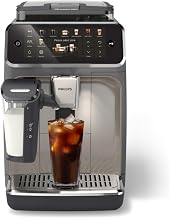
PHILIPS 5500 Series Fully Automatic Espresso Machine, LatteGo Milk System
One-touch drinks, built-in grinder, and a milk system that cleans up faster than any steam wand
You are renting someone else's idea of a good shot, and the ceiling arrives early
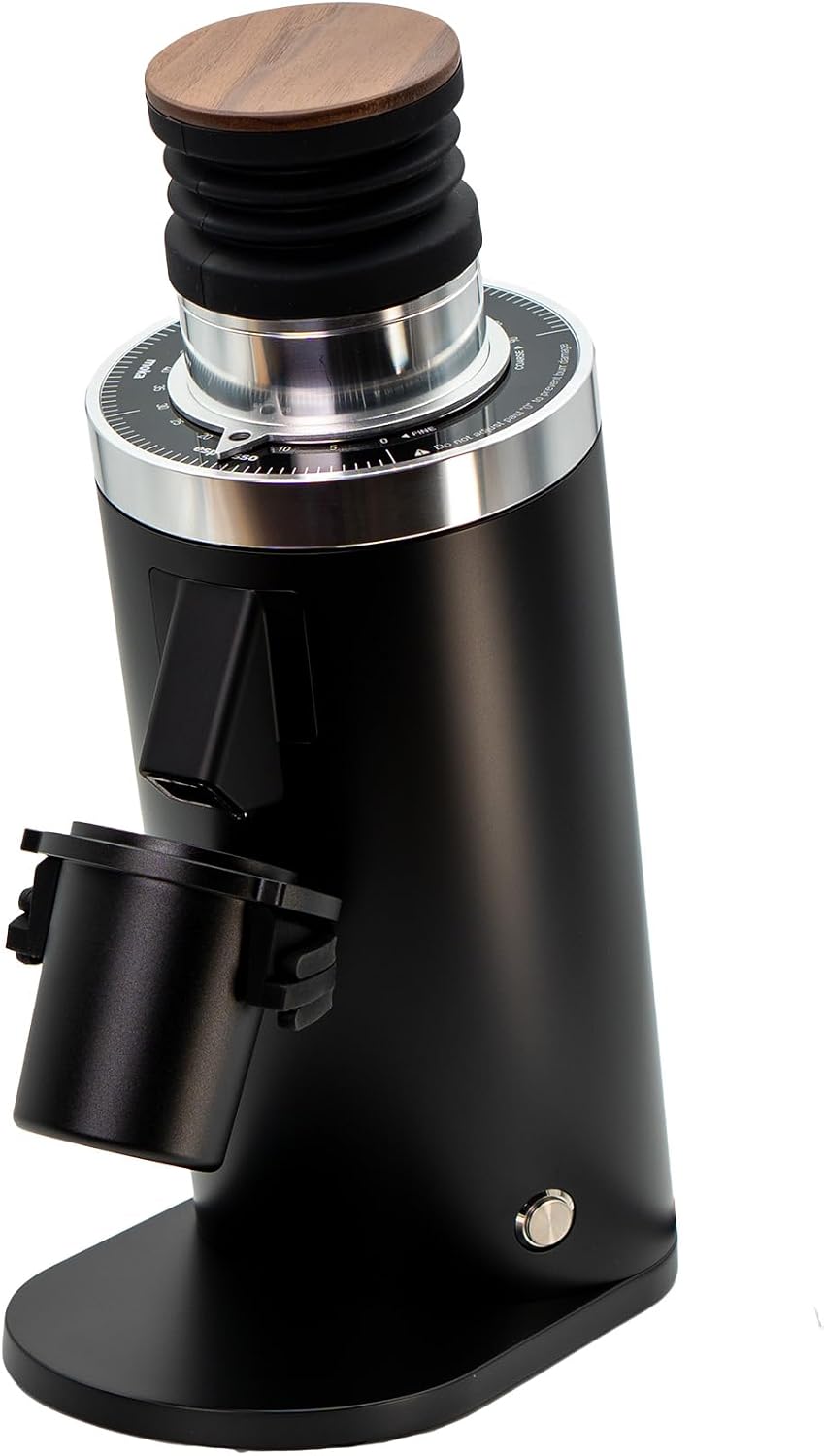
MiiCoffee DF64 II Single Dosing Coffee Grinder (Black)
Single dosing, stepless adjustment, and a flat-burr platform built for people who chase clarity
The workflow asks more of you every single morning, and it is the priciest way to start
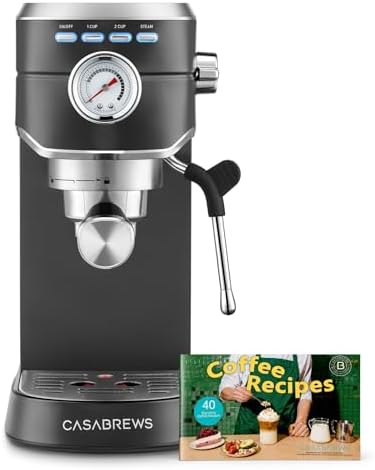
CASABREWS CM5418 Compact Espresso Machine with Milk Frothing Steam Wand
Small footprint, a real steam wand, and the lowest entry point of the two machines here
Single boiler reality, and it rewards a grinder you may not own yet
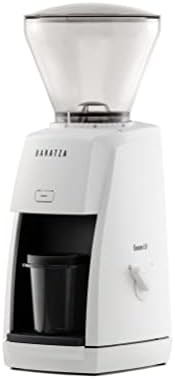
Baratza Encore ESP Coffee Grinder ZCG495BLK, Black
The most forgiving first grinder, with an adjustment range that actually reaches espresso
It is not the last grinder you will ever want if you fall for light roasts
Prices and availability were captured from Amazon Creators API and may change.
How I judged these four
I care about four things, in this order. Can it grind fine enough and adjust finely enough to dial in a shot? Does the workflow survive month three, when the novelty is gone and you just want coffee before work? Does it hold temperature and pressure steadily enough that two shots in a row taste like the same coffee? And can you fix it or improve it, or is it a sealed box that becomes landfill?
I will be straight with you about one boundary: I have not pulled thirty shots on every unit in this list, and where I am reasoning from the design rather than from my own counter time, I say so. What I will not do is tell you a machine is great because the marketing copy says "barista-grade." I have opened enough of these to know what that phrase usually means.
MiiCoffee DF64 II Single Dosing Coffee Grinder (Black)
This is the grinder for the person who already knows they are going to weigh beans, single dose, and change coffees every few days. The DF64 II is built around a single-dose workflow and stepless adjustment, which means you are not hunting for the right numbered click. You turn the collar, you taste, you turn it again. That freedom is the whole point, and it is also the whole cost: single dosing means you weigh every dose, every time, and you manage what stays in the chute.
For espresso, the appeal is control. Stepless adjustment lets you make the tiny moves that separate a gusher from a 30-second shot, and a single-dose routine means a light Ethiopian one morning does not have to fight the ghost of yesterday's dark roast. That is not a small thing. Stale grounds left in a hopper are the quiet reason a lot of home setups taste muddled.
The honest downsides: this is more grinder than a beginner needs, it costs more than the Encore ESP, and it asks for a routine. If you are not going to weigh your beans, do not buy it, because you will pay for capability you never use. Check current Amazon price: Visit on Amazon →.
Baratza Encore ESP Coffee Grinder ZCG495BLK, Black
If I could put one grinder on every beginner's counter, it would be this one. The ESP version exists because the standard Encore was never quite fine enough or adjustable enough for espresso, and the fix was to give the collar an espresso-focused range where small turns matter. The result is a hopper-fed grinder that is easy to live with, easy to adjust, and backed by a brand with a long reputation for selling parts instead of replacement units.
This is the grinder that makes a cheap machine drinkable. A modest single boiler with a decent basket and a well-dialed Encore ESP will beat an expensive machine fed by a blade grinder every single time. That is not a slogan, it is the most repeatable result in home espresso.
What it will not do: give you the last word in clarity on very light roasts, or the flat-burr separation that the DF64 II chases. If you get serious about filter roasts and single origins, you will eventually want more. But it is the correct first purchase, and it stays useful as a backup or a second grinder for decaf. Check current Amazon price: Visit on Amazon →.
CASABREWS CM5418 Compact Espresso Machine with Milk Frothing Steam Wand
This is the manual-side entry point of the pair. It is compact, which matters in a Seattle apartment kitchen where the counter is already crowded, and it has a steam wand rather than a frothing gadget, which means you can actually texture milk instead of just heating it into foam. That distinction is where most cheap machines fall apart, and it is the reason I would rather see someone buy this than a machine with a push-button "cappuccino" setting.
The compromises are the usual ones for the category. Budget machines in this shape are typically built around smaller baskets and smaller boilers, and smaller boilers mean dead time: you brew, then you wait for the steam to build before you can texture milk. That wait is where the workflow dies for people who make two milk drinks every morning. Ask yourself honestly how many milk drinks you make back to back.
It also assumes you have a real grinder. Pair this machine with a pressurized basket and pre-ground coffee and you will get something drinkable but flat, and you will learn nothing. Pair it with the Encore ESP and a non-pressurized basket and you have a genuine learning platform for a very reasonable total. Check current Amazon price: Visit on Amazon →.
PHILIPS 5500 Series Fully Automatic Espresso Machine, LatteGo Milk System
This is the other philosophy entirely. A fully automatic machine grinds, doses, tamps, brews, and handles milk in one button press, and the LatteGo system is the part that earns its reputation: the milk carafe is a small number of parts with no hidden tubes, which is the difference between a machine you clean and a machine you avoid. Anyone who has scrubbed dried milk out of a wand knows how much that matters.
The trade-off is authorship. You are not dialing in a shot, you are choosing a strength and a volume and trusting the machine's programming. You can adjust the grinder and the dose, but you are working inside a smaller window than a manual setup allows, and when a shot runs fast or slow you have fewer levers to pull. For a household where one person wants a flat white at 6:40 a.m. and nobody wants to think about puck prep, that is a fair trade. For someone who wants to understand extraction, it is a wall.
The other thing to weigh is ownership cost over time. Automatic machines have more parts that can need attention, and they reward consistent water and consistent cleaning. If you are not going to descale on schedule, buy the simpler machine. Check current Amazon price: Visit on Amazon →.
Pairing the four: what the trade-offs actually look like
Here is how I would actually split a budget, because this is the decision that matters more than any spec sheet.
If you have around a thousand dollars total, buy the Encore ESP and the CASABREWS CM5418 and keep the difference for a scale, a decent tamper, and fresh beans. That is a complete manual setup with a real steam wand, and it will teach you more in three months than a fully automatic will teach you in three years. If your mornings are chaotic and milk drinks are the point, buy the PHILIPS 5500 Series and accept that the grinder question is answered for you. If you already know you love single origins and you want to taste the difference between two washed Ethiopians, the DF64 II is the grinder that will show it to you, and you pair it with whichever machine your counter and patience allow.
The one combination I would avoid is a premium machine with a weak grinder. A $2,000 machine fed by a $50 grinder makes worse coffee than a $500 machine fed by a $300 grinder. Every time. I have watched friends learn this the expensive way, and it is the single most common mistake in home espresso.
The second combination to avoid is a compact single boiler plus a household that makes four milk drinks in a row every morning. The machine is not bad. The workflow is wrong for the house.
The pressurized basket problem
One more thing, because it shows up constantly with compact machines. Many budget machines ship with a pressurized basket, sometimes as the default, sometimes as an option. It works by creating artificial resistance so that coarse, stale, or pre-ground coffee still produces something that looks like espresso. It is a crutch, and it hides exactly the variables you need to learn to control.
If your machine comes with both, use the non-pressurized basket and a grinder that can go fine enough. If it only comes with pressurized, treat it as a temporary measure while you save for a grinder. A machine that can only make good coffee with a pressurized basket is not making good coffee. It is making brown liquid with crema on top, and crema is decoration.
The order I would buy them in
Grinder first, always. Start with the Baratza Encore ESP. It is the least exciting purchase in this article and the one that changes the most cups. It gives you a dial you can actually move in useful increments, it does not punish you for leaving beans in a hopper, and it stays valuable if you upgrade the machine later.
Then the machine, chosen by workflow. Small counter and a willingness to learn: the CASABREWS CM5418. Milk drinks on autopilot and no interest in puck prep: the PHILIPS 5500 Series.
Then, if and only if you find yourself wishing you could taste the difference between two similar coffees, the MiiCoffee DF64 II. It is a wonderful grinder and a terrible first purchase for someone who has not yet decided how deep they want to go. Buy it when you know why you want it.
Final word
The pattern I keep seeing is that people buy the machine they imagine using on a relaxed Sunday and then live with it on a rushed Tuesday. Buy for the Tuesday. Buy the grinder you will actually use every morning, pair it with the machine whose workflow matches your real routine, and skip anything that promises results you cannot adjust your way into. That is the whole game, and it is a much cheaper game than the one the marketing departments are selling.