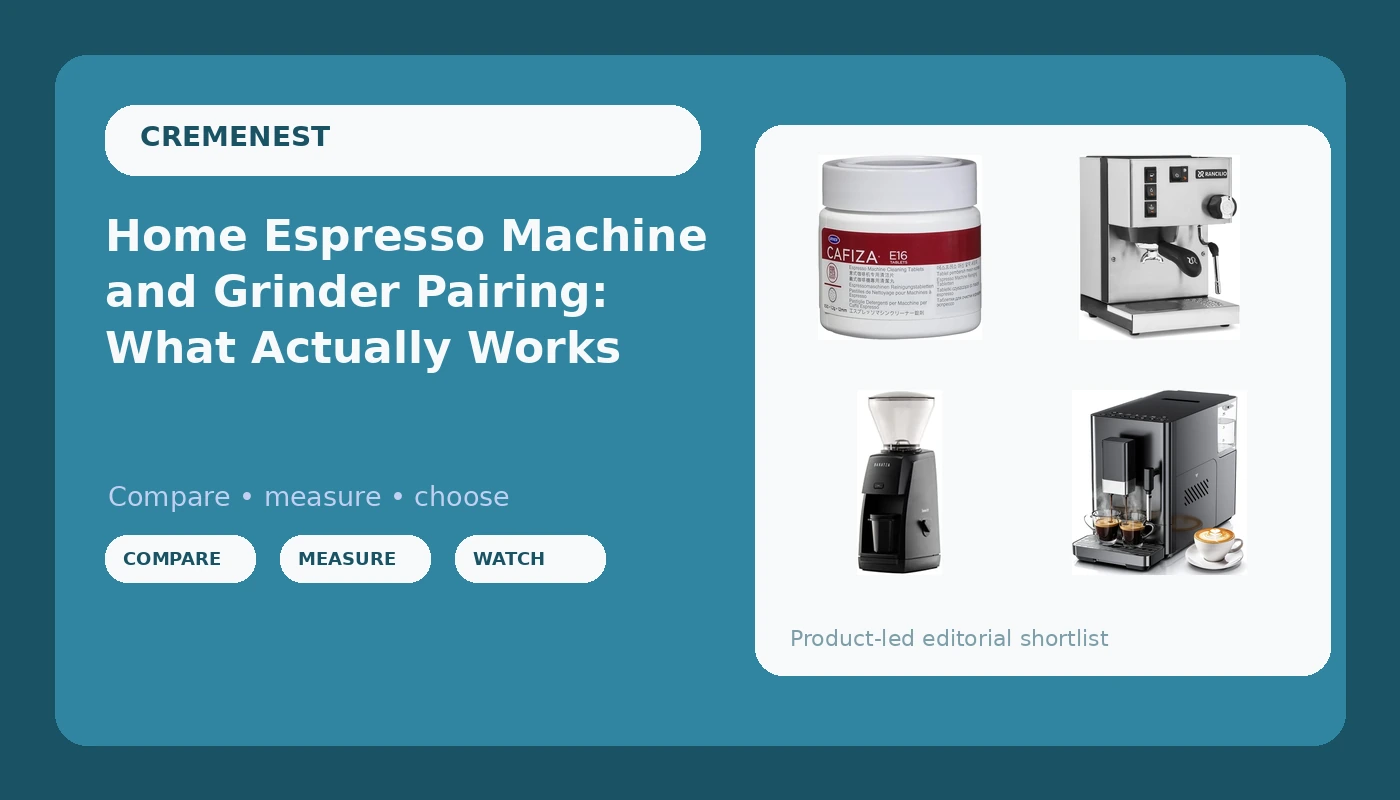
I have pulled more than 40,000 shots in twelve years behind a bar, and the question I still get at every dinner party is the same one: which machine should I buy? After helping friends, family, and two cafes build stations, my answer has not changed. Home espresso machine and grinder pairing is the decision. Not the machine alone, not the grinder alone, but the two of them sitting on the same counter. My Seattle garage holds the evidence: a Breville that leaked, a Gaggia I modded into something unrecognizable, an ECM that is still pulling every morning. Every one of them taught me the same lesson. The grinder sets the ceiling of your shot, and the machine decides how pleasant the climb is.
The best home espresso machine and grinder pairing for most people is the Rancilio Silvia with the Baratza Encore ESP, because it puts a professional 58mm basket and a genuinely espresso-capable grinder on your counter without asking you to buy a dual boiler you do not need yet. If you want one box, one button, and no homework, the Kismile 20 Bar automatic is the honest alternative. Whichever way you go, the Urnex Cafiza tablets are the least glamorous and most important line item in the whole cart.
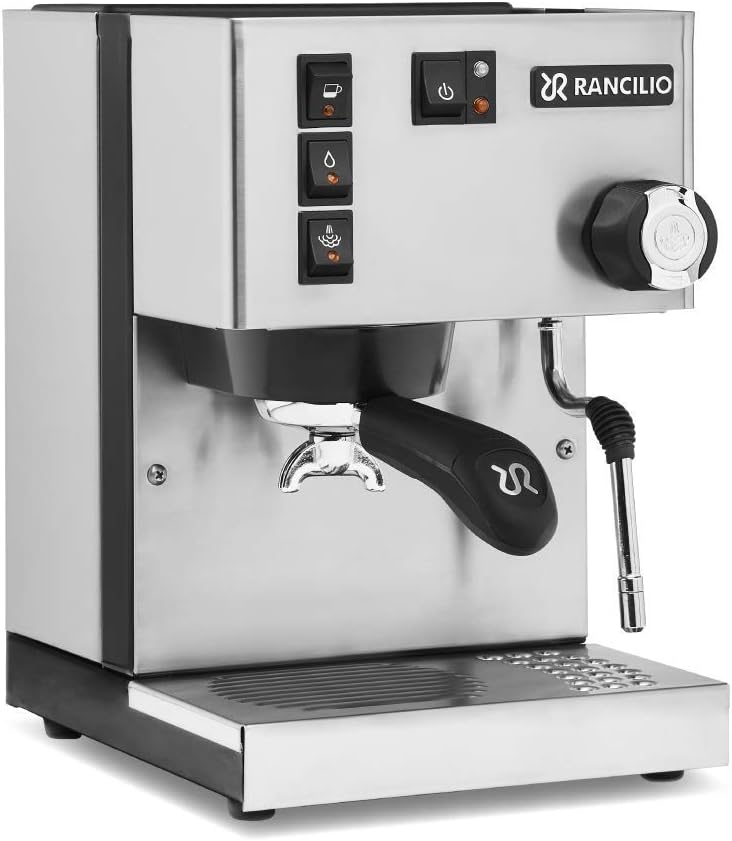
Rancilio Silvia Espresso Machine, Stainless Steel
Commercial 58mm basket, stainless body, parts and mods available for years
Single boiler means real dead time between brew and steam
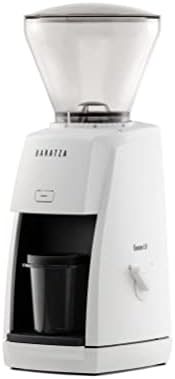
Baratza Encore ESP Coffee Grinder ZCG495BLK, Black
Espresso-tuned adjustment and honest conical burrs, the upgrade that changes every shot
It is a grinder, so it fixes nothing if your basket is pressurized
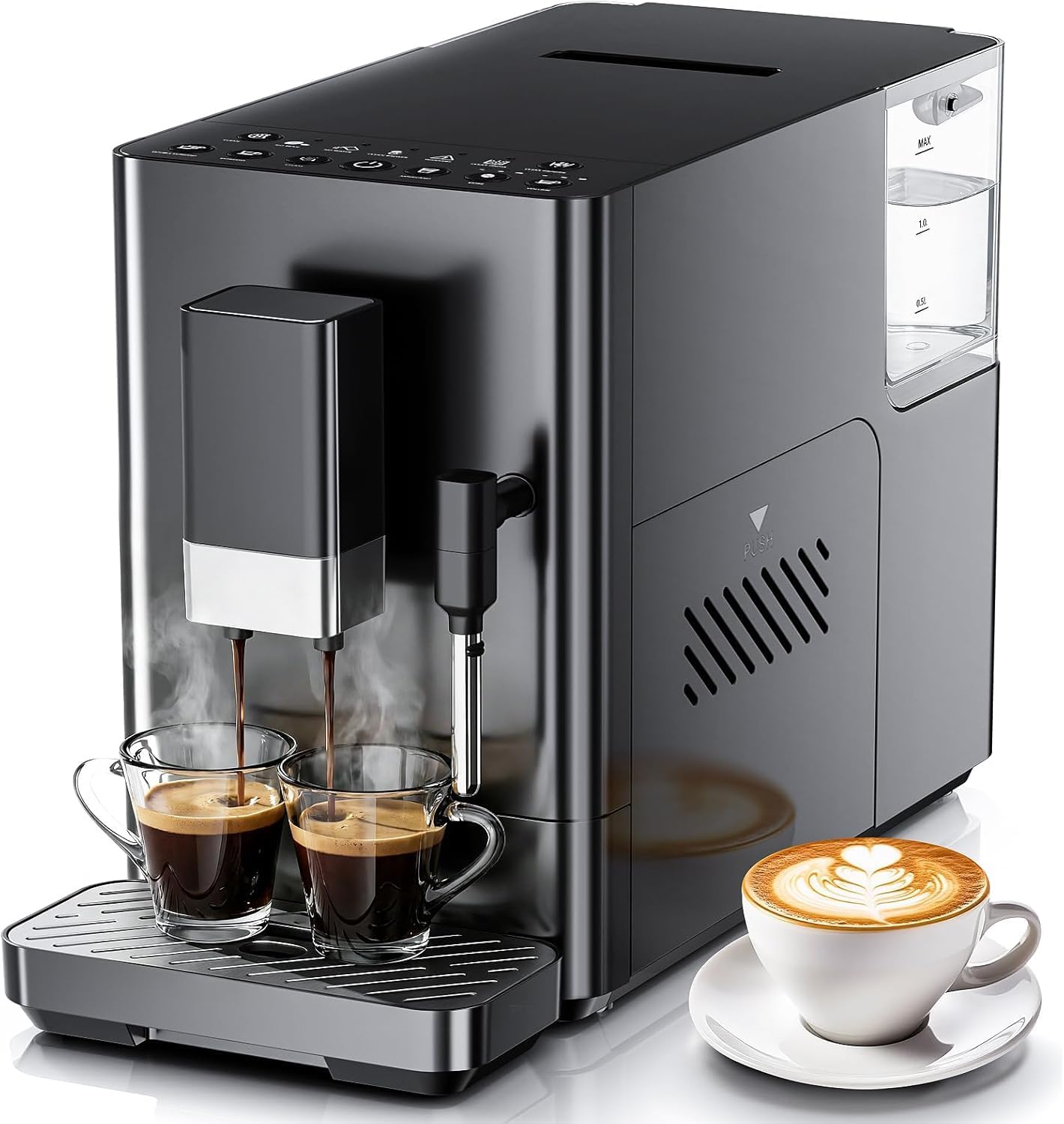
Kismile 20 Bar Automatic Espresso Machine, Brew and Grind Coffee Maker
Grinds and brews in one box, gentle learning curve, small footprint
The 20 bar figure is marketing, and the built-in grinder caps how far you can go
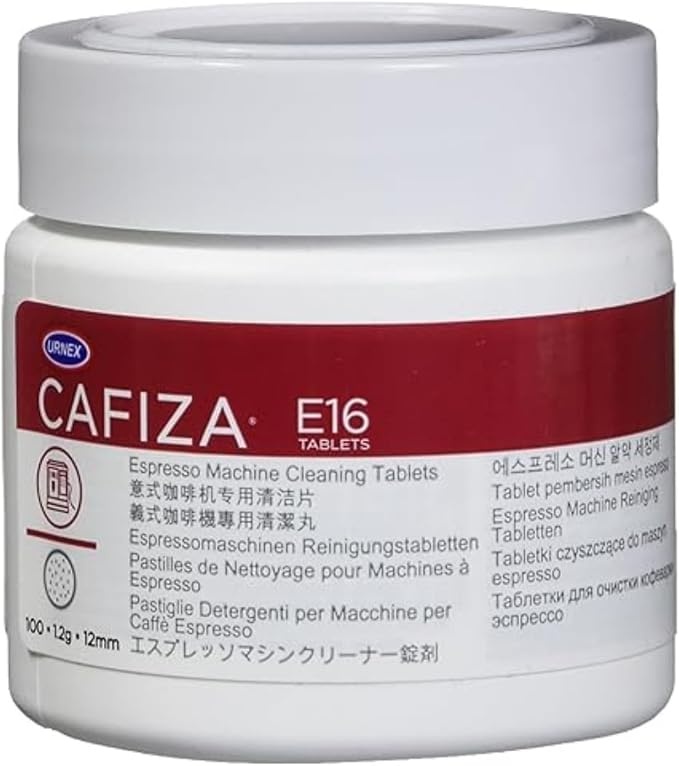
Urnex Cafiza Espresso Machine Cleaning Tablets - 100 Count - Professional Espresso Machine Cleaner Barista Use
Keeps the group head, screen, and valves clean, which is most of what "my machine died" actually means
It is maintenance, not an upgrade, and it will not rescue a bad grind
Prices and availability were captured from Amazon Creators API and may change.
How I judge a pairing
Four questions, every time. First, what is the real boiler setup, not the marketing name for it? A single boiler with a thermostat behaves differently from a heat exchanger, and the difference shows up in your second drink, not your first. Second, if there is a grinder built in, does it actually grind fine enough for a real espresso basket, and does it adjust in small enough steps to chase a shot? Third, how long is the dead time between pulling a shot and steaming milk? On a single boiler that wait is the whole workflow, and it is where most people quietly give up on milk drinks. Fourth, would I still enjoy using this in month three, when the novelty is gone and it is 6:40 on a Tuesday morning?
I also look at the basket. A real 58mm portafilter gives you a deeper puck, more forgiveness, and access to every tamper and basket on the market. Smaller baskets and pressurized baskets are not crimes, but they hide stale beans and sloppy grind, and they cap how good your coffee can get.
The Rancilio Silvia: the first serious machine
The Silvia is the machine I point people toward when they tell me they want to learn. It is a single boiler, stainless steel machine with a commercial 58mm portafilter, and it has been on counters long enough that parts, gaskets, and modifications are not a scavenger hunt. That matters more than any spec sheet. A machine you can keep running for a decade is cheaper than a machine you replace every three years.
The trade-off is workflow. Single boiler means you brew, then you wait for the boiler to come up to steam temperature, then you steam. If you drink espresso only, that dead time never touches you. If you make two lattes every morning, you will feel it, and you will learn to pull your shots first and steam everything at the end.
The other thing to understand is that the Silvia rewards a good grinder and punishes a bad one. It has no pressurized basket to hide behind and no automatic dosing to save you. That is the point. It is also why the next section matters more than this one.
The Baratza Encore ESP: where 70% of your shot lives
If I could only move one item from this list onto your counter, it would be the grinder, not the machine. The Encore ESP is the espresso-focused version of a grinder that has been a default recommendation for years, with the adjustment range pushed toward the fine end so you can actually dial in a shot instead of choosing between gush and choke.
Here is what that looks like in practice. With a blade grinder or a coarse drip grinder, you change one variable and the shot swings wildly. You get sour, then bitter, then sour again, and you blame the machine. With a grinder that adjusts in small steps, you move one notch, taste, move another notch, and taste again. That feedback loop is the entire hobby. Everything else is plumbing.
The honest limitation: the Encore ESP is a home grinder, not a cafe grinder. If you are pulling six doubles a day for a family of espresso drinkers, you will eventually want something with bigger burrs. For one or two people, it is the difference between guessing and dialing in.
The Kismile 20 Bar: the one box path
Not everyone wants a hobby. Some people want a machine that grinds, doses, and brews while they are still waking up, and the Kismile automatic is built for exactly that. It is a brew and grind machine, so there is no separate grinder to buy, no dosing funnel, no scale ritual at 6 a.m. For a small kitchen, a shared apartment, or a household where nobody wants to learn puck prep, that convenience is real and worth paying for.
Two things to go in with your eyes open. The 20 bar figure on the box is marketing, not a target. Espresso extracts around 9 bar, and pressure above that mostly adds channeling and bitterness; the number sells machines, it does not make better coffee. And a built-in grinder is a compromise by design. It will be fine enough for the machine it ships with, but it will not give you the adjustment range of a standalone espresso grinder, so your ceiling is lower.
If your goal is a better cup than the chain down the street without turning coffee into a project, this is the sensible pick. If your goal is to learn, buy the Silvia and the Encore ESP instead.
The Urnex Cafiza tablets: the part nobody photographs
Every "my machine died" story I have heard in twelve years has the same middle chapter, and it is not a broken pump. It is old coffee oil. Oils from roasted beans build up in the group head, the screen, the valves, and the lines, and eventually the machine tastes like a burnt pan no matter what beans you buy.
Cafiza is the cleaner the cafes use, sold in a 100 count tub of tablets that lasts a home user a very long time. You backflush with it on a schedule, you soak your screens and baskets in it, and your machine keeps tasting like coffee. It is also the thing that protects the other three purchases in this article. A machine you clean is a machine you keep.
The limitation is obvious: it is maintenance, not an upgrade. No tablet will fix a grind that is too coarse, and no cleaning routine will turn a pressurized basket into a real one. But skip it and you will spend money on a new machine long before you needed to.
Three pairings, three kitchens
The learner's setup: Rancilio Silvia plus Baratza Encore ESP. This is the combination I would build for anyone who wants to understand espresso rather than just drink it. A real 58mm basket, a grinder that can dial in, and a machine with parts availability for the long haul. Budget for a scale and a tamper and you are done.
The one box setup: Kismile 20 Bar automatic. One plug, one hopper, one button. Pair it with Cafiza and a decent local roast and you will beat most of what is sold within walking distance of your apartment. You give up the top end of quality and the fun of dialing in; you get your mornings back.
The maintenance layer: Cafiza tablets, whichever machine you own. This is not optional. If you take nothing else from this article, take this one: the cheapest upgrade in espresso is cleaning the machine you already have.
There is a fourth pairing worth naming, and it is the one I see most often. It is a nice machine with a bad grinder. If that is your counter right now, do not replace the machine. Buy the grinder first, and you will finally hear what your machine has been capable of the whole time.
What I would skip
I would skip any machine whose default configuration is a pressurized basket, especially when the marketing treats that as a feature. Pressurized baskets exist to make stale pre-ground coffee produce something that looks like espresso. They work, in the same way that a microwave works. The moment you buy fresh beans and a real grinder, the pressurized basket is the thing holding you back.
I would also skip any machine that demands descaling every two weeks. That is not a coffee machine, that is a part time job. And I would skip the idea that the machine is the important purchase. It is not. The grinder and the beans are, in that order.
What I am testing next
I am working through a month of daily shots with each of the machines above, same beans, same grinder, same test: does it make me want a second cup? The thing I am most curious about is whether the automatic path has gotten good enough that I would recommend it to a friend who has no interest in the hobby. My instinct says convenience still costs you the top 20 percent of quality. I will report back when I know.