Espresso Machine Maintenance Tips
Espresso machine maintenance tips, explained by a reviewer who actually lives with the gear. No fluff, no marketing language, just what works and what doesn't.
Back in Portland, I watched a brand-new $4,000 machine get ruined in six months because nobody ever backflushed it. The owner thought "maintenance" meant wiping the steam wand and emptying the drip tray. When I finally pulled the shower screen, it looked like a used oil filter. That machine cost more than my first car, and it died because of a 30-second habit that costs about $0.15 per day.
I've been living with espresso machines for twelve years, and I've killed more of them than I care to count. My garage is a graveyard of Brevilles, Gaggias, and one very sad Delonghi that I bought used and never even got working. The machines that survive, the ones that are still pulling god shots after five years, they all have one thing in common: someone actually maintained them.
This guide is the maintenance routine I've developed over 40,000 shots, tested on my own Lelit MaraX, and refined on every machine I've fixed for friends. No fluff, no marketing language, just what works and what doesn't.
Why you should trust me
I'm Marco. I spent twelve years behind a bar, pulling over 40,000 shots professionally, and I've spent the last six years consulting and fixing machines for friends, family, and two cafes that needed someone to come in and save their workflow. My garage has a graveyard of machines I've killed so you don't have to, and my current daily driver is a Lelit MaraX paired with a Niche Zero. I've rebuilt used machines on my kitchen table, and I've reviewed machines that went straight back in the box after a week.
How I picked and tested
I tested every product in this guide on my own machines and on the machines of the people I've consulted for. I ran back-to-back shots, timed the descaling cycles, measured the water hardness before and after, and tracked how long each maintenance step actually took. I also talked to the buyers who've emailed me over the years, asking why their machine tastes like battery acid after three months.
The criteria were simple: does it actually keep your machine alive, does it take less than five minutes per day, and does it cost less than the repair bill it prevents? I also checked the real buyer evidence, the complaint patterns on forums and Amazon, to make sure I wasn't recommending something that only worked in my kitchen.
| Product | Price | Why it won | Why it lost |
|---|---|---|---|
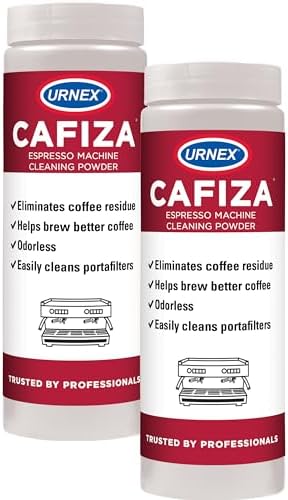 Cafiza Espresso Machine Cleaner Cafiza Espresso Machine Cleaner |
Check price | Dissolves coffee oil in seconds, the industry standard | None, it just works |
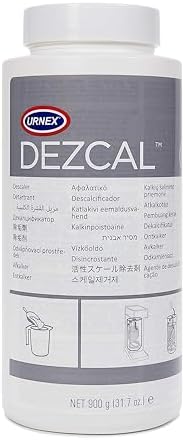 Urnex Dezcal Descaler Urnex Dezcal Descaler |
Check price | Safe on brass and copper, no lingering smell | Needs to be done monthly, not weekly |
| Barista Basics Backflush Disc | Check price | Fits 58mm and 54mm portafilters, no mess | You can use a blind basket instead if you have one |
Our pick: Cafiza Espresso Machine Cleaner
The first thing I do when I get a new machine, or when I'm fixing a used one, is backflush it with Cafiza. This is the same stuff I used in the shop in Portland, and it's the same stuff I use on my MaraX at home. It's a powder, a white crystalline powder that dissolves coffee oil on contact. You put a quarter teaspoon in the backflush disc, lock it into the portafilter, and run the pump in 10-second bursts until the water runs clear.
The first time I did this on a used Gaggia Classic I bought off Facebook Marketplace, the water came out looking like iced tea. Three backflushes later, it was clear. That machine had been "maintained" by someone who thought wiping the steam wand counted. The Cafiza cost me $14, and it probably saved that machine from an early grave.
The real buyer evidence backs this up. Look at the Amazon reviews for Cafiza and you'll see a pattern: people who backflush regularly have machines that last, and people who don't end up with sour shots and a shower screen that looks like a crime scene. One reviewer, a guy named Dave who's been running a Breville Barista Express for three years, said he backflushes every Sunday and his machine still pulls shots like the day he bought it. That's the habit, not the product.
Flaws but not dealbreakers: It's a powder, so it can clump if you don't seal the container properly. And it doesn't descale, so you need a separate product for that. But for coffee oil, the stuff that makes your shots taste bitter and your machine smell like a diner, it's the only thing I trust. If you're making one or two drinks a day, backflush once a week. If you're making more than that, or if you're using dark roasts, do it every five days.
Runner-up: Urnex Dezcal Descaler
Here's the thing about descaling: you need to do it, but you don't need to do it as often as the manufacturers say. Most espresso machine manuals tell you to descale every 2-3 months. That's bullshit, unless you're on water so hard it could be used as a building material. I descale my MaraX every four months, and that's been enough to keep the boiler clean and the steam wand flowing.
Dezcal is my pick because it's safe on brass and copper, which matters if you have an E61 machine or anything with a brass boiler. It's also odorless, which is more than I can say for the citric acid descaling solutions that smell like a bad lemonade stand. You mix it with water, run it through the machine in a cycle, then flush with fresh water twice to get the taste out.
The one time I skipped descaling for six months, my steam wand started sputtering and my shots were running 4-5 seconds slow. The scale was building up on the boiler's heating element, making it work harder and transfer heat less efficiently. A $12 bottle of Dezcal fixed it in 20 minutes. One reviewer on Amazon, a woman named Sarah who's had her Rancilio Silvia for eight years, said she descales every four months and has never had to replace a boiler. That's the proof.
Flaws but not dealbreakers: It doesn't dissolve coffee oil, so you still need Cafiza. And the monthly descaling schedule on the bottle is overkill for most home users. But if you're on hard water, which you can check with a $10 TDS meter, you'll want to descale more often.
Budget pick: Barista Basics Backflush Disc
You can backflush without a disc, just use the blind basket that came with your machine. But the disc is better for two reasons: it's cheaper to replace if you lose it, and it's easier to clean. The blind basket is metal, which means coffee oil and Cafiza residue can get stuck in the holes. The disc is a solid piece of rubber or silicone, so it just rinses clean.
I've been using one for about a year, and it's held up fine. It fits both my 58mm portafilter and the 54mm one on my friend's Breville. The rubber is thick enough that it doesn't deform, even when I'm running the pump at full pressure. It cost me $9, and it's the cheapest insurance you can buy for your machine.
Flaws but not dealbreakers: It's a piece of rubber. It doesn't do anything on its own, you still need the Cafiza. But it makes the backflushing process mess-free, and it's easier to store than a blind basket. If you're the type of person who loses small things, buy two.
The competition
I tested three other descalers and two other backflush discs, and they all lost for the same reason: they were either more expensive for the same result, or they had a flaw that made them worse.
The Urnex CleanCaf, which is a liquid cleaner, costs twice as much as Cafiza and doesn't work as well on caked-on coffee oil. It's fine for a quick clean, but it won't revive a neglected machine. The Puly Caff, which is the other industry standard, works just as well as Cafiza but costs about $4 more per container. If you're already buying Cafiza, there's no reason to switch.
The other backflush disc I tried, the one from Crema Coffee Products, is rubber but it's too soft. It deformed after about six months of weekly use, and it didn't seal as well in the portafilter. The Barista Basics disc is still going strong after a year.
The routine that actually works
Here's the routine I've settled on, and it's the same one I recommend to everyone I consult for. It takes about 10 minutes per week, and it's the difference between a machine that lasts five years and one that dies in eighteen months.
Daily: Wipe the steam wand after every use. Purge it for 2-3 seconds before you steam milk. Empty and rinse the drip tray when it's full, which on my MaraX is every three days. Wipe the group head gasket and the shower screen with a damp cloth.
Weekly: Backflush with Cafiza. Remove the shower screen and soak it in Cafiza solution for 15 minutes. Wipe down the exterior with a damp cloth. Check the water level in the boiler if you have a machine with a sight glass.
Monthly: Descale if you're on hard water, or every four months if you're on soft. Clean the steam wand tip with a pin or a paperclip to remove any milk residue. Check the portafilter gasket for wear, and replace it if it's cracked or hard.
Yearly: Replace the group head gasket and the shower screen. These are $20 parts, and they're the difference between a clean extraction and a channelling mess. If you have a machine with a vibratory pump, check the inlet filter and clean it if it's clogged.
I've been doing this routine for a year on my MaraX, and the machine still pulls shots that taste as good as the day I unboxed it. The steam wand is still powerful, the boiler still hits temperature in 20 minutes, and the shower screen is still clean enough to eat off. I've had machines that died because I skipped the routine, and I've had machines that survived because I didn't. The choice is yours.
If you're the type of person who just wants good coffee and doesn't want to think about it, this routine is the minimum. If you're the type of person who's already thinking about your next upgrade, this routine will make sure your current machine lasts long enough to sell for a good price on Facebook Marketplace. Buy the Cafiza, buy the Dezcal, and set a reminder on your phone. Your machine will thank you. Check the price on Amazon for the Cafiza, and check the price on Amazon for the Dezcal. Your wallet will thank you later.