I've lost count of how many people have asked me to fix their espresso setup. Not because their machine broke, but because they bought the wrong one. I've seen the $2,000 mistake. The $600 mistake. The "I bought a Delonghi and a blade grinder and now I'm drinking sour nonsense" mistake. I made most of them myself. This is the guide I wish I'd had before I started throwing money at my garage.
The biggest espresso machine buying mistakes aren't about picking a bad machine. They're about buying in the wrong order, ignoring your actual workflow, and believing that the machine matters more than the grinder. I've pulled over 40,000 shots professionally and killed a dozen machines at home. Here's what I've learned.

Espresso Machine Mara X by LELIT
PID-controlled steam boiler, consistent brew temps, no dead time between shots
Visit on Amazon →
Breville BES870XL Barista Express Espresso Machine, Brushed Stainless Steel
The Breville Barista Express espresso machine is an espresso maker delivering third wave specialty coffee at home. This manual espresso machine allows home baristas to go from beans to espresso in und
Visit on Amazon →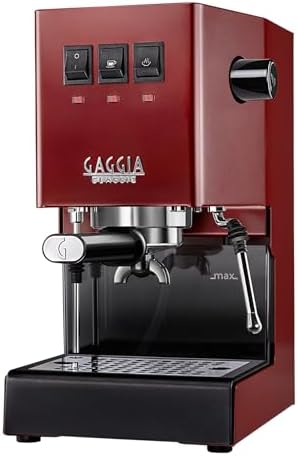
Gaggia RI9380/47 Classic Pro Espresso Machine,1.3liters, Cherry Red
Cheap, moddable, built like a tank
Visit on Amazon →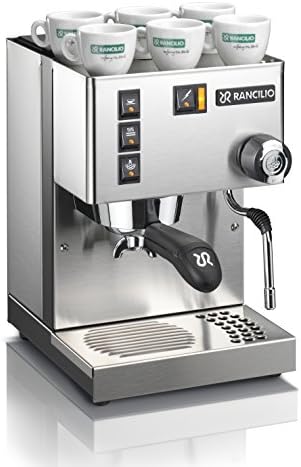
Rancilio Silvia Espresso Machinet,0.3 liters, with Iron Frame and Stainless Steel Side Panels, 11.4 by 13.4-Inch
Indestructible, huge modding community
Visit on Amazon →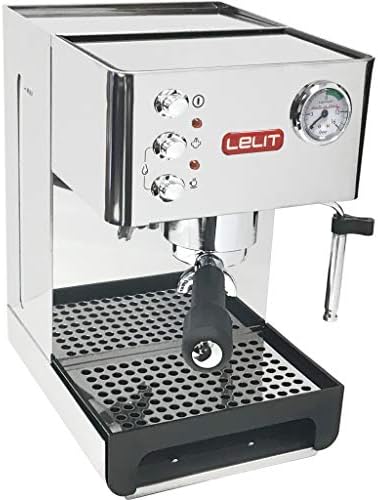
Lelit PL41EM Anna Espresso Machine
The Breville Barista Express espresso machine is an espresso maker delivering third wave specialty coffee at home. This manual espresso machine allows home baristas to go from beans to espresso in und
Visit on Amazon →Mistake #1: Buying the Machine Before the Grinder
I'll say this until I'm blue in the face. A $300 Delonghi with a Mazzer Super Jolly grinder will beat a $3,000 Rocket with a blade grinder every single time. The machine is downstream of the grind. I've seen people drop $2,000 on a beautiful E61 machine and pair it with a $50 grinder that produces dust and boulders. They blame the machine. It's not the machine. It's the grind.
The Breville Barista Express is the perfect example. It gets you 85% of the way there, and for a lot of people, that's enough. But the integrated grinder is the weak link. The grind setting dial feels like a suggestion, not a control.
The steps between settings are too coarse for precise dialing in. Buyers consistently report this. You'll be stuck between "too fine, channelling" and "too coarse, sour" with no way to split the difference.
My take: If you're starting from zero, buy a Baratza Encore ESP ($200) and a Breville Bambino Plus ($400). That combo costs less than the Barista Express and makes better coffee because the grinder is actually capable.
Mistake #2: The Single Boiler Trap
I timed it once. Fifteen minutes between shots on my old single boiler. Fifteen minutes. My partner and I each have two coffees every morning. Do the math. If you're making more than one milk drink a day, a single boiler will ruin your morning routine.
The Gaggia Classic Pro is the worst offender here. Out of the box, the OPV spring is set to something like 12 bars, which is way too high. The first thing every owner does is learn to temp surf or buy a $15 OPV spring and a $100 PID kit. I've owned one. I've modded one. I've loved and hated mine in equal measure.
Once you mod it, it's genuinely good. The boiler is small but built like a tank. Parts are cheap and available. But it's not out-of-the-box friendly. It's a project. If that sounds fun, it's the best $400 you'll spend. If that sounds exhausting, buy a Breville Bambino Plus and don't look back.
My take: The Gaggia is for tinkerers. The Rancilio Silvia has the same problem at double the price. Buy the Silvia used off Facebook Marketplace for $250, spend $80 on parts and a weekend fixing it. That's what I did, and it's been running perfectly for three years. Best $330 I ever spent.
Mistake #3: Paying Full Retail for Outdated Tech
The Rancilio Silvia is the "step up" from the Gaggia, and for years it was the default recommendation for serious home espresso. The boiler is bigger, the build quality is better, and it's built like a tank. But it's also a single boiler with no PID, and in 2024, that's hard to justify at $800.
The Lelit Anna is cheaper and comes with a PID. The Bambino Plus is cheaper and heats up in three seconds. The Silvia's only real advantage is that it's indestructible. I bought a used one for $250, spent $80 on parts, and it's been running perfectly for three years. But if you're paying full retail, you're leaving money on the table.
My take: Buy it used, not new. The Silvia hasn't changed fundamentally in fifteen years. Don't pay for a machine that's been coasting on reputation.
Mistake #4: Ignoring the 57mm Problem
The Lelit Anna is the best budget option for people who want to get serious without spending $1,500. The shots are genuinely good, the PID keeps the temperature stable, and the steam wand is better than the price suggests. But it has a 57mm portafilter, which locks you into Lelit's accessory ecosystem.
That's a real downside if you want a bottomless portafilter or an IMS basket. You're stuck with whatever Lelit sells, and the selection is limited compared to 58mm. The value is hard to beat, but the upgrade path is a dead end.
My take: The Anna is a great machine, but the 57mm portafilter is a real annoyance. If you think you'll catch the upgrade bug, save up for something with a 58mm portafilter.
Mistake #5: Buying a Showpiece Instead of a Workhorse
Once you cross $1,500, you're paying for build quality and looks. The Rocket is a showpiece. It's the machine people buy because it looks beautiful on the counter. The Profitec has better internals for the same money. The ECM is the middle ground, beautiful AND well-built.
Here's the thing about these machines: they're all overkill for most home users. If you're making two or three drinks a day, a Lelit MaraX or a Profitec 500 will do everything you need. The ECM Synchronika and the Lelit Bianca are endgame machines, but they're $3,000+ and most people don't need them.
My take: The MaraX is the sweet spot. It's a heat exchanger with a PID-controlled steam boiler that gives you consistent brew temperatures without the dead time of a single boiler. It's the machine I own, and it's the machine I recommend to anyone who's serious about espresso and has $1,200 to $1,500 to spend.
Mistake #6: Buying a Manual Machine as Your Daily Driver
The Flair is a great travel machine. No electricity, no warm-up, just you and the lever. But I'm not doing that every morning. There's a reason we invented electric pumps.
The 9Barista is genuinely wild. A stovetop espresso maker that actually hits 9 bars. But you're making one shot at a time, and it takes about five minutes to heat up. It's a novelty, not a daily driver.
My take: These are for people who already own a proper machine and want a backup or a travel option. Not for beginners. If you're starting out, buy an electric machine.
The Grinder-First Argument, One More Time
The machine is cheap. The grinder is where you should spend your money. I've said this until I'm blue in the face, and I'll keep saying it because it's the most common mistake I see.
The Bambino Plus at $400 split over five years is 22 cents a day. The Bianca at $1,600 is 88 cents a day. You're paying 66 cents more for a machine that stops the upgrade spiral. But none of that matters if your grinder can't produce a consistent particle size.
I started with a Delonghi Dedica and a blade grinder. I thought it was fine. Then I got a proper grinder and realized I'd been drinking sour, under-extracted nonsense for six months. I've now spent $2,000. My wife says I have a problem. She's right. But most of that money was wasted on skipping steps.
Should You Buy a Cheap Machine First?
Here's the honest answer. If you're not sure you'll stick with espresso, buy a Breville Bambino Plus and a Baratza Encore ESP. That's $600 total, and it makes coffee that's genuinely better than Starbucks. If you use it every day for six months, upgrade. If you don't, you've lost nothing.
The mistake is buying a $750 Barista Express and then realizing you've outgrown it in a year. You'll sell it for $300 on Facebook Marketplace and buy a MaraX anyway. I've seen it happen a hundred times.
The other mistake is buying a $200 machine and a $50 grinder because you think you're being smart. You're not. You're going to drink bad coffee for six months, blame yourself, and then spend $1,500 to fix a problem that was never the machine's fault.
What I'm Testing Next
I'm currently running the Lelit MaraX V2 against the Profitec 500 to see if the price difference is justified for home users. So far, the MaraX is holding its own. I'm also working on a guide to buying used espresso machines, what to look for, what to avoid, and how to talk down the price on Facebook Marketplace. That's where the real deals are.
My next review will be the Flair 58, which I've been putting off because I don't want to admit it might be good. Biscuit, my golden retriever, sleeps in the garage on a pile of old towels next to the machine graveyard. He's my quality control. If the shot smells good enough to wake him, it's dialed in.