Single Boiler Vs Dual Boiler Espresso Machine
Single boiler vs dual boiler espresso machine, explained by a reviewer who actually lives with the gear. No fluff, no marketing language, just what works and what doesn't.
Single Boiler Vs Dual Boiler Espresso Machine: The Honest Math
The single boiler is advertised as the budget-friendly entry into "real" espresso. The dual boiler is sold as the serious upgrade. But is the price jump from $400 to $1,600 actually worth it for your kitchen? I've owned both, and I've lived with the workflow consequences of each for years. Here's the honest breakdown.
| Product | Price | Why it won | Why it lost |
|---|---|---|---|
 Lelit MaraX V2 Lelit MaraX V2 |
Check price | Heat exchanger with PID-managed steam. No dead time between shots. My daily driver. | It's a big jump from entry-level pricing. |
 Rancilio Silvia Rancilio Silvia |
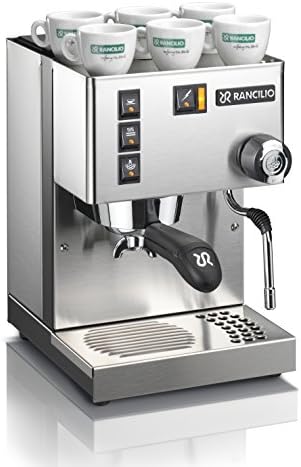
Check price new | Indestructible. I fixed a used one for Check price total. | Single boiler. 15-minute dead time between milk drinks. |
 Breville Bambino Plus Breville Bambino Plus |
Check price | Heats up in 3 seconds. Good enough steam. | Small 54mm portafilter. You'll outgrow it. |
 Gaggia Classic Pro Gaggia Classic Pro |
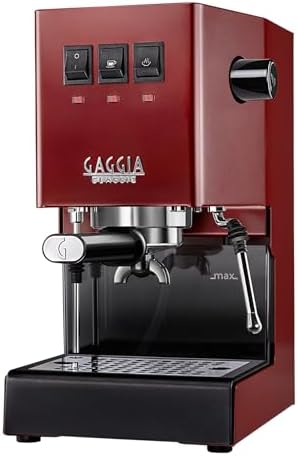
Check price | Modder's dream. Built like a tank. | Terrible out of the box. Needs OPV spring and PID work. |
The Core Difference Nobody Explains Clearly
Here's my rule: a single boiler heats one thing at a time. You brew espresso, then you wait for the boiler to climb to steam temperature, then you steam milk, then you wait for it to come back down if you're pulling another shot. That wait is real. I timed my old Gaggia at fifteen minutes between pulling a shot and being ready to pull another one after steaming milk. Fifteen minutes.
A dual boiler heats brew water and steam in separate boilers simultaneously. No waiting. That's the whole game. If you're single and you drink one black espresso a day, a single boiler is fine. If you're making two lattes for you and your partner every morning, the math changes completely.
The Rancilio Silvia: The One I Bought Used
I bought a used Silvia off Facebook Marketplace for $250. It needed $80 in parts and a weekend of work. That's the only way I'd recommend buying one, because at $750 new it's overpriced for what you get. The machine hasn't changed fundamentally in fifteen years.
Here's the thing about the Silvia: it's a single boiler with no PID. Out of the box, you're temp surfing. That means timing your shot to the boiler's heating cycle because the machine doesn't regulate temperature precisely. I did it for years. It's a skill, but it's a workaround, not a solution.
The water tank is also tiny. I'm refilling a 2L tank twice a day because my wife and I each have two coffees. That gets old fast.
Choose the Silvia if you're handy and you find one used. Choose something else if you're paying full retail.
The Breville Bambino Plus: The Fast Heater
The Bambino Plus is the machine I recommend to people who want good coffee without making it a hobby. It heats up in three seconds. The steam wand is genuinely usable, and the thermocoil does a decent job maintaining temperature for a single shot.
But it's a single boiler, so you've got the same back-to-back limitations. And the 54mm portafilter means you're locked into Breville's accessory ecosystem. If you catch the upgrade bug, you'll outgrow it in a year, and then you've spent $500 on a machine you'll sell for $200.
The Bambino Plus at $500 split over five years is 27 cents a day. That's cheap. But it's a starting point, not an endpoint.
The Gaggia Classic Pro: The Project
The Gaggia Classic Pro is the modder's machine. Out of the box, it's set to something like 12 bars from the factory, which is way too high. The first thing every owner does is either learn to temp surf or buy a $15 OPV spring and a $100 PID kit.
I modded mine into something unrecognizable. OPV spring, PID, bottomless portafilter, the works. Once you mod it, it's genuinely good. The boiler is small but built like a tank, and parts are cheap and available.
But here's the problem: if you buy this as your first machine expecting out-of-the-box performance, you'll be frustrated. I've seen buyers complain that every shot is either sour or bitter for two weeks before they almost returned it. That's not user error. That's the machine being unfinished.
Don't buy this unless you're prepared to tinker. If that sounds exhausting, buy the Bambino Plus and don't look back.
The Lelit MaraX V2: What I Actually Use
This is the machine I've been using daily for the last two years. It's a heat exchanger, which means it uses a single boiler but runs it at steam temperature and runs the brew water through a heat exchanger to bring it down to brew temp. The MaraX adds a PID that manages the steam boiler temperature to keep brew temperatures consistent.
The result? No dead time. I can pull a shot, steam milk, and pull another shot without waiting. My wife and I each have two coffees every morning, and the machine keeps up.
The MaraX is $1,500. Split over five years, that's 82 cents a day. You're paying 55 cents more per day than the Bambino Plus for a machine that stops the upgrade spiral. I don't have to think about upgrading anymore. That's worth something.
Is it perfect? No. The steam wand takes about 90 seconds to texture milk for one latte. My arm hurts sometimes. But it's the sweet spot between entry-level and the $3,000 endgame machines like the ECM Synchronika or Lelit Bianca.
The Grinder Argument: Don't Skip This
I've said this until I'm blue in the face. A $200 grinder matters more than a $2,000 machine. The machine is downstream of the grind. If you're using a blade grinder, you're drinking sour, under-extracted nonsense and you don't even know it.
I started with a Delonghi Dedica and a blade grinder. I thought it was fine. Then I got a proper grinder and realized I'd been drinking bad coffee for six months. I've now spent $2,500 on my current setup. My wife says I have a problem. She's right.
If you're buying any of these machines, budget for a proper grinder first. A Baratza Encore ESP at $200 will do more for your coffee than upgrading from a Bambino to a MaraX.
The Back-to-Back Shot Math
Let me be specific about the numbers. On my old single boiler, pulling two drinks took about twenty minutes total. Brew a shot, steam milk, wait for the boiler to reheat, brew another shot, steam more milk. The wait between brew and steam was the killer.
On the MaraX, I can pull two drinks in about seven minutes. Same beans, same grinder, same routine. The machine just doesn't get in the way.
If you make more than one milk drink a day, do not buy a single boiler. I don't care how good the reviews say it is. The workflow will break you.
The Verdict
If you're single and you drink one black espresso a day, buy a single boiler. The Bambino Plus is the best entry point. The Gaggia is fine if you like projects.
If you're making milk drinks for more than one person, save for the MaraX or a dual boiler. The back-to-back workflow is worth the money. I've lived both lives, and I won't go back to waiting fifteen minutes between shots.
Buy the grinder first. Always.