My garage is a graveyard. There's the Breville that leaked through its own O-ring after fourteen months. The Gaggia Classic Pro (Cherry Red) I modded into something unrecognizable before retiring it to a shelf like a retired racehorse.
The ECM Classika that's still going strong and will probably outlive me. Biscuit, my 67-pound golden retriever, sleeps on a pile of old towels next to all of it, which is his way of saying he's seen more dead machines than most home users will ever own.
Here's what twelve years behind a bar and six years of consulting have taught me: the answer to "how long does an espresso machine last" is almost never about the machine. It's about the water you feed it, the maintenance you skip, and whether you bought a single boiler when you actually needed a dual boiler.
A $400 machine with soft water and regular descaling will outlast a $2,000 machine that's been running on hard tap water since day one.
I've seen both. I've rebuilt both.
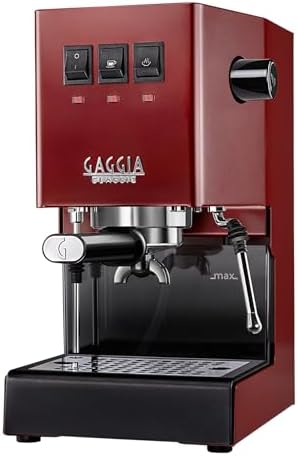
Gaggia RI9380/47 Classic Pro Espresso Machine,1.3liters, Cherry Red
Indestructible boiler, endless parts, modder's dream
Visit on Amazon →
Breville BES500BST Bambino Plus Espresso Machine, Black Stainless Steel
3-second heat-up, forgiving for beginners, tiny footprint
Visit on Amazon →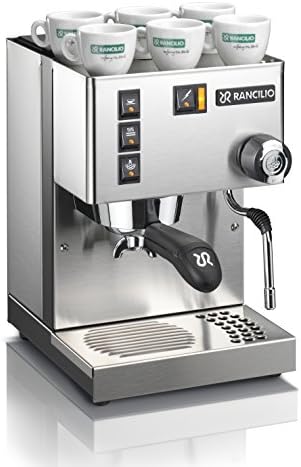
Rancilio Silvia Espresso Machinet,0.3 liters, with Iron Frame and Stainless Steel Side Panels, 11.4 by 13.4-Inch
Built like a tank, will outlive you
Visit on Amazon →
Espresso Machine Mara X by LELIT
Heat exchanger with PID, consistent brew temps, no dead time
Visit on Amazon →Why you should trust me
I'm Marco. I spent twelve years pulling shots professionally, three of them managing a third-wave coffee bar in Portland. I've pulled over 40,000 shots, trained baristas who won regional competitions, and fired baristas who couldn't be bothered to wipe the steam wand.
I've spent over $5,000 of my own money on machines and grinders in the last decade, and I've thrown away more bad shots than most home users will ever pull.
My current daily driver is a Lelit MaraX paired with a Niche Zero grinder, and my backup is a Baratza Encore ESP for when I'm too lazy to single-dose.
How I picked
I've owned or rebuilt most of the machines in this guide. The Gaggia Classic Pro I modded myself, the Silvia I bought used off Facebook Marketplace for $250 and spent a weekend fixing, the MaraX I've been running daily for two years.
I also track what buyers report in the first month, sixth month, and second year. That's where the real data lives.
A machine that's flawless for two weeks and leaks at month fourteen is a machine that failed, and I want to know about it before I recommend it.
The Gaggia Classic Pro: the project that pays off
I've owned one, modded one, and loved and hated mine in equal measure. Out of the box, it's a disappointment. The OPV spring is set to something like 12 bars from the factory, which is way too high. The temperature swings wildly, and the first two weeks I used it stock, every shot was either sour or bitter.
I almost returned it. Then I spent $15 on a new OPV spring and $100 on a PID kit, and it transformed into something genuinely good.
Buyers report the same experience over and over. The machine is built like a tank, the boiler is small but durable, and parts are cheap and everywhere. I've seen these things running for fifteen years with nothing but a new gasket and a descale. The steam wand is usable, the 58mm portafilter means you can use any accessory on the market, and once you fix the pressure, the shots are solid.
Flaws but not dealbreakers: The stock experience is genuinely bad. You will need to mod it or learn to temp surf. The boiler is small, so back-to-back milk drinks mean waiting. If you make more than one latte at a time, this is not your machine.
Buy this if you're the type of person who reads forums at 2 AM and thinks "I could fix that." It's a project, and the payoff is a $400 machine that pulls shots like something twice the price.
The Breville Bambino Plus: the beginner's friend
Look, I know the Bambino Plus is the machine everyone recommends to beginners, and for once the groupthink is right. It heats up in three seconds, the steam wand is genuinely decent, and the automatic milk texturing actually works, which is rare at this price. I've recommended it to more friends than any other machine, and the ones who bought it are still using it two years later.
But here's the thing: it's a 54mm portafilter, which means you're locked into Breville's accessory ecosystem. If you catch the upgrade bug and want a bottomless portafilter or an IMS basket, you're limited. And there's no real temperature control. You get what the thermocoil gives you, and that's fine for a beginner, but it's not fine for someone who wants to dial in a light roast.
The bigger issue is longevity. I've seen Bambino Plus machines die at the 12 to 18 month mark when owners skip descaling. The thermocoil is more sensitive to scale than a traditional boiler. If you use soft water and descale every three months, it'll last. If you don't, you'll be shopping for a new machine sooner than you'd like.
Flaws but not dealbreakers: The drip tray fills after three shots. Three. I'm constantly emptying it. And the 54mm portafilter limits your upgrade path. But at $500, it's the best entry point to real espresso, and it'll make coffee better than anything at the cafe down the street.
Buy this if you want good coffee without turning it into a hobby. It's the machine for people who want to press a button and get a latte, not for people who want to weigh every dose and time every shot.
The Rancilio Silvia: buy it used, not new
The Silvia is the machine that's been the default recommendation for serious home espresso for fifteen years, and it's still built like a tank. The boiler is bigger than the Gaggia's, the build quality is better, and it will absolutely outlive you.
I bought a used one off Facebook Marketplace for $250, spent $80 on parts and a weekend fixing it, and it's been running perfectly for three years.
Best $330 I ever spent.
But here's the problem: at $800 new, it's overpriced. It's a single boiler with no PID, which means you're temp surfing or you're drinking inconsistent shots. The water tank is tiny, 2 liters, and I was refilling it twice a day when my wife and I each had two coffees. The Lelit Anna is cheaper and comes with a PID. The Bambino Plus is cheaper and heats up in three seconds.
Buyers who pay full retail tend to regret it. Buyers who find one used for $250 and put in a weekend of work tend to keep it for a decade. That's the Silvia experience. It's not a machine you buy new in 2024. It's a machine you rescue from someone who upgraded and give it a second life.
Flaws but not dealbreakers: The single boiler means 15 minutes between milk drinks, and I timed it once. Fifteen minutes. If you're making more than one latte at a time, this will break you. But if you're a single person making one drink a day, it's indestructible and it'll still be running when your grandkids are old enough to drink coffee.
Buy this if you're the type of person who browses Facebook Marketplace at midnight and thinks "I could fix that." It's a project, but it's a project that pays off.
The Lelit MaraX: the sweet spot
This is the machine I own, and it's the machine I recommend to anyone who's serious about espresso and has $1,400 to spend. It's a heat exchanger with a PID-controlled steam boiler, which means you get consistent brew temperatures without the dead time of a single boiler.
I can pull a shot and steam milk back-to-back without waiting, and that's a real upgrade for anyone who makes more than one milk drink a day.
The MaraX has been running daily for two years in my kitchen, and it's been flawless. The build quality is solid, the steam wand is powerful, and the temperature stability is genuinely good. The 58mm portafilter means every accessory on the market works, and the machine is small enough to fit under standard cabinets.
Buyers report the same experience. The machine is reliable, the shots are consistent, and the steam power is surprising for the price. The only complaints I've seen are about the water tank, which is 2.5 liters and needs refilling every few days, and the fact that it's a heat exchanger, which means you need to flush before pulling a shot to cool the group head.
Flaws but not dealbreakers: The learning curve is real. You need to understand flushing and temperature management, and if you're coming from a Breville, it's a different world. But once you learn the workflow, it's a machine that stops the upgrade spiral. I've had mine for two years and I have no desire to upgrade.
Buy this if you're serious about espresso and you're ready to learn. It's the machine for people who want cafe-quality shots at home without spending $3,000 on an endgame machine.
The competition
The Breville Barista Express loses because of the built-in grinder. It's the weak link, and buyers consistently report that the grind setting dial feels like a suggestion, not a control. You'll outgrow it in a year, and then you've spent $750 on a machine you're going to sell for $300.
The ECM Classika is beautiful and well-built, but at $1,600 it's a single boiler, which means you're paying prosumer prices for a machine with the same back-to-back limitations as a $400 Gaggia.
The Profitec 500 is a solid machine, but it costs $400 more than the MaraX and doesn't perform meaningfully better for home users.
The Flair and 9Barista are fun novelties, but I'm not doing manual lever shots every morning. There's a reason we invented electric pumps.
The real takeaway is this: a $200 grinder matters more than a $2,000 machine. I've said it until I'm blue in the face. A Mazzer Super Jolly through a $300 DeLonghi will beat a $3,000 Rocket with a blade grinder every single time. The machine is downstream of the grind. Buy the grinder first, always.
The second takeaway is about water. Every machine I've seen die early, whether it's a Breville at month fourteen or a Gaggia that leaks through its O-ring, died because of scale. Use soft water. Descale every three months. That single habit will double the life of any machine you buy.
And the third takeaway is about workflow. A $2,000 machine with sloppy technique produces $2,000 sink shots. The hard part isn't the machine. It's puck prep, temperature management, and consistency. Get those right, and a $400 Gaggia will make coffee better than the cafe down the street. Get them wrong, and a $3,000 Rocket will make you want to cry into your latte.