Related: Coffee Scale Buying Guide
Most home espresso machine comparison articles start with the machine. That is the wrong end of the problem. Start with the workflow you will actually keep on a Tuesday morning, and the machine picks itself.
I spent twelve years behind a bar, managed a third wave coffee bar, and now I set up espresso stations in other people's kitchens. I have pulled somewhere north of 40,000 shots. My garage holds a machine graveyard: the Breville that leaked, the Gaggia I modded into something no longer recognizable, the ECM that is still going.
Here is the rule I hand to everyone. The grinder is roughly 70 percent of the shot. A $500 machine with a $300 grinder beats a $2,000 machine with a $50 grinder. Every time. So what follows is not a contest with a winner and three losers. It is a home espresso machine comparison by role: the serious first machine, the compact starter, the scale that makes both repeatable, and the cold brew maker for the mornings you do not want to pull a shot at all.
Best for a first serious machine: Rancilio Silvia Espresso Machine
The Rancilio Silvia is the machine I recommend to the person who has already owned one appliance grade espresso maker and is tired of replacing it. Stainless steel body, stainless steel internals, and a parts network that means a ten year old machine is still fixable. That matters more than any feature list, and it is the reason I stopped worrying about the Silvia the day I understood it.
What you are buying is a workflow, and the workflow has a cost. This is a single boiler machine, which means brewing and steaming do not happen at the same time. Pull your shot, then wait, then steam. I call that gap dead time, and on a single boiler it is where impatient mornings go to die. If you make two milk drinks back to back every morning, you will feel it. If you drink espresso most days and a latte on Sunday, you will not care.
The reward is consistency and forgiveness. The group is built to professional dimensions, the machine answers small grind adjustments the way a real machine should, and nothing about it feels disposable. It is also the machine most likely to still be on your counter in ten years.
Two things before you buy. First, budget for a grinder that can actually choke it. A capable espresso grinder costs more than most people expect, and buying the Silvia without one is the most common mistake I see. Second, learn the temperature dance. Temperature stability is the difference between consistent espresso and that "sometimes great, sometimes sour" streak nobody understands. The Silvia rewards the person who pays attention to it.
Best compact pick: AMZCHEF 20 Bar Compact Home Espresso Coffee Machine
Not everyone has room for a stainless steel shell and a footprint to match. The AMZCHEF 20 Bar is a compact home espresso machine in matte silver, and it is the pick for a narrow counter, a rental kitchen, or a first apartment where the espresso budget is real and so is the square footage.
Honest framing: this is a starter machine. It is not going to out brew a Silvia, and it is not trying to. What it does is put real espresso within reach of someone who is not ready to spend four figures on a first setup, and that matters, because the fastest way to learn is to pull shots every single day.
At this level, spend your upgrade money on the grinder and the scale before you spend it on the machine. A compact machine fed freshly ground beans and a consistent dose will beat an expensive machine fed stale pre ground coffee every time. Once your grinder can do the work, stop using a pressurized basket. A pressurized basket is a crutch. It hides stale beans and a bad grind instead of fixing either one, and it teaches you nothing.
Treat this as a two year learning machine. Learn to dial in. Learn what a balanced ratio tastes like when you finally hit it. Learn to steam milk on a smaller wand. When you have outgrown it, you will know exactly what you want next instead of guessing.
The gear that makes both machines repeatable: KitchenTour Coffee Scale with Timer
A scale is not an accessory. It is the difference between a recipe and a guess. The KitchenTour Coffee Scale reads in 0.1g steps with a 3kg capacity, which covers a dose of beans and a cup sitting on top of it, and it carries a built in timer and a back lit LCD. Batteries are included, which sounds like a small thing until you are standing at the counter with a new machine and no coin cell in the drawer.
You need it for two numbers: dose in, yield out. Weigh the beans before grinding. Then put the cup on the scale and stop the shot by weight, not by eye. Volume is a liar and crema is decoration. The timer tells you how long the shot took, which is how you find out whether the grind is off or the puck is channeling.
This is the piece of gear people skip, and then they wonder why their shots are inconsistent from one morning to the next. Precisely because it is inexpensive relative to a machine, it changes more shots than a machine upgrade does. If you only buy one thing from this list, buy this, and use it from the very first bag of beans.
For the mornings you do not want to pull a shot: Bodum 51oz Cold Brew Coffee Maker
Everything above is about pressure and precision. This one is about having coffee in the fridge at six in the morning without making a single decision. The Bodum 51oz Cold Brew Coffee Maker is a 51 ounce cold brew system in black, made in Portugal. Coarse grind, water, time, and you have concentrate for the better part of a week.
I keep one because cold brew is the honest test of beans. There is nowhere to hide behind crema or a tidy 25 second shot. If the coffee is stale or the roast is thin, cold brew tells you immediately, and it tells you the same way every time.
It is also the most forgiving thing in the kitchen. No temperature stability to manage, no dead time, no puck prep. Weigh the grounds and the water on the same KitchenTour scale so you are working from a repeatable starting point, then dilute to taste and adjust the next batch. Coarse grind matters here. Too fine and you get mud and a slow, bitter brew. If your grinder only does espresso fine, ask the roaster to grind coarse for you.
How I tested
Every machine I write about gets the same treatment before it earns a paragraph. A month of daily shots. Same beans. Same grinder. Same water. Nothing lands in a guide until I have pulled at least 30 shots on the machine, and in practice it is closer to a hundred by the time I am ready to say anything useful.
The questions I ask are boring on purpose. What is the real boiler setup, not the marketing version? Does the machine hold temperature across a shot or drift while I am watching it? How long is the dead time between brew and steam? Would I still enjoy this in month three, when the novelty has worn off and it is just Tuesday?
I taste every shot instead of photographing it. Crema is decoration, taste is the test. If a machine makes me want a second cup, it passes. If I find myself reaching for milk to cover something up, it does not, and no amount of chrome fixes that.
Analysis and test results
Three things separate a machine you keep from a machine you resell: temperature stability, workflow, and whether parts will exist in five years.
Temperature stability is the one you feel every shot. When brew water swings, the same beans taste sour one morning and bitter the next, and you blame the coffee. On a machine like the Silvia, with attention and a stable routine, you can hold it steady. On a compact machine with a small boiler, recovery after a shot is slower, which is exactly why weighing your dose and timing your shot matters so much. The scale is not a luxury item. It is how you find out what the machine is actually doing.
Workflow is the second. Single boiler machines make better espresso than their convenience suggests, as long as you build the wait into your routine instead of fighting it. Steam wand quality matters more than people admit too. A wand that cannot texture milk properly turns a two minute drink into a ten minute fight, and you will stop making milk drinks entirely rather than admit the machine is the problem.
The third is serviceability. Stainless steel and a real parts network mean a machine can be repaired instead of replaced. That is the boring reason I keep recommending the same names, and the boring reasons are usually the correct ones.
The last piece is the portafilter. If the machine does not have a real professional standard group, you are fighting an uphill battle with thin pucks and less forgiveness. Pair any machine here with a grinder that can grind fine enough to choke it, and with the scale.
The espresso setup reference table
This is the table I keep for people building a station from scratch. Roles, not rankings. Buy in this order: grinder, then scale, then machine, and add the cold brew maker whenever you want coffee to stop being a project.
| Product | Role in the setup | Best for | Notes |
|---|---|---|---|
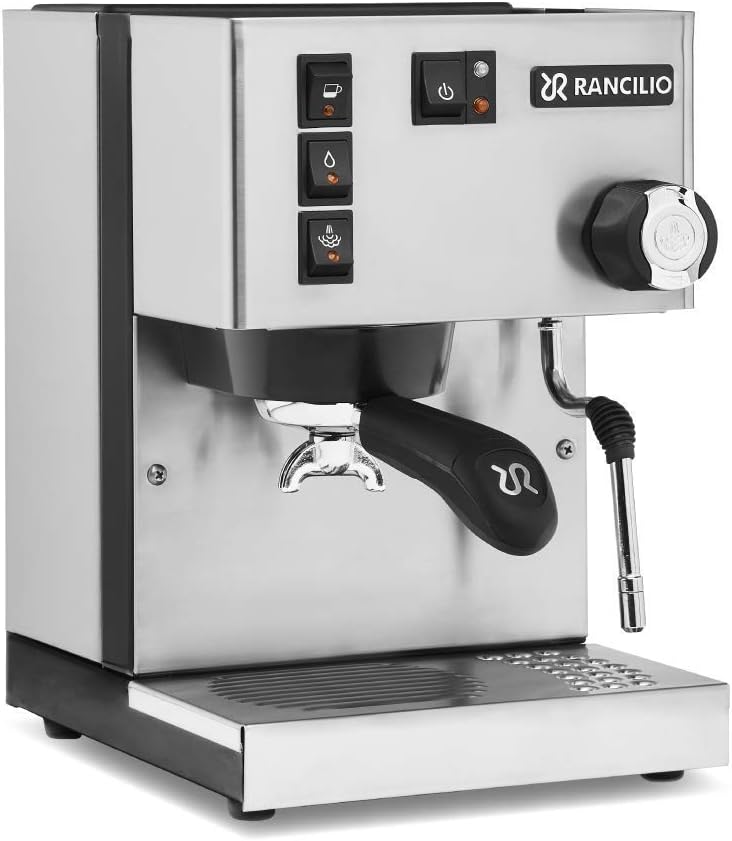 Visit on Amazon → Visit on Amazon →Rancilio Silvia Espresso Machine |
First serious machine | Espresso daily, milk on weekends | Stainless steel, single boiler, expect dead time between brew and steam |
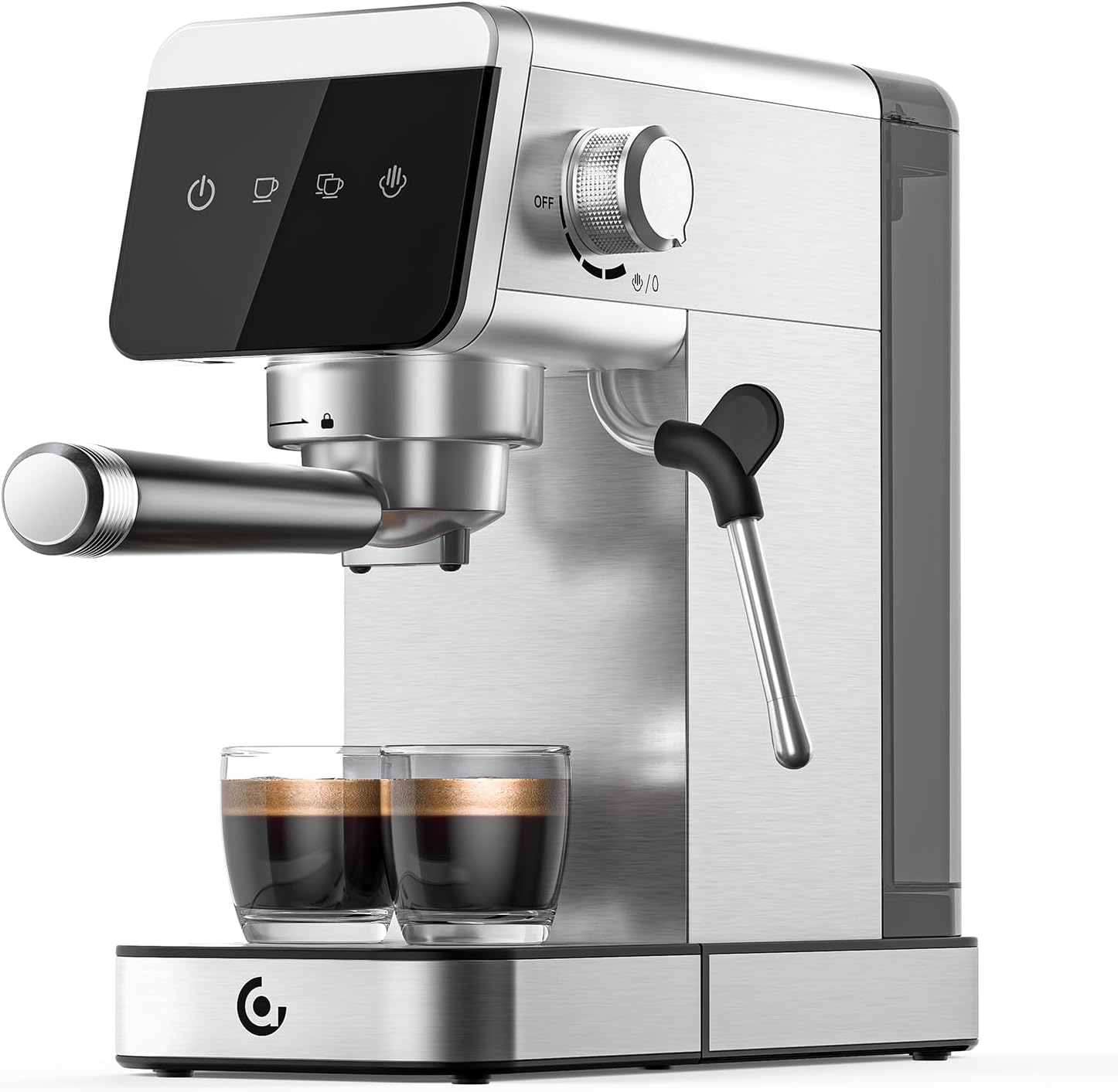 Visit on Amazon → Visit on Amazon →AMZCHEF 20 Bar Compact Home Espresso Coffee Machine |
Compact starter | Small counters, first setup | Matte silver, 20 bar, pairs with a grinder that can grind fine |
 Visit on Amazon → Visit on Amazon →KitchenTour Coffee Scale with Timer |
Repeatability | Anyone dialing in by weight | 3kg capacity, 0.1g precision, built in timer, back lit LCD, batteries included |
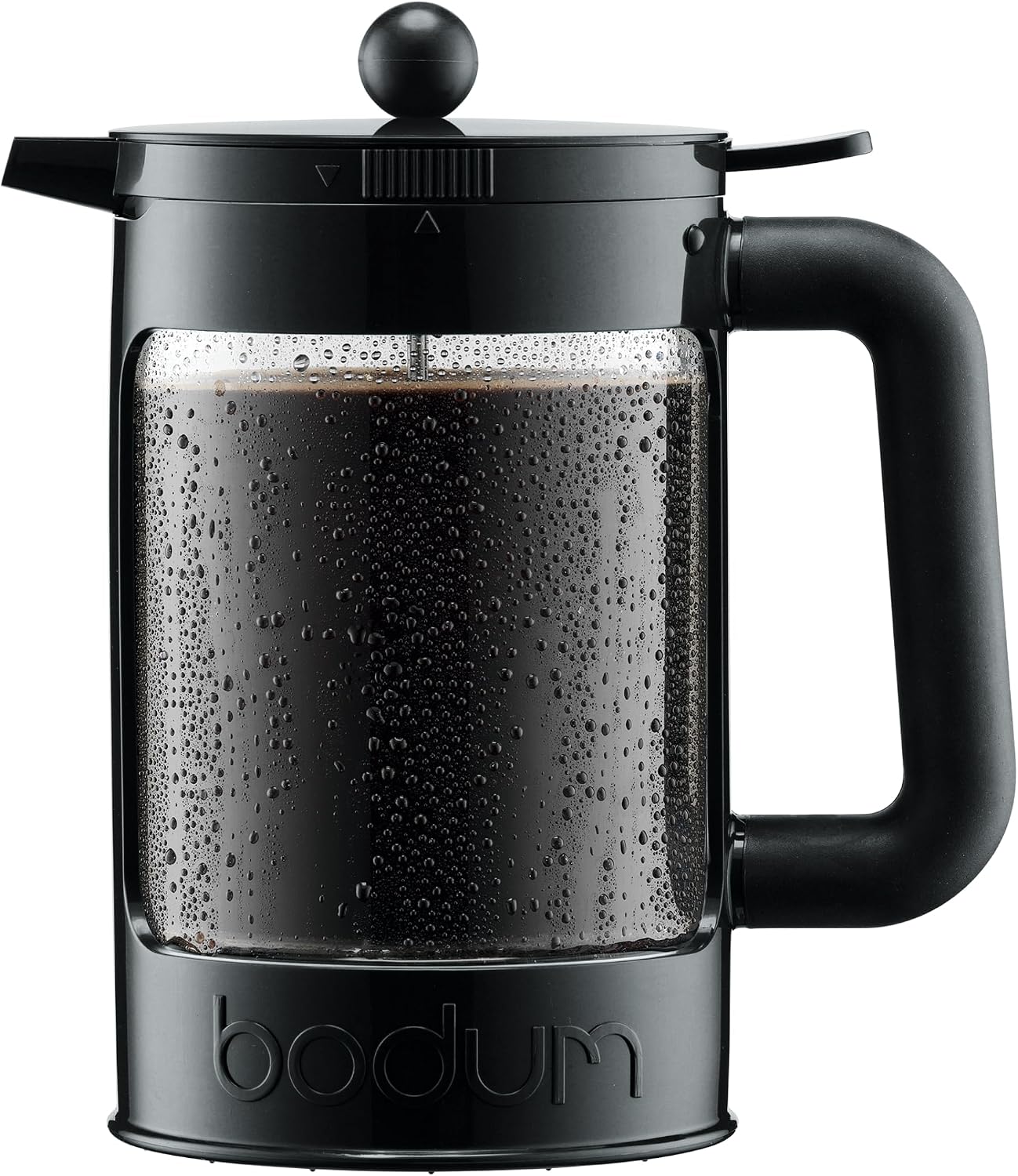 Visit on Amazon → Visit on Amazon →Bodum 51oz Cold Brew Coffee Maker |
Off hours coffee | Cold brew concentrate, zero pressure | 51 oz, black, made in Portugal, coarse grind |
The scale row is the one people skip, and it is the one that changes the most shots per dollar. Weigh everything. Every time. That habit travels with you to the next machine.
Should you buy the Rancilio Silvia?
Yes, with one condition: you own a grinder that can keep up with it. If you do, this is the machine I would buy with my own money at this end of the market. It is bombproof, parts exist, and it makes the kind of espresso that stops you from buying coffee on the way to work.
The compromise is the single boiler, and it is a real one. You will wait between your shot and your steam. If you make milk drinks back to back every single morning, and you can stretch your budget further, save longer for a dual boiler instead. If you drink espresso most days and a flat white now and then, buy this one and learn it properly.
Should you buy the AMZCHEF 20 Bar?
Yes, if it matches your kitchen and your budget. It is a compact 20 bar home espresso machine in matte silver, and it will teach you more in six months of daily shots than a shelf of gadgets ever will.
Order the KitchenTour scale in the same purchase. Sort out a grinder before you buy anything else. Skip the pressurized basket as soon as your grinder can handle a fine grind. And when you upgrade, you will know exactly why you are upgrading, which is more than most people can say.