Related: Best Espresso Grinders for Home Espresso
Most people buy the machine before they understand the workflow. I did the same thing years ago, convinced a bigger boiler would fix a bad shot. Twelve years behind a bar, a stretch managing a third-wave coffee bar, and more than 40,000 shots later, the lesson has not moved: the grinder is roughly 70 percent of the cup, and the machine decides how pleasant your mornings are. So this home espresso machines comparison is not a list of the flashiest boxes on a shelf. It is the four pieces of gear I would actually put on a real kitchen counter.
The lineup: the Breville Bambino Plus for most kitchens, the Rancilio Silvia for people who want one machine for a decade, a budget 20 bar machine with a milk frother and cold brew for a first step, and the KitchenTour coffee scale, which is the least glamorous product here and the one that changes your coffee the most. Every machine got the same beans, the same grinder, and a month of daily shots. At the end of each month I asked one question: does this make me want another cup?
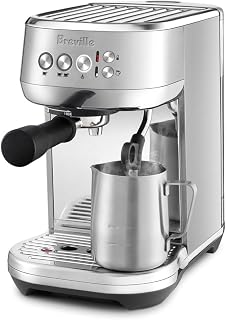
Best Overall for Most Kitchens: Breville Bambino Plus
The Bambino Plus is the machine I recommend to anyone who wants real espresso without adopting a second hobby. It comes up to temperature fast, it fits on a counter that also has to hold a toaster, and the automatic steam wand textures milk better than most beginners can by hand. That last part is the whole reason it sits first. Wand steam that cannot texture milk properly is one of my standing complaints, and this machine solves it by doing the work for you. You pour, you press, you get microfoam.
It is also forgiving in a way cheap machines are not. Temperature stays steady enough that you are not chasing sour and bitter shots all week, and a slightly sloppy dose still produces something drinkable. This is not a machine built around the professional basket standard, so the puck has less room to forgive a mediocre grind. That is the trade for the compact body, and for most kitchens it is the right trade.
Two things to know before you buy. There is no grinder in the box, so set money aside for one. And convenience is not the same as consistency, so you still need to weigh your dose. That is why the scale further down this article matters as much as the machine.
Best First Serious Machine: Rancilio Silvia
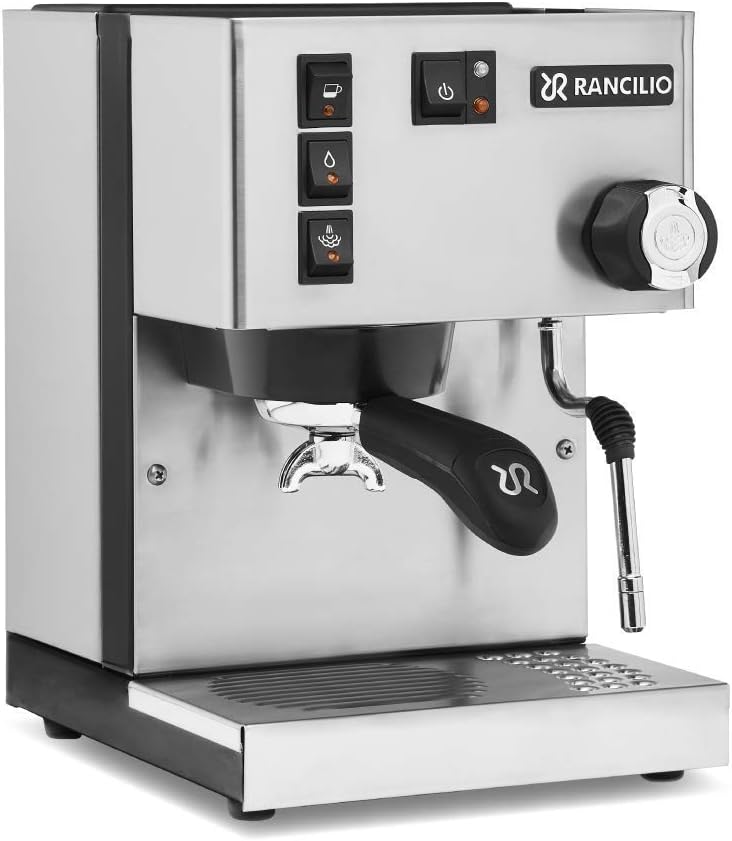
The Silvia is stainless steel, simple, and repairable, and that combination is why it has been the answer to "what do I buy after the appliance stage" for years. Parts are available, the body is bombproof, and it will outlast the counter it sits on. If you want a tool rather than a gadget, this is the machine in this article that fits the description best.
It is also honest about what it is. It is a single boiler, which means you pull your shot, then you wait for the boiler to come up to steam temperature before you can texture milk. That dead time is where workflows go to die. If you make four milk drinks back to back at 7 a.m., you will feel every second of it. If you drink one flat white and then clean up, you will barely notice.
The steam wand is manual and it demands technique. You will learn to texture milk on this machine or you will drink flat, hot milk. Temperature surfing is part of the ritual, and brew temperature drifts if you stop paying attention. None of that is a dealbreaker for someone who wants to learn. All of it is a dealbreaker for someone who wants a button.
Pair it with a real grinder and a scale. Without those two, you have bought a very nice way to make mediocre coffee.
Best Budget Entry: 20 Bar Espresso Machine with Milk Frother, Cold Brew, Touch Screen
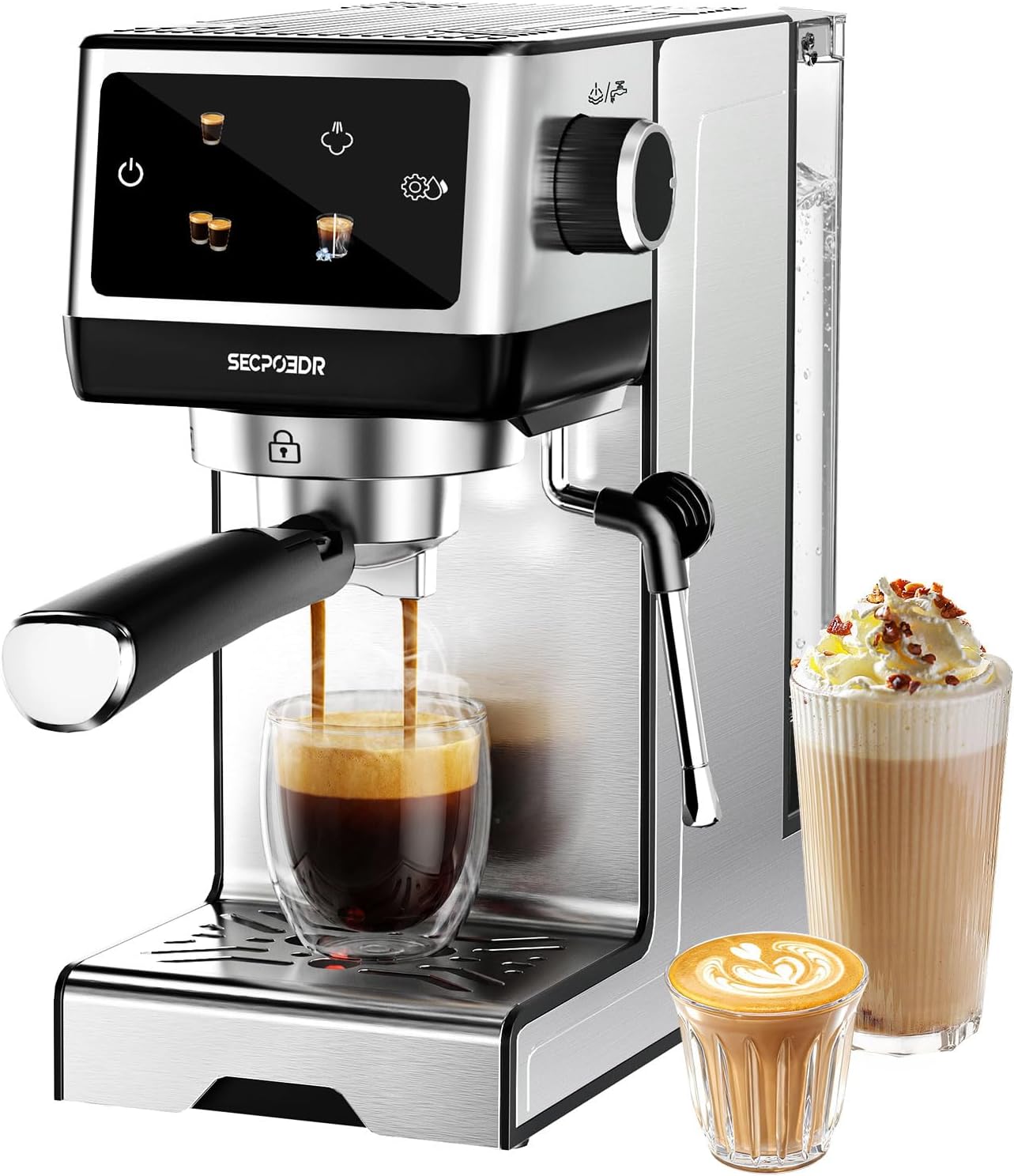
Twenty bar is a marketing number. Espresso wants roughly nine bar at the puck, and pressure above that is usually a sign the machine is pushing more than the basket needs to fight. I say that as a warning, not as a reason to skip this machine. As a first step on a tight budget, with a touch screen, a milk frother, and a cold brew function, it does a lot for the money.
Where it earns its place: counter space, convenience, and milk drinks. The frother takes the technique problem off your plate. The touch screen turns the morning routine into a tap instead of a ritual. Cold brew is a genuinely useful extra in summer, and it means one machine handles both your hot and your cold coffee. For someone who wants an iced latte in July and a cappuccino in November, that is a real argument.
Where it asks you to compromise: the basket. Pressurized baskets marketed as a feature are a pet peeve of mine, because they hide stale beans and a bad grind instead of revealing them. If you can swap in a non-pressurized basket, do it. If you cannot, use fresh beans and treat the machine as a stepping stone. And weigh your dose anyway, because the difference between a good shot and a bad one is often a few grams.
The Upgrade That Matters More Than Any Machine: KitchenTour Coffee Scale
If you take one thing from this article, take this: dosing by weight beats every feature on the machines above. The KitchenTour scale weighs up to 3kg in 0.1g increments, has a built-in timer, a back-lit LCD, and batteries in the box. It is the cheapest meaningful upgrade in espresso, and it is the one I would buy before a new machine.
Here is the workflow. Put the portafilter on the scale, tare it, dose your grounds by weight, then set the cup on the scale under the spout and pull the shot while the timer runs. You are watching two numbers: how much coffee went in, and how much liquid came out, and how long it took. A ratio of one part coffee to two parts espresso in the cup, in roughly 25 to 30 seconds, is a reasonable starting point for most beans. When the numbers drift, adjust the grind, not the machine.
The 0.1g resolution is what makes that possible. A kitchen scale that rounds to the nearest gram is fine for flour and useless when you are chasing a couple of grams of difference in the basket. A timer that lives under the cup instead of on your phone is the difference between a habit and a hassle. And the back-lit display means you can read it at 6 a.m. without turning on the kitchen lights.
Buy the scale before you upgrade the machine. A modest machine with a serious grinder beats an expensive machine with a cheap one, every time, and the scale is how you find out which one you actually own.
How I test espresso machines
Same beans, same grinder, one month of daily shots per machine, plus a milk pitcher test and a workflow test at the end of it. I pull a shot every morning before I am properly awake, which is the most honest test there is. If a machine is annoying at 6:30 a.m., you will stop using it by month three.
I look at four things. Temperature stability, meaning how steady the brew water stays across a shot, because that is the difference between consistent espresso and sometimes great, sometimes sour. Dead time, the wait between brew and steam, because that is where a workflow dies. Milk texture, because wand steam that cannot texture milk properly wastes a pitcher and your patience. And whether I still want to use the machine after four weeks, which no spec sheet measures.
Analysis and test results
Grinder first, machine second. That is not a slogan, it is the biggest single variable in your cup, and no machine in this article fixes a bad one. If your budget forces a choice, spend it on the grinder.
Pressure is the most oversold number in espresso. A 20 bar machine is not twice as good as a 9 bar machine. Most budget machines ship over-pressure from the factory, which is why the OPV, the over-pressure valve, is the first thing modders adjust. Get the pressure at the puck near nine bar and the same beans taste sweeter and less harsh. You cannot always adjust it, but you can stop treating a bigger number as a feature.
Temperature stability is the feature you feel every shot. Pressure profiling is the feature you will use twice, though I installed a flow control kit out of curiosity, so take that with the hypocrisy it deserves.
Dead time matters more than people expect. On the Silvia you brew, then wait for steam. On the Bambino Plus the wand is ready when you are. Neither is wrong, but one of them fits a household making four milk drinks before work and the other does not.
Water matters too. If a machine needs descaling every two weeks, something is wrong, either the water or the machine. Filtered water is not a luxury, it is part of the equipment.
And the basket. Pressurized baskets are a crutch. They hide stale beans and a bad grind, and they get marketed as convenience. Use them if you must, then move on.
Home espresso machine reference table
This is the table I would hand someone standing in my kitchen. Every machine got the same month, the same beans, and the same grinder. Prices move constantly, so check them at the link.
| Machine | Best for | What it does well | Where it falls short | Price |
|---|---|---|---|---|
 Visit on Amazon → Visit on Amazon →Breville Bambino Plus |
Most kitchens | Automatic steam wand, small footprint, fast warm up | No grinder in the box, not the professional basket size | $499.95 |
 Visit on Amazon → Visit on Amazon →Rancilio Silvia |
First serious machine | Bombproof stainless body, parts forever, manual wand with real power | Single boiler, so you wait for steam, and it demands technique | $995.00 |
 Visit on Amazon → Visit on Amazon →20 Bar Espresso Machine with Milk Frother, Cold Brew, Touch Screen |
Budget first step | Touch screen routine, milk frother, cold brew in one box | 20 bar is a marketing number, stock basket hides bad grind | $99.74 |
 Visit on Amazon → Visit on Amazon →KitchenTour Coffee Scale with Timer |
Everyone, before anything else | 3kg capacity, 0.1g precision, built-in timer, back-lit LCD, batteries included | No espresso machine in the box, obviously | $19.99 |
Should you buy the Breville Bambino Plus?
Yes, for most kitchens. It comes up to temperature fast, the automatic steam wand textures milk without a learning curve, and the workflow still makes sense in month three. The compromises are real: no grinder in the box and a basket that is not the professional standard, so the puck is less forgiving. Neither one matters if you buy a decent grinder and weigh your dose. If you want coffee better than the cafe down the street without turning your kitchen into a lab, this is the machine I would hand you first.
Should you buy the Rancilio Silvia?
Yes, if you want one machine for the next decade and you accept the single boiler. It is bombproof, parts are easy to find, and it rewards technique instead of hiding it. The dead time between brew and steam is the honest cost, and it is the reason I would not recommend it to a household making four milk drinks before work. Buy it because you want to learn the craft on something that will still be pulling shots when your taste in beans has changed three times.
Should you buy the 20 bar machine with the milk frother?
Yes, if the budget is tight and the counter is small. The touch screen, the frother, and the cold brew function cover more morning scenarios than most machines at this level, and it is a low-risk way to find out whether home espresso sticks. Just do not believe the pressure number, swap the basket if you can, and buy the scale. Treat it as a stepping stone and it will serve you well.
Should you buy the KitchenTour coffee scale?
Yes, and before anything else in this article. A tenth of a gram of resolution and a built-in timer are the two tools that turn guesswork into repeatable shots, and repeatable is the only path to better. It weighs your dose, it times your shot, and it costs less than the mistakes you will make without it. Buy the scale, then save for the grinder, then think about the machine.