The Espresso Grind Size Chart
The internet is full of espresso grind size charts that look like a chemistry textbook diagram. They show you a picture of table salt and tell you to "grind finer." That's not a chart. That's a suggestion.
After twelve years behind a bar, 40,000 shots pulled, and a garage full of machines I've killed so you don't have to, I've learned that a grind chart is only useful if it comes with context.
So here's mine.
The short list:
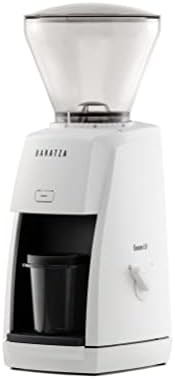
Baratza Encore ESP
Grinds fine enough for real espresso, consistent enough to dial in
Not stepless, but close enough for home use
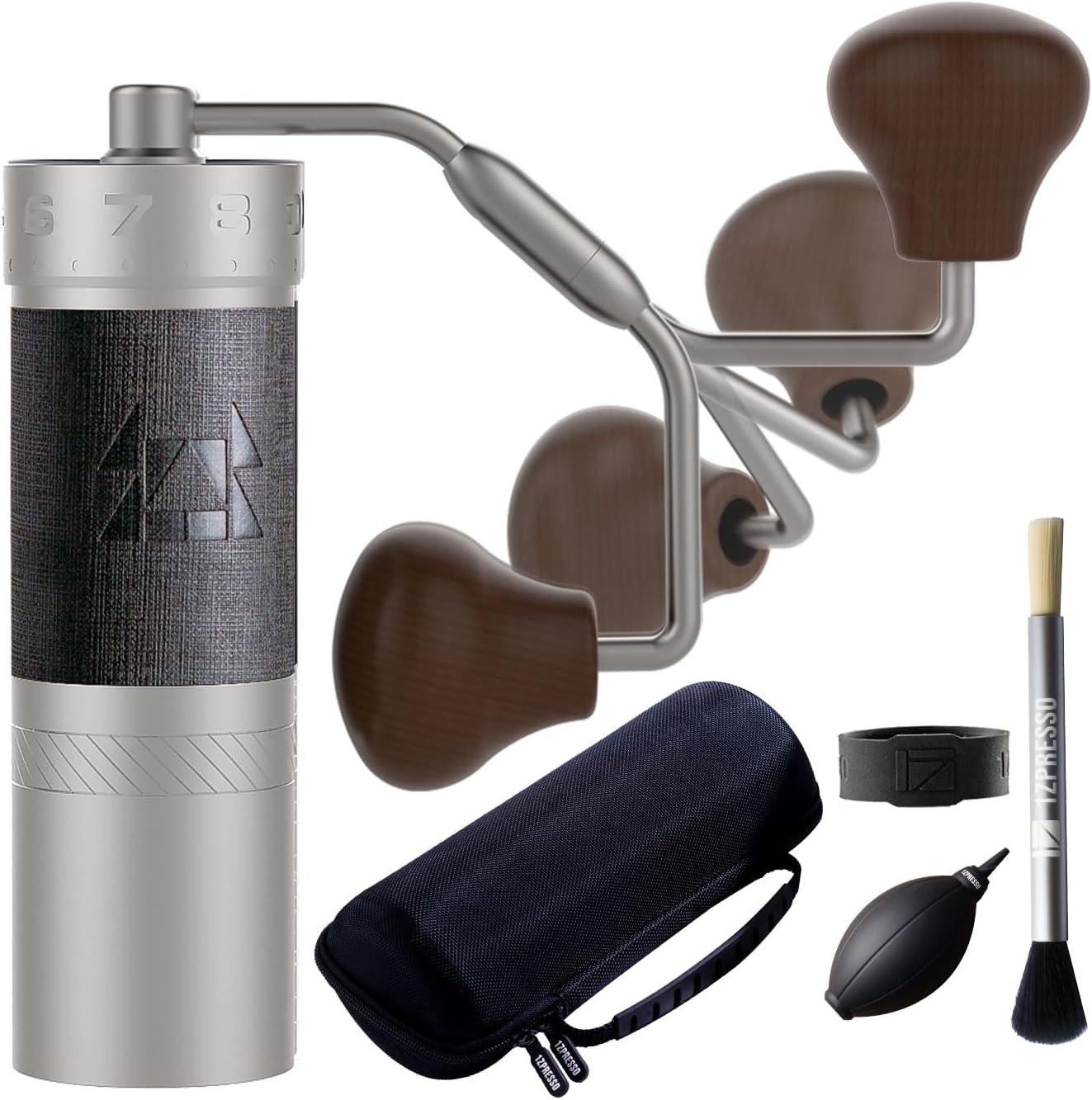
1Zpresso J-Max
Hand grinder that competes with electrics, zero retention
Requires arm work, slow for multiple shots
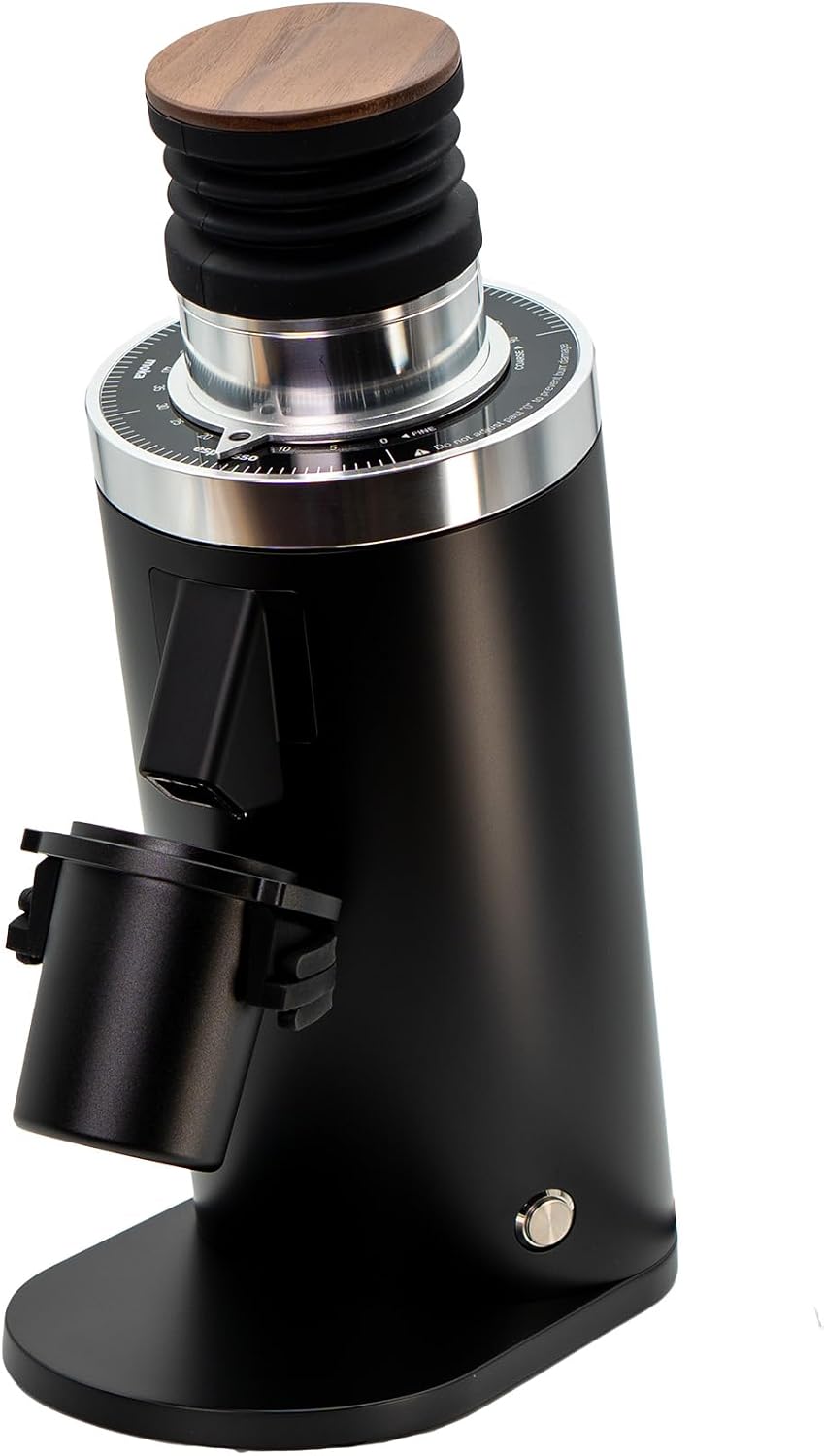
MiiCoffee DF64 II Single Dosing Coffee Grinder (Black)
Single-dose perfection, zero retention, the endgame for most
Sold out constantly, pricey for a single grinder
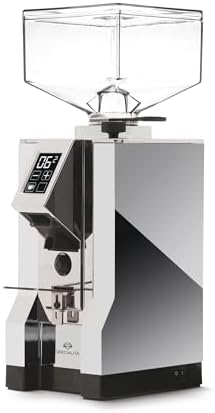
Eureka Mignon Specialita
Stepless adjustment, quiet, built like a tank
50mm burrs, and the dial is a bit fiddly
Prices and availability were captured from Amazon Creators API and may change.
How I Actually Test Grinders
I don't pull one shot and declare a winner. I run a grinder for weeks. I dial in three or four different beans on it. I make back-to-back milk drinks on a Saturday morning when my wife and I each want two lattes. I check the retention, the static, the mess on the counter, and whether the grind size actually stays put between shots.
The grind size chart below is based on that. Not on a weekend. Not on a spec sheet.
What "Fine" Actually Means
Here's the problem with every grind chart you've seen: they all say "espresso should be fine." That's like saying "a car should be fast." Fine for what? A dark roast from Brazil at 1:2 in 25 seconds needs a different grind than a light roast from Ethiopia at 1:2.5 in 35 seconds.
The chart I use isn't a picture of salt. It's a starting point, and then I adjust based on taste.
The baseline for a standard 15 in, 30 out, 25-30 second shot:
| Grind Setting | Texture | Best For | Flow Rate |
|---|---|---|---|
| 0-1 (Turkish) | Powder, finer than flour |  Visit on Amazon → Visit on Amazon →Turkish coffee, not espresso |
Too fine, channelling |
| 2-4 (Fine) |  Visit on Amazon → Visit on Amazon →Powder, slightly granular |
Espresso, dark roasts | 25-30 seconds |
| 4-6 (Medium-Fine) | Table salt |  Visit on Amazon → Visit on Amazon →Espresso, medium roasts |
20-25 seconds |
| 6-8 (Medium) | Sand | Moka pot, Aeropress | Too fast for espresso |
| 8-10 (Coarse) | Rough sand |  Visit on Amazon → Visit on Amazon →French press, cold brew |
Way too fast |
The Baratza Encore ESP: The Grinder I Recommend to Everyone
I've owned the Encore ESP for two years now. It sits on my counter as backup to the Niche Zero, and honestly, it gets more use than I expected.
The biggest issue with the ESP is the step adjustment. It's not stepless, so you're working in increments. For most people, that's fine. The steps are close enough that you can get within a second or two of your target shot time. But if you're chasing a specific 28-second extraction on a light roast, you might find yourself stuck between steps.
That's the only real criticism I have. The ESP grinds fine enough for real espresso, which the original Encore couldn't do. It has a 40mm conical burr set that's actually designed for espresso, not just renamed. It retains maybe half a gram between shots, which is annoying but manageable if you single-dose.
The price is the story here. At $199, this is the cheapest grinder I'd trust for espresso. I've seen people buy $50 blade grinders and wonder why their shots are sour. The grinder is the bottleneck. Always. The ESP is the cheapest way out of that trap.
I used mine for six months as my daily driver before I upgraded to the Niche. I pulled hundreds of shots on it. I never had a bad shot that was the grinder's fault. It's not flashy. It doesn't have a timer or a scale built in. But it's consistent, it's cheap, and it will make better coffee than a $2,000 machine with a blade grinder.
Choose the ESP if you want to stop drinking sour, under-extracted nonsense without spending a fortune. Skip it if you're the kind of person who will obsess over the last 2% of grind precision.
The 1Zpresso J-Max: The Hand Grinder That Surprised Me
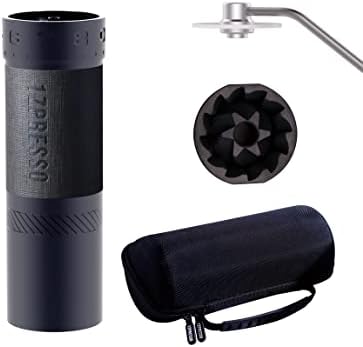
I'll be honest. I bought the J-Max as a travel grinder. I didn't expect to like it. I was wrong.
The J-Max is a hand grinder, and hand grinders have a reputation for being slow and inconsistent. This one isn't. The 48mm steel burrs are sharp, the adjustment is stepless, and the grind quality rivals grinders that cost twice as much. I've used it to dial in a light roast Ethiopian bean and got shots that were just as good as what I was pulling on the Niche.
The downside is physical. Grinding 18 grams of light roast takes about 45 seconds of actual arm work. That's fine for one shot. It's a chore when you're making four drinks on a Sunday morning. My wife won't touch it. She says it feels like a workout. She's not wrong.
The J-Max also has zero retention. Every gram of coffee you put in comes out. That's rare in electric grinders under $500. And it's quiet. I can grind coffee at 6 AM without waking the dog, which is more than I can say for some electrics I've owned.
At $199, the J-Max is the same price as the Encore ESP. They're different tools. The ESP is faster and easier. The J-Max is more precise and portable. If you make one or two shots a day and you don't mind the arm work, the J-Max is the better grinder. If you're making multiple drinks, get the ESP.
The Niche Zero: The Endgame
I've had my Niche Zero for 18 months. It's the grinder that stopped my upgrade spiral. Before the Niche, I had a Eureka Mignon Specialita, which was good, but I kept wondering if there was something better. The Niche ended that.
The Niche is a single-dose grinder. You weigh your beans, you drop them in, you grind. There's no hopper full of beans going stale while you work through a bag. There's no retention. The grind chamber is designed so that everything you put in comes out. I've measured it. Zero grams retained. That's unheard of in an electric grinder.
The grind quality is exceptional. The 63mm conical burrs produce a consistent particle size that makes dialing in almost boring. I set the grind for a new bag of beans, pull one shot, adjust slightly, and the second shot is dialed in. That never happened with my previous grinders.
The downsides are real, though. The Niche costs $599, and it's frequently sold out. The single-dose workflow means you're weighing every shot, which adds a step to your routine. The design is also a bit divisive. It looks like a spaceship. My wife hates it. I think it's beautiful. We've agreed to disagree.
The Niche is also not the fastest grinder. It takes about 15 seconds to grind 18 grams, which is slower than some flat burr grinders. That doesn't matter to me. The consistency is worth the extra few seconds.
If you're serious about espresso and you want to stop thinking about grinders, get the Niche. It's the last grinder you'll buy.
The Eureka Mignon Specialita: The Flat Burr Alternative
I owned the Specialita for about eight months before I switched to the Niche. It's a great grinder with a fatal flaw for my workflow.
The Specialita has 50mm flat burrs, which produce a slightly different particle distribution than conical burrs. Some people prefer flat burrs for light roasts because they can produce a brighter, more acidic cup. I could taste the difference, but it was subtle.
The bigger issue was the dial. The Specialita has a stepless adjustment, which is great in theory, but the dial is small and stiff. I found myself needing to make tiny adjustments and struggling to get the dial to stay where I put it. It's a minor annoyance, but when you're making two or three shots a day, it adds up.
The Specialita is also a hopper grinder. It came with a 300g hopper, which means coffee sitting in the hopper goes stale. I tried to single-dose with it, but the retention was around 1-2 grams, which made it hard to be precise. That's not the grinder's fault. It wasn't designed for single dosing. But it's a limitation.
The Specialita is quieter than the Niche. It's also faster. And it's cheaper at $449. If you're making coffee for a family and you don't want to weigh every shot, the Specialita with a hopper full of beans is a solid choice. Just know that the coffee in the hopper is degrading every day it sits there.
My Honest Bottom Line
The espresso grind size chart is a starting point, not a destination. You'll adjust it based on your beans, your machine, and your taste. The grinder is where you should spend your money. I've said it until I'm blue in the face. A $200 grinder with a $300 machine beats a $2,000 machine with a $50 grinder every single time.
Start with the Baratza Encore ESP. It's the best value in espresso grinding. If you catch the bug and you want to stop upgrading, save up for the Niche Zero. It's the endgame for most people. My dog Biscuit has been sleeping next to my Niche for 18 months now, and he's never once knocked it off the counter. That's the real quality test.