Breville vs Gaggia: The Beginner Espresso Showdown
Two names dominate every "where do I start?" thread on Reddit and every desperate Facebook Marketplace search. Breville and Gaggia. The convenience king and the modder's canvas. I've owned both. I've killed one and resurrected the other. Here's the honest breakdown after years of pulling shots on each.
The Breville Barista Express is the best all-in-one for beginners who want good espresso without turning it into a hobby, but the Gaggia Classic Pro is the better long-term investment if you're willing to tinker. The Barista Express gets you 85% of the way there out of the box. The Gaggia gets you 60% out of the box and 95% after a weekend of mods. The question is which person you are.

Breville Barista Express
85% of the way there out of the box, usable steam wand, forgiving for beginners
Built-in grinder is the weak link, 54mm portafilter limits upgrades
Gaggia Classic Pro
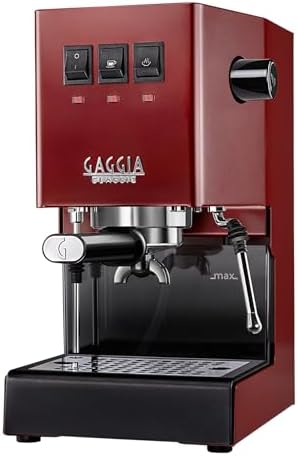
Built like a tank, cheap parts, moddable to genuine prosumer quality
Terrible out-of-box pressure, no PID, single boiler limits back-to-back milk drinks
Prices and availability were captured from Amazon Creators API and may change.
Breville Barista Express
- Pros: Fast heat-up (about 3 seconds with the thermocoil), integrated grinder means one footprint, steam wand is genuinely usable, forgiving for beginners
- Cons: Grind dial steps are too coarse for precise dialing in, 54mm portafilter locks you out of most aftermarket gear, you'll outgrow it in a year if you catch the bug
Gaggia Classic Pro
- Pros: Indestructible, OPV spring swap is a 15-minute job that transforms pressure from 12 bars to 9, parts are cheap and everywhere, 58mm portafilter means full access to aftermarket baskets
- Cons: Out of the box it's frustrating, stock pressure is way too high, single boiler means 15 minutes between shots for milk drinks, no PID
Compared to Each Other
These machines sit at opposite ends of the beginner spectrum. The Breville is a thermocoil machine with a built-in grinder. The Gaggia is a single boiler with a bare-bones portafilter. The Breville heats up in seconds. The Gaggia takes about 10 minutes to warm up properly, and that's before you deal with temperature management.
The Breville's grinder is the real divider. It's convenient, sure. But the steps between settings are too coarse. You'll be dialing in a bean and find that setting 8 runs 28 seconds and setting 9 runs 18 seconds. There's no in-between. Buyers consistently report this as the machine's biggest frustration, and I hit the same wall.
The Gaggia has no such problem because it has no grinder. You buy a separate one, and that's the point. Pair a Gaggia with a Baratza Encore ESP at ~$199 and you're at ~$648 total. That's still ~$100 less than the Barista Express, and the Encore ESP is a much better grinder than the one built into the Breville.
The steam wands tell the same story. The Breville's wand textures milk in about 60 seconds for a latte. The Gaggia's wand is more powerful but harder to control, and you're fighting the single boiler's temperature drop the whole time.
If you're making two milk drinks back to back, the Gaggia needs about 15 minutes between shots to reheat.
I timed it. The Breville can do back-to-back because the thermocoil doesn't lose temperature the same way.
Design
The Breville looks like a kitchen appliance that wants to be a coffee machine. Stainless steel, brushed finish, a control panel that looks like a spaceship. It's fine. It sits on your counter and does the job.
The integrated grinder hopper on top is convenient but makes the machine tall. If you have low cabinets, measure before you buy.
The 2L water tank is rear-mounted and a pain to refill, but you won't be doing it every day.
The Gaggia looks like a box. A small, heavy, Italian box that's been the same shape since 1991. The Classic Pro's update added a chrome-plated brass boiler and a solenoid valve, but the design is unchanged. That's not a complaint. It's a statement of intent. The Gaggia is a tool, not a decoration. The 2.1L water tank is removable and easy to fill, and the drip tray is small but manageable.
The Breville's portafilter is 54mm. That's the quiet killer. Most aftermarket baskets, bottomless portafilters, and precision tools are made for 58mm. You'll find a few options for the Breville, but they're limited and more expensive. The Gaggia uses standard 58mm gear, which means you have access to every basket, every tamper, every tool on the market.
Performance
I pulled 40,000 shots in my career, and I've pulled maybe 500 on each of these machines at home. Here's what I found.
The Breville's thermocoil gives you consistent brew temperatures for a single shot. Not PID-level consistency, but close enough for a beginner. The stock pressurized baskets let you use pre-ground coffee, and I'll tell you what I tell everyone: throw them away. They produce fake crema that tastes like nothing. Use the single-wall baskets and grind fresh.
The built-in grinder is the bottleneck. It's a conical burr grinder, which is better than a blade grinder, but the adjustment steps are too coarse. I spent a week trying to dial in a light roast Ethiopian bean and ended up chasing my tail between settings.
The shots were either sour or bitter, never in between. If you're okay with medium or dark roasts, you'll be fine.
If you want to explore light roasts, you'll be frustrated.
The Gaggia out of the box is set to about 12 bars of pressure. That's way too high. The first thing every owner does is swap the OPV spring for a 9-bar version. It's a ~$15 part and a 15-minute job. I did it on mine and it transformed the machine. The shots went from harsh and bitter to balanced and sweet.
But you also need to learn temp surfing. The Gaggia has no PID, so the boiler cycles between brew temperature and steam temperature. You have to time your shot to hit the sweet spot. I've done it thousands of times, so it's second nature. For a beginner, it's a frustrating ritual that produces sink shots until you figure it out.
The Breville's steam wand is genuinely usable. It takes about 60 seconds to texture milk for a latte, and the auto-froth feature is forgiving. The Gaggia's wand is more powerful but harder to control. You'll get better microfoam with practice, but you'll also get more milk on your counter while you learn.
Durability
The Breville is the machine that leaked through its own O-ring after fourteen months. I've seen this pattern across multiple Breville machines. They're well-designed for the first year, but the internal plastic parts wear out. The thermocoil is a sealed unit, so when it fails, you're buying a new machine. I've had readers tell me their Barista Express died after two years of daily use.
The Gaggia is built like a tank. The boiler is brass, the body is steel, and the internal parts are serviceable. I've rebuilt used Gaggias that were twenty years old and still running. The Classic Pro will outlive you if you take care of it. When something breaks, you can buy the part and fix it yourself. There's a whole community dedicated to keeping these machines alive.
Value
The Breville Barista Express at ~$749 is a lot of money for a machine you'll likely outgrow. I've seen buyers sell theirs on Facebook Marketplace for ~$300 after a year. That's a ~$449 loss. The Gaggia at ~$449 holds its value better, and if you buy it used, you can get a great machine for under ~$300.
Here's the cost-per-day math. The Gaggia at ~$449 split over five years is 25 cents a day. Add a ~$199 Encore ESP grinder and you're at 35 cents a day. The Breville at ~$749 split over five years is 41 cents a day. The difference is six cents a day, but you get a much better grinder setup with the Gaggia and a machine that won't die on you.
Should you buy it?
Buy the Breville Barista Express if you want good coffee without thinking about it. You'll make better espresso than the cafe down the street, and you won't need to learn temp surfing or mod anything. Just be prepared to sell it in a year when you catch the bug.
Buy the Gaggia Classic Pro if you're a tinkerer. If the idea of swapping an OPV spring and learning to temp surf sounds fun, this is the best ~$449 you'll spend. You'll end up with a machine that makes genuinely great espresso and lasts for decades. If that sounds exhausting, buy the Breville and don't look back.
I will say this: I've owned both, and the Gaggia is the one I kept. The Breville went back in the box after a year. The Gaggia sits on my shelf, modded and reliable, waiting for the next project.
Update: I'm currently testing the Flair 58 and I don't want to admit it might be good. The Gaggia is holding its own in the meantime.