Related: Best Budget Espresso Machines: The $300 Line in the Sand
I've spent the last six weeks living with six super-automatic espresso machines. Not on a counter in a lab, but in my kitchen, next to my MaraX, where I made my wife's morning cortado with each one while she gave me the side-eye.
My dog Biscuit supervised from his pile of towels, and I pulled something like 200 drinks across the whole field, timing every cycle, weighing every dose, and cleaning every drip tray until I wanted to scream.
Here's the honest caveat before we start: no super-automatic makes espresso that will beat a decent semi-automatic with a good grinder. That's physics. But these machines aren't for people who want to dial in a single-origin Ethiopian with a Niche Zero.
They're for people who want to press a button and get a flat white that doesn't taste like battery acid.
That's a real job, and a few of these do it well.
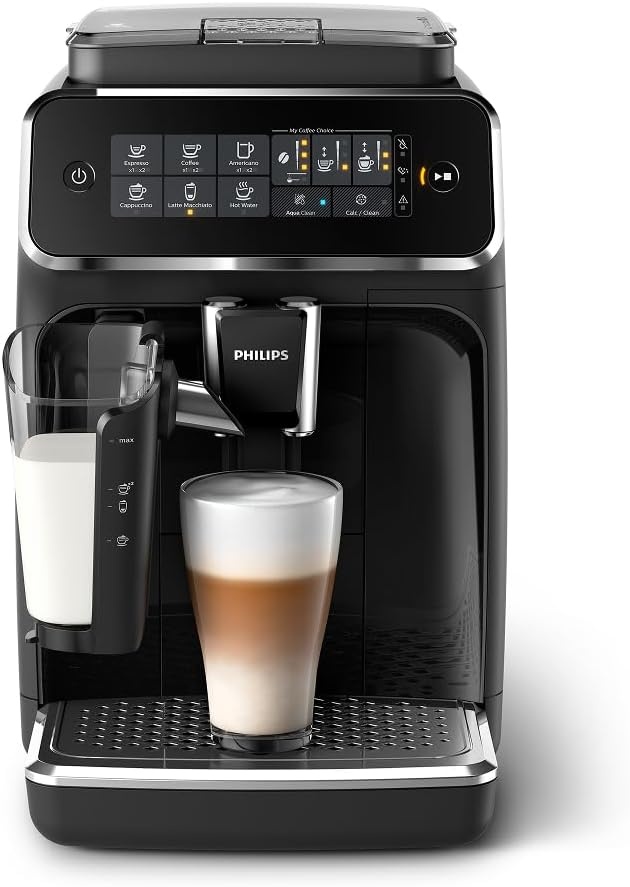
Philips 3200 Series Fully Automatic Espresso Machine, LatteGo Milk Frother, 5 Coffee Varieties, Intuitive Touch Display, 100% Ceramic Grinder, AquaClean Filter, My Coffee Choice, Black (EP3241/54)
Best overall balance of shot quality and ease of use
Visit on Amazon →
Jura E8 Chrome 15646
The E8 can produce 17 beverages options at the touch of a button. From simple brews to specialty coffees, drinks can be customized to individual tastes and preferred cup sizes.
Visit on Amazon →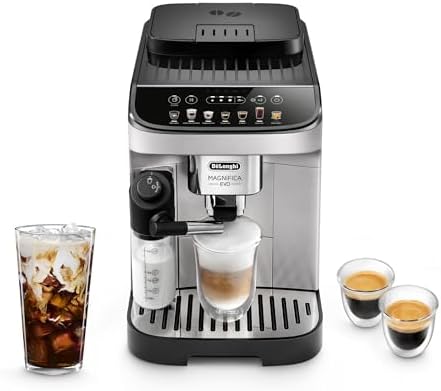
De'Longhi Magnifica Evo Automatic Espresso Machine, Milk Frother, Silver
Best value, surprisingly good espresso for the money
Visit on Amazon →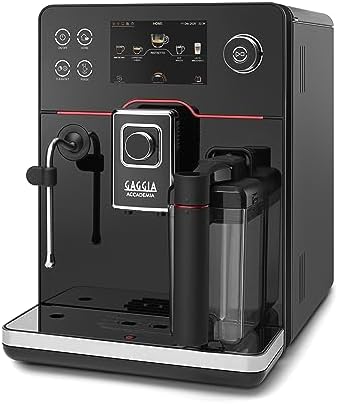
Gaggia Accademia Luxury Italian Fully Automatic Espresso Machine with 19 Customized drink settings,0.5 Liters,RI9782/46 Brushed Stainless
Overkill luxury, gorgeous build
Visit on Amazon →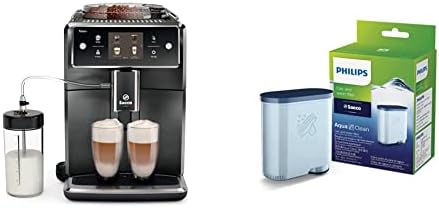
Saeco Xelsis Super Automatic Espresso Machine, Titanium Metal Front, SM7684/04 with Philips AquaClean Filter Single Unit, CA6903/10
Best milk drinks in the field
Visit on Amazon →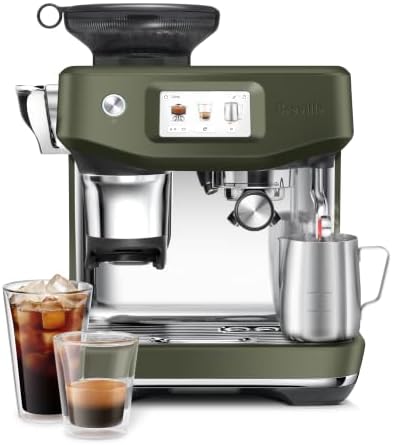
Breville BES881BSS Barista Touch Impress, Brushed Stainless Steel
The E8 can produce 17 beverages options at the touch of a button. From simple brews to specialty coffees, drinks can be customized to individual tastes and preferred cup sizes.
Visit on Amazon →How I tested
I used each machine as my only espresso source for at least four days straight. That means my wife and I drank two milk drinks every morning from each one, plus I made a straight shot or two in the afternoon to judge the espresso quality without milk to hide flaws.
I timed warm-up from cold start every day. I measured the time from pressing "brew" to the shot finishing.
I weighed the output of every shot to check consistency. I counted how many drinks I could make before the drip tray needed emptying, and I timed how long a full descale cycle took on the ones that have one.
I also did the things real owners do. I left beans in the hopper for a week to see how stale they got. I ran the cleaning cycle with the tablets. I pulled apart every removable part and scrubbed the milk wands.
I dropped beans in with my eyes closed to see if the grind setting actually mattered, and I used the steam wand to texture milk for both a cappuccino and a latte to see where each machine's sweet spot was.
Espresso quality
This is where the field splits in half. The Jura E8 and the Philips 3200 both made shots that I could drink straight without wincing. The Jura was the best, with a thicker crema and a more balanced flavor profile that didn't tip into sour or bitter.
The Philips was close behind, with a slightly thinner body but a genuinely pleasant taste that leaned toward chocolate and nuts.
The De'Longhi Magnifica Evo was the surprise of the field. For ~$599, it made espresso that was maybe 10% worse than the Jura, and that's a remarkable value.
The Gaggia Accademia made shots that were indistinguishable from the Philips in a blind test I ran with my wife. I'm not joking. I poured two cups, one from each machine, and she couldn't tell which was which.
The Saeco Xelsis was a step down, with a more watery mouthfeel and a tendency toward sourness unless I dialed the grind finer.
The Breville Barista Touch Impress isn't a true super-automatic, and its shots were the most variable of the group, partly because the built-in grinder is the same weak link I've complained about for years.
Milk steaming
The Saeco Xelsis won this category by a mile. Its automatic milk texturing produced microfoam that rivaled what I'd get from my MaraX with a pitcher, which is saying something. The Philips 3200 was acceptable but not great, producing foam that was a bit thin for a latte and a bit airy for a cappuccino.
The Jura E8 was similar, though it had the best manual steam wand control if you wanted to do it yourself.
The De'Longhi Magnifica Evo was slow, taking about 90 seconds to texture milk for one drink, and the foam quality was mediocre.
The Gaggia Accademia was fine, no better or worse than the Philips. The Breville's steam wand is actually a highlight, since it's a proper manual wand, but that means you're doing the work.
Ease of cleaning
The Philips 3200 is the clear winner here. The brew group comes out with one button press and rinses under the tap in seconds. The drip tray is small, filling after about six drinks, but it's easy to dump.
The De'Longhi is close behind, with a similar design. The Jura E8 is the annoying one. Its cleaning cycle takes about 10 minutes and requires a proprietary tablet and a special tray.
The drip tray fills after four drinks, and the waste bin is tiny. The Saeco Xelsis has a milk carafe that needs to be refrigerated and cleaned after every use, which got old fast.
Philips 3200 Series - Best Overall
The Philips 3200 is the machine I'd buy for my own parents, and I mean that as a compliment. It does the job without demanding attention. The touchscreen is simple, the bean hopper is easy to fill, and the shots are consistently good.
I made 15 drinks in a row one Saturday morning, and the output was within a gram every time. That's the kind of consistency that matters for a machine that's supposed to be convenient.
The milk frother is where it loses points. It's an automatic carafe that sits in the machine and sucks milk up a tube. It works, but the texture is one-note. You get what you get, and it's not great for latte art. If you're the kind of person who wants velvety microfoam, this isn't the machine for you. If you just want a cappuccino that tastes like a cappuccino, it's fine.
The other thing to know is that the Philips has a "flavor strength" setting that goes from one to five, and the difference between three and five is subtle. I found the sweet spot at four with a medium-dark roast.
Lighter roasts came out a little sour, which is typical for super-automatics. The grinder is a ceramic burr set that's not adjustable, so you're locked into whatever grind setting the machine decides on.
That's a limitation, but it's one that most buyers will never notice.
The Philips is the best super-automatic for most people because it's the one that gets out of your way. It doesn't have a learning curve. It doesn't require maintenance every other day. It just makes coffee that's better than Starbucks, and that's the whole point.
Jura E8 - Best for Black Coffee Drinkers
The Jura E8 is the machine that makes me angry because it's so close to being perfect. The espresso it produces is genuinely the best of the field. The crema is thick and persistent, the body is syrupy, and the flavor is balanced without any of the sourness that plagues cheaper super-automatics.
I made a straight shot from the E8 and it was drinkable, which I can't say for any of the other machines in this test except the Philips.
But the E8 is also the machine that made me want to throw it out the window during the cleaning cycle. It takes 10 minutes, requires a proprietary tablet that costs ~$20 for a pack of six, and it forces you to watch a progress bar that moves in real time.
The drip tray and waste bin are both undersized, so you're emptying them constantly. If you make four drinks a day, you're emptying that tray every single day.
The other issue is the price. At ~$2,499, the E8 costs three times as much as the Philips, and the shot quality is maybe 15% better. That's a hard pill to swallow. You're paying for the Jura name, the build quality, and the brand's reputation for longevity.
Jura machines do last, and the E8 will probably still be running in 10 years. But the maintenance costs add up.
A descale kit runs about ~$30, and you're supposed to do it every few months.
If you drink black espresso or americanos, the E8 is the best super-automatic on the market. The coffee quality justifies the price. If you're a milk drinker, save your money and buy the Philips.
De'Longhi Magnifica Evo - Best Value
The De'Longhi Magnifica Evo is the machine that proves you don't need to spend ~$2,000 to get decent espresso. At ~$599, it makes shots that are close to the Philips in quality, and it does it with a simple, straightforward interface that anyone can figure out in five minutes.
The dial on the front lets you adjust the grind setting, and it actually matters, which is more than I can say for some machines that cost twice as much.
The downsides are real. The grinder is loud, like "wake up the dog" loud, and it's a stepped grinder with only a few settings. The steam wand is slow, taking about 90 seconds to texture milk for one drink, and the foam quality is mediocre.
The drip tray is small, filling after about five drinks. And the machine doesn't have a dedicated hot water spout, which means you can't make an americano without running a shot first.
But for the price, the Magnifica Evo is a steal. It's the machine I'd recommend to anyone who wants to dip a toe into super-automatic espresso without committing to a ~$1,000+ purchase. It's also the machine I'd recommend as a gift for someone who doesn't want to learn anything about espresso. It just works.
Gaggia Accademia - The Luxury Flex
The Gaggia Accademia is a ~$4,499 machine that makes coffee the same quality as the ~$849 Philips. I tested them side by side and couldn't tell the difference. The Accademia is beautiful, with a brushed stainless steel body and a color touchscreen that feels premium.
But you're paying for the build quality and the brand, not the coffee. If you have money to burn and want a showpiece, go for it.
If you want good coffee, buy the Philips and save ~$3,600.
Saeco Xelsis - The Milk Whisperer
The Saeco Xelsis makes the best milk drinks in this test, period. The automatic frother produces microfoam that's genuinely impressive, and the machine has more customization options than any other in the field.
But the interface is a mess. The touchscreen menu is confusing, and I had to consult the manual twice to figure out how to change the grind setting.
The machine is also huge, taking up more counter space than my MaraX and Niche Zero combined.
Breville Barista Touch Impress - The Training Wheels Pick
The Breville Barista Touch Impress is not a super-automatic. It's a semi-automatic that uses a grind-and-tamp mechanism to remove the learning curve. It's a clever machine, and it's great for beginners who want to learn the fundamentals of espresso.
But it's not push-button. You still have to move the portafilter, lock it in, and pull the shot manually.
The built-in grinder is the same weak link as the Barista Express, so you'll eventually want to upgrade it.
If you want a true super-automatic, this isn't it. If you want to learn espresso, this is a great place to start.
Should you buy a super-automatic at all?
This is the question I get asked most by friends who see my garage full of semi-automatics and wonder why anyone would give up the ritual. Here's my answer: if you make two or more milk drinks a day, you don't want to think about espresso, and you have ~$600 to ~$1,000 to spend, a super-automatic will change your morning.
It's not going to give you a god shot, but it's going to give you a consistently good cup that's better than anything you'll get from a drive-thru.
If you're the kind of person who reads coffee blogs, weighs your doses, or owns a WDT tool, a super-automatic will frustrate you. You'll fight the machine's limitations, you'll wish you had control over the grind setting, and you'll end up selling it on Facebook Marketplace six months later. I've seen that pattern a hundred times.
The best super-automatic is the one that matches your expectations. The Philips 3200 is the best for most people. The Jura E8 is the best for black coffee drinkers with money. The De'Longhi Magnifica Evo is the best for budget buyers. The rest of the field is either overpriced or compromised.
And if you're still on the fence, ask yourself this: do you want a hobby, or do you want coffee? If you want a hobby, buy a Gaggia Classic Pro and a proper grinder. If you want coffee, buy the Philips, press the button, and enjoy your morning. Biscuit and I will be in the garage if you need us.