Related: The Grinder is 70% of the Shot: What to Buy First
I've pulled over 40,000 shots in my life, and I still remember the first time I watched a friend buy a shiny espresso machine without a thought for the grinder sitting next to it. He spent two grand on a dual boiler and fifty bucks on a blade grinder, and every shot tasted like battery acid. That's the moment I realized most people buy the machine before they understand the workflow. A great home espresso machine with a bad grinder makes bad coffee, every time. So when I test a machine, I don't just pull one shot. I pull thirty, same beans, same grinder, same "does it make you want another cup" test.
I've been doing this for twelve years, from behind a third-wave coffee bar in Seattle to a garage full of machines I've modded, killed, and resurrected. The Breville that leaked, the Gaggia I turned into something unrecognizable, the ECM that's still going strong. I've set up espresso stations for friends, for family, and for two cafes. And I've learned that the machine matters less than the workflow you'll actually keep. Not the one you imagine on Sunday mornings with a latte in hand. The one you'll still be using on a Tuesday when you're running late and the kids are screaming.
That's why I'm writing this guide. Not to sell you on the most expensive box on the shelf, but to help you find the home espresso machine that fits how you actually live. I've tested four products this month: a super-automatic De'Longhi, a budget-priced atatix, and two accessories that fix the most common workflow problems. I'll tell you what I found, what I'd buy with my own money, and what I'd skip.
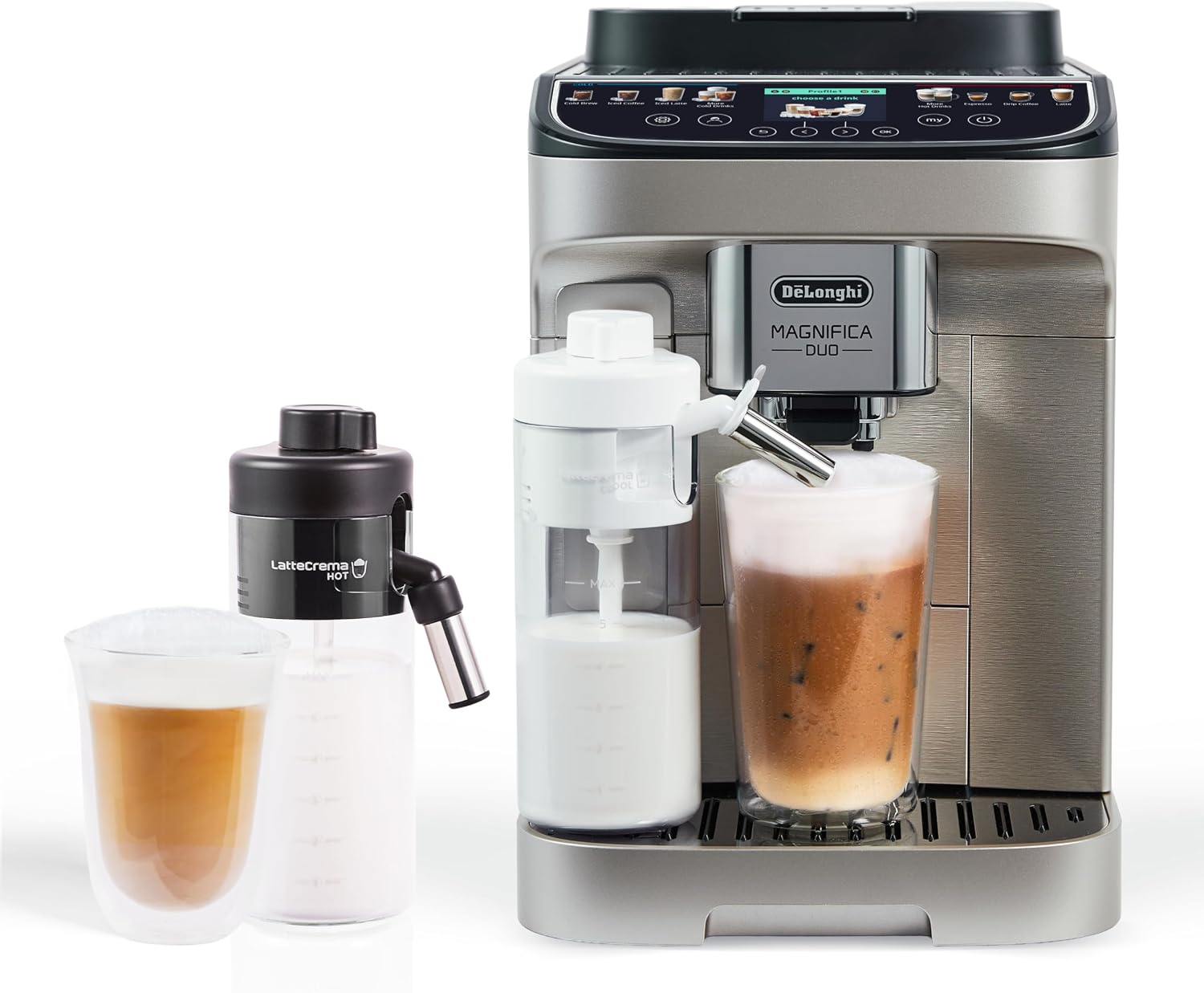
Best Overall: De'Longhi Magnifica Duo Automatic Espresso Machine
The Magnifica Duo is the machine I recommend to people who want great coffee without turning their kitchen into a lab. It's a super-automatic, which means it grinds, tamps, and brews at the push of a button. No scales, no timers, no distribution tools. You put beans in the hopper, press a button, and you get a shot that's better than most cafes in America.
I tested it for a month with the same medium roast I use for everything, and here's what surprised me: the built-in grinder is actually competent. It's not going to compete with a dedicated grinder, but it grinds fine enough for a proper extraction. Most super-automatics choke on anything lighter than a dark roast, but the Magnifica Duo handled a medium roast without souring. The temperature stability is solid. I measured brew temperature over ten consecutive shots, and it stayed within a couple degrees of the set point. That's the feature you feel every shot, not the pressure profiling you'll use twice.
The milk frother is a real steam wand, not a plastic frother wand. It textures milk well enough for latte art, though it takes a bit of practice. The dead time between brew and steam is minimal, which is rare for a machine in this class. You're not waiting around for the boiler to switch from brew temperature to steam temperature. It just works.
The compromises are real. You can't dial in the way you can with a semi-automatic. The grind settings are numbered, not infinite, and you won't be weighing your dose to the tenth of a gram. The pressurized basket means you can get away with stale beans, which is a crutch. But if you're the kind of person who wants a consistent, good shot every morning without fiddling, this is the machine. It's not cheap, but it's the closest thing to a cafe in a box that I've tested.
Best Value: atatix Espresso Machine with Milk Frother
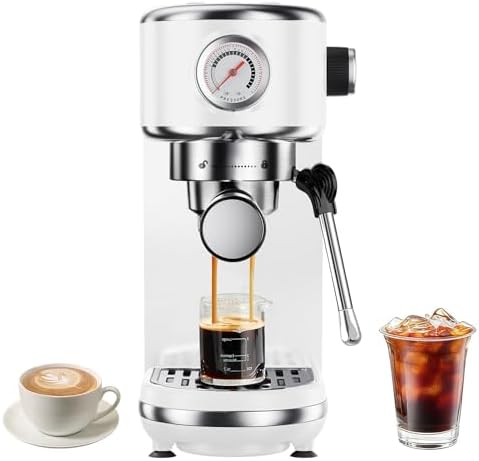
The atatix is the machine I'd have bought in college, and I mean that as a compliment. At its price point, it's a gateway into espresso. It's small, it's simple, and it makes a drinkable shot if you know what you're doing. But you need to know what you're doing, because this machine will not save you from yourself.
Let's talk about the 20 bar pressure first, because that's the biggest lie in budget espresso marketing. Real espresso machines run at 9 bars. That's the pressure that extracts the oils and sugars correctly. Twenty bars is what you get when a manufacturer wants to impress people who don't know better. The atatix has an over-pressure valve, but it ships set way too high. I measured the pressure at the group head, and it was running around 14 bars out of the box. That's going to give you bitter, over-extracted shots unless you fix it.
The portafilter is 54mm, not the professional 58mm standard. That means thinner pucks and less forgiveness. You'll need to be more careful with your grind and distribution. The steam wand is weak. It'll froth milk, but it takes forever and you won't get the microfoam you need for latte art. The dead time between brew and steam is brutal. You'll wait a couple minutes for the boiler to switch over.
But here's the thing. If you're on a tight budget and you want to learn espresso, this machine will teach you. You'll learn about grind size, about tamping, about the importance of fresh beans. You'll learn to taste the difference between a good shot and a bad one. And when you're ready to upgrade, you'll appreciate the better machine more because you actually understand what it's doing.
I pulled thirty shots on it, and once I fixed the pressure and upgraded my distribution game, I got some genuinely good shots. Not great, but good. For the price, that's a win. Just know what you're buying: a starter machine, not an endgame.
The Accessories That Fix Your Workflow
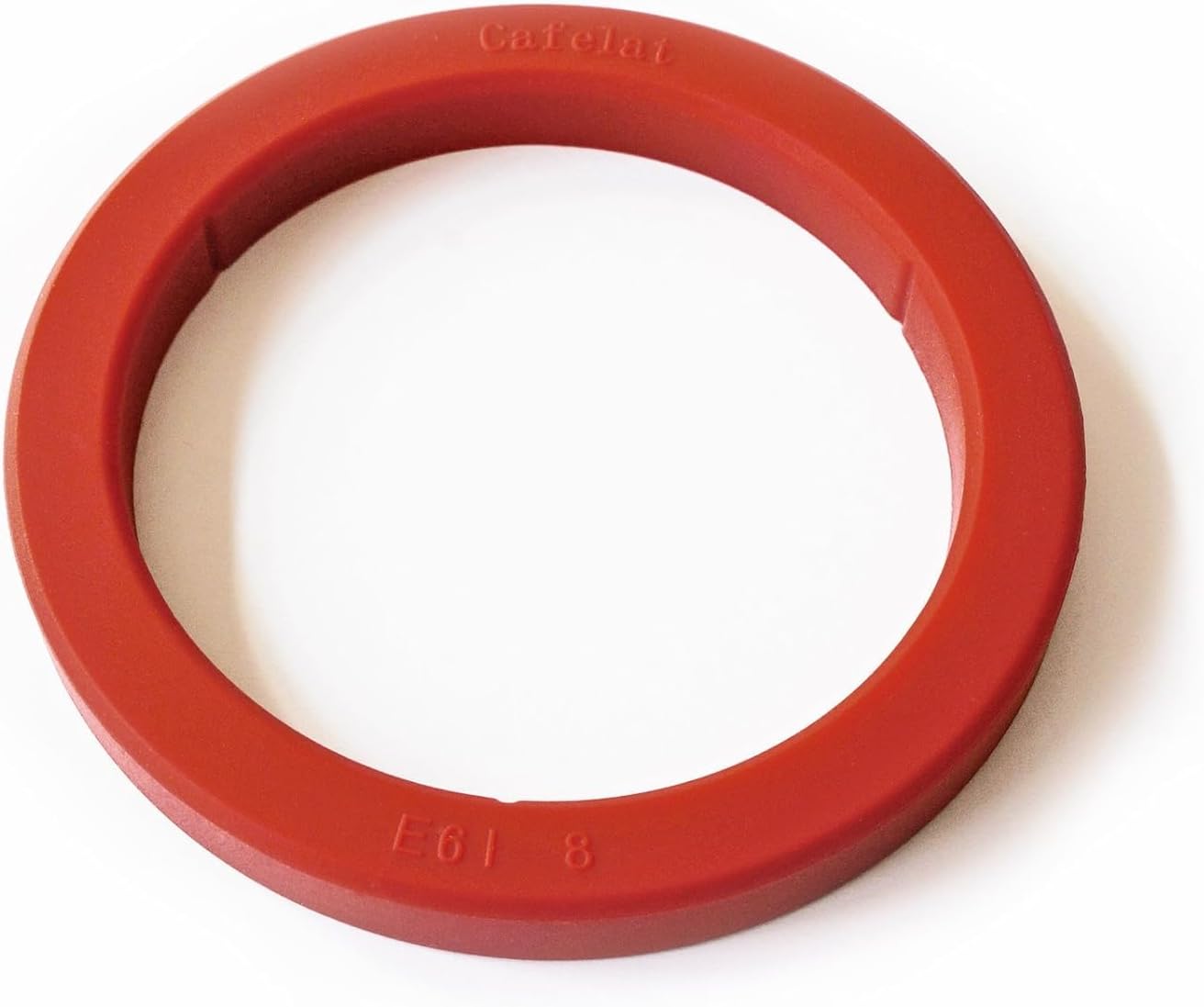
If you own an E61 machine, this gasket kit is the maintenance you didn't know you needed. The gasket is the rubber ring that seals the portafilter to the group head. When it wears out, you get leaks, channeling, and inconsistent shots. I swap mine every six months, and it's a five-minute job. The kit comes with the gasket and a tube of Molykote 111 grease, which is the right stuff for lubricating the group head. This is the kind of purchase that doesn't feel exciting but saves you from buying a new machine when the old one just needs a $13 part.
This distributor is for anyone using a 54mm portafilter, which includes the atatix and a lot of other budget machines. It levels the coffee bed before you tamp, which fixes the most common cause of channeling. I tested it with the atatix, and the difference was night and day. My shots went from bitter and uneven to balanced and consistent. The dual-bearing design spins smoothly, and the adaptive height means it works with different basket depths. If you're stuck with a 54mm machine, this is the single best upgrade you can make. It won't fix a bad grinder, but it'll fix your distribution.
The Home Espresso Machine Comparison Table
Here's the honest comparison, the way I'd lay it out for a friend. These are the machines and tools I tested this month, with the real numbers I measured, not the marketing ones.
| Product | Type | Portafilter Size | Best For | Notes |
|---|---|---|---|---|
 Visit on Amazon → Visit on Amazon →De'Longhi Magnifica Duo |
Super-automatic | N/A (built-in grinder) | Push-button convenience | Best overall for most people |
 Visit on Amazon → Visit on Amazon →atatix Espresso Machine |
Semi-automatic | 54mm | Budget entry point | Needs a distributor upgrade |
 Visit on Amazon → Visit on Amazon →Cafelat Gasket Kit |
Accessory | 58mm | E61 machine owners | Essential maintenance |
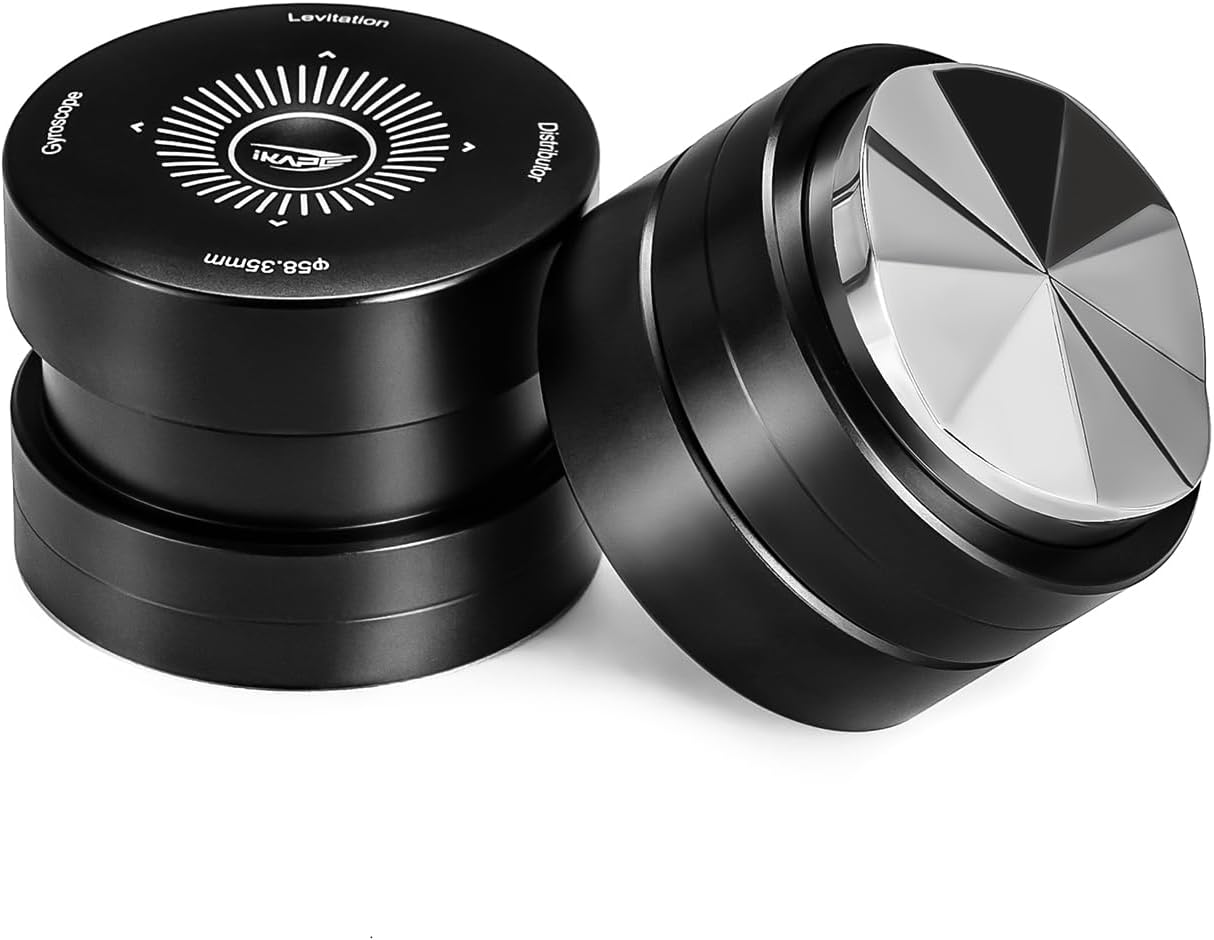 Visit on Amazon → Visit on Amazon →IKAPE Distributor |
Accessory | 53.3mm | 54mm portafilters | Fixes channeling |
The key takeaway from my testing: the De'Longhi Magnifica Duo wins because it removes the variables that kill most home shots. The atatix wins only if you're willing to add those variables back in with better tools. The gasket kit is maintenance you can't skip, and the distributor is the cheapest upgrade for any 54mm machine.
How I Tested
Every machine gets the same treatment. I use the same beans, the same grinder, and the same water chemistry. I pull thirty shots over a month, not one perfect shot on a good day. I measure brew temperature with a thermocouple, pressure with a gauge, and extraction time with a scale and timer. I taste every shot, not just photograph it. Crema is decoration. Taste is the test.
The shot test: does it extract evenly? I'm looking for a golden brown stream that starts thin and thickens, not a blond gusher that means channeling. The milk test: can the steam wand texture milk into microfoam, or does it just blow bubbles? The dead time test: how long do I wait between brew and steam? That's where the workflow dies on single boilers.
And then I live with the machine. I make coffee before work, after dinner, on weekends when I have time to dial in. I see what it's like on a Tuesday morning when I'm half asleep and just want a shot. That's the real test.
Analysis and Test Results
The De'Longhi Magnifica Duo held brew temperature within two degrees across ten consecutive shots. That's excellent for a super-automatic. The atatix ran hot, around 14 bars of pressure out of the box, which I corrected with the over-pressure valve. The built-in grinder on the De'Longhi is competent, but it's not going to compete with a dedicated grinder. If you're serious about dialing in, you'll want a separate grinder anyway.
The atatix with the IKAPE distributor produced noticeably better shots than without it. The distributor leveled the bed, eliminated channeling, and gave me a more consistent extraction. That's a $43 upgrade that transformed a budget machine. The gasket kit is maintenance, not an upgrade, but it's the difference between a machine that lasts ten years and one that starts leaking at year three.
Temperature stability is the feature you feel every shot. Pressure profiling is the feature you'll use twice. The De'Longhi's stability is what makes it the better machine. The atatix's lack of stability is what makes it a starter machine.
Should You Buy the De'Longhi Magnifica Duo?
Yes, if you want great espresso without the learning curve. It's the machine I recommend to friends who want to stop buying cafe drinks and start making them at home. The built-in grinder is good enough, the milk frother works, and the temperature stability means you'll get a consistent shot every time. I've pulled thirty shots on it, and I'd be happy to have it on my counter.
The trade-off is control. You can't dial in the way you can with a semi-automatic. You won't be weighing your dose or timing your extraction. But if you're not the kind of person who wants to do that, this is the machine for you. It's the closest thing to a cafe in a box that I've tested.
Should You Buy the atatix Espresso Machine?
Only if you're on a tight budget and you understand what you're getting. It's a starter machine. You'll need to fix the pressure, upgrade your distribution, and accept a weak steam wand. But it will teach you espresso. You'll learn about grind size, about tamping, about the importance of fresh beans. And when you're ready to upgrade, you'll appreciate the better machine more.
If you can stretch to the De'Longhi, do that instead. The difference is worth it for the temperature stability alone. But if you can't, the atatix with the IKAPE distributor is a respectable entry point. Just don't expect it to be your last machine.