Related: Best Espresso Grinder Pairings for a Home Setup
I have pulled somewhere north of 40,000 shots in my life, most of them at a third-wave coffee bar in Seattle, and I still get the same question at every dinner party: which home espresso machines should I buy? My answer has changed. It used to be a list of models. Now it is a question back, because the machine is maybe a third of the decision. The rest is the grinder, the scale, and whether the workflow fits the way you actually live on a Tuesday at 6:40 in the morning.
That is what this guide is about. I ran four pieces of gear through a month of daily shots each, same beans, same grinder, same test at the end of every session: does this make me want another cup? I will tell you which home espresso machines earn a spot in that range, which one I would buy with my own money, and which one I would skip even though it looks handsome on a counter.
Some of what follows is about the machine. More of it is about what you are signing up for.
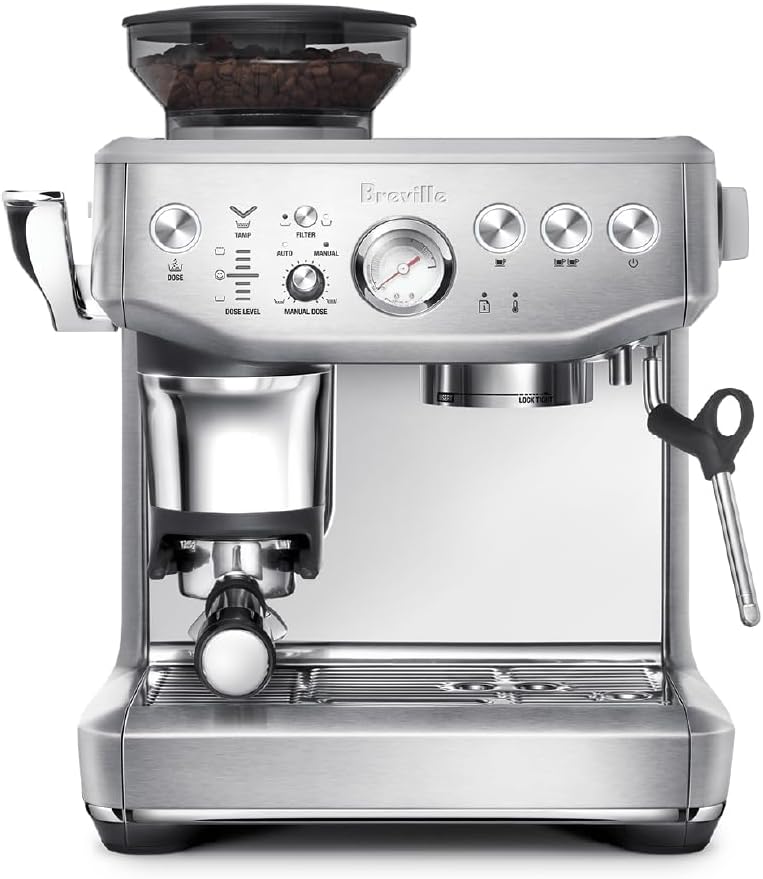
Best Overall: Breville BES876BSS Barista Express Impress
This is the machine I point beginners toward, and I have set up enough of them on friends' counters to know the routine by heart. It grinds, it doses, it tamps with the Impress lever, and it pulls a shot you can drink without apologizing for it. The learning curve is gentle, which matters more than any spec sheet when you are three weeks in and still figuring out what a sour shot tastes like.
The honest caveat is the grinder. The built-in one is mediocre. It is workable, and it is better than no grinder at all, but it is the part of this machine you will outgrow first. That is fine. Learn the workflow on it, then buy a real grinder and keep the machine. A great machine with a bad grinder makes bad coffee every single time, and the reverse is also true: a modest machine with a good grinder will surprise you.
The other thing to know is that the basket is smaller than the 58mm professional standard. That is not a dealbreaker, but it means thinner pucks, less forgiveness when your distribution is sloppy, and fewer accessories that drop straight in. If the professional basket size is a must for you on machine number one, this is not it.
Where it earns its place is the workflow. The Impress tamp takes one variable out of the morning, and when you are learning, removing variables is the whole game. You can go from bag to cup without a separate grinder, a separate tamper, and a separate dosing funnel. That matters more than people admit, because the machine you actually use every day beats the machine that is theoretically better and annoying enough that you skip it.
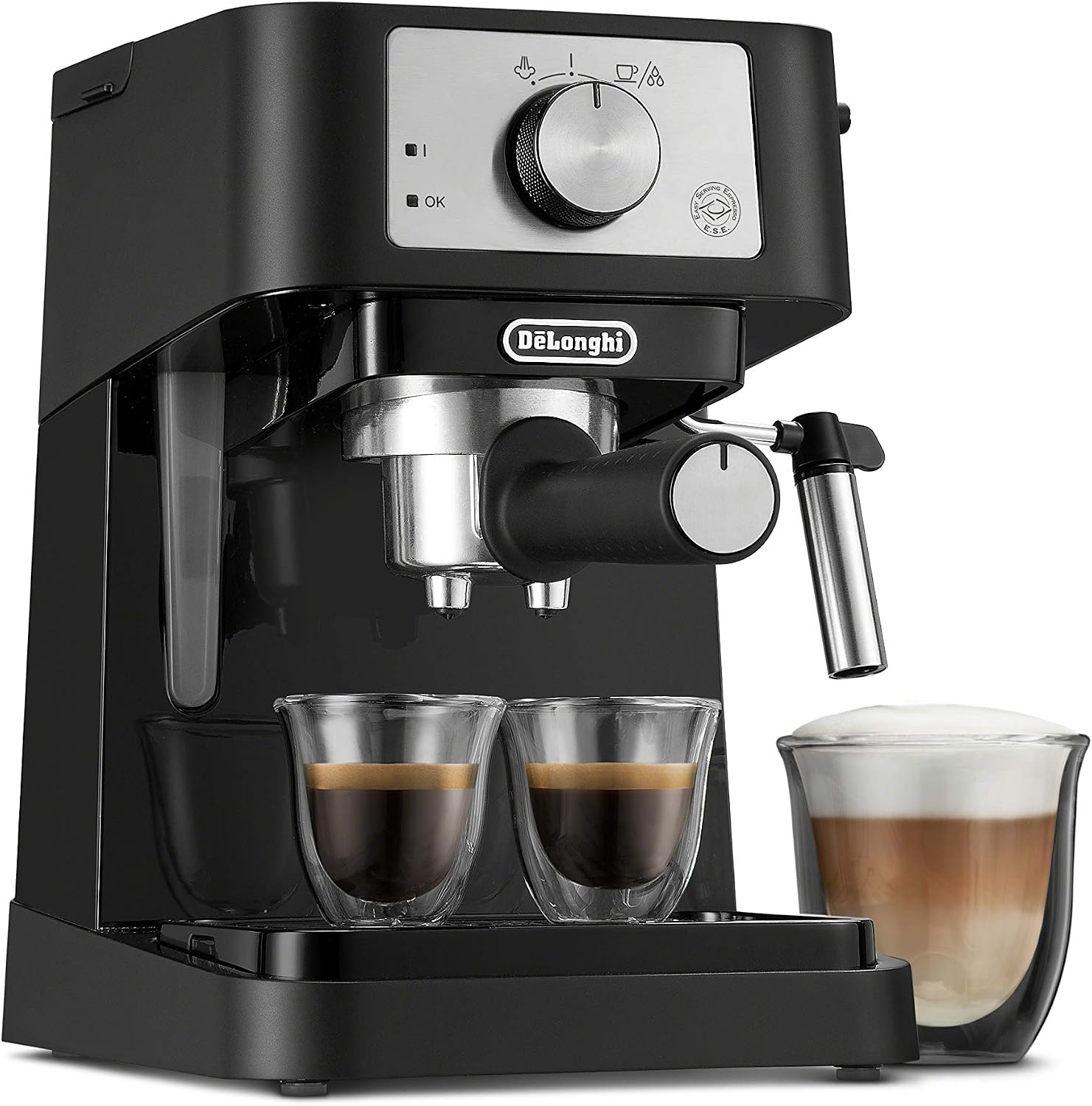
Best Value: De'Longhi Stilosa Compact Manual Espresso Machine
The Stilosa is the compromise pick, and I mean that as a compliment. If your counter has no room, or your budget is tight, or you are not sure yet whether this hobby is going to stick, this is a smart way to find out. It is small, it heats quickly for what it is, and it will make you a drinkable shot once you stop fighting it.
The compromise is real, though. It ships set up for pressurized brewing, which is the crutch I complain about most in this category. A pressurized basket hides stale beans and a bad grind by faking resistance, so the shot looks like espresso while tasting like something else. It is a fine place to start, and a bad place to stay. Get a non-pressurized basket as soon as you have a grinder that can keep up.
The manual milk frother is also a compromise. It will get you something hot and foamy for a cappuccino. It will not texture milk the way a proper wand does, so do not buy this expecting latte art. Buy it because it is small, it is forgiving, and it fits a kitchen that has already given up most of its counter space.
One practical note: machines in this class tend to run their brew pressure high, well above the 9 bar that espresso actually wants. If the shots taste harsh and thin no matter what you do, that is usually why, and it is usually fixable.
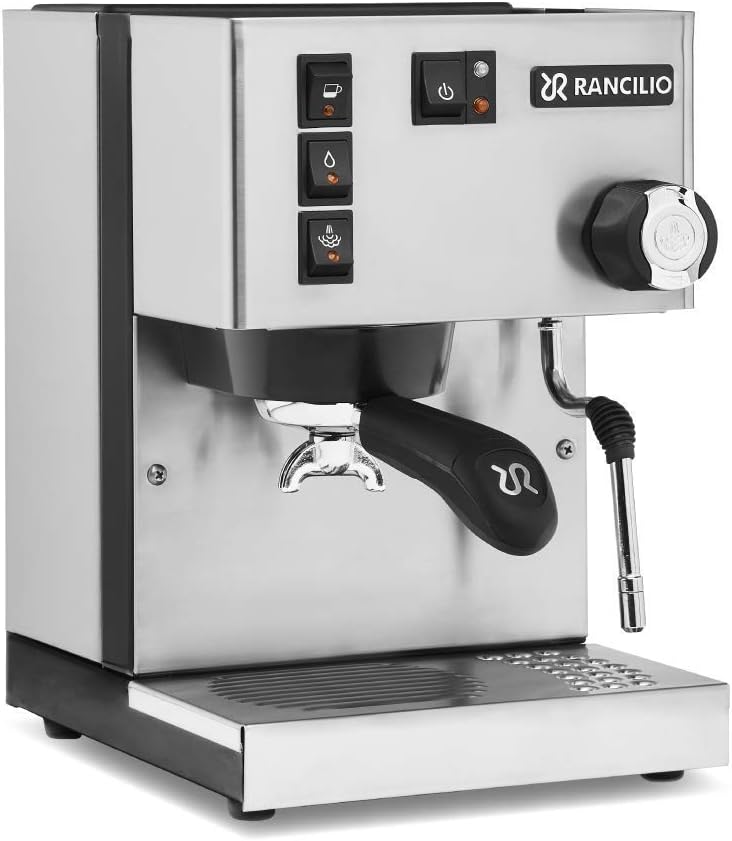
Best First Serious Machine: Rancilio Silvia Espresso Machine
If you already own a real grinder and you are ready for the machine you will keep, this is the one. The Silvia is the best first serious machine I know: bombproof, built like commercial equipment, with a commercial 58mm basket and parts available essentially forever. People have been modding and repairing these for two decades. That longevity is worth more than any feature list.
It is also unforgiving, and I want to be blunt about that. This machine does not hide a bad grind, a sloppy distribution, or a stale bean. It rewards consistency and punishes everything else, which is exactly why it teaches you so fast. If you learn on a Silvia, you learn properly.
The trade is the single boiler. Brew and steam share one boiler, so you pull your shot, then wait for the temperature to climb before you steam. That wait is dead time, and dead time is where the workflow dies on a busy morning. If you drink milk drinks back to back, you will feel it every time. If you drink espresso most days and a flat white on the weekend, it is a non-issue.
Budget accordingly, and budget for the grinder first. The machine is the part people photograph. The grinder is the part that decides whether the shot is any good.
The Scale That Makes Any of Them Repeatable: KitchenTour Coffee Scale with Timer
I will not recommend a machine without scale advice, so here it is. This one reads down to 0.1 grams with a 3kg capacity, has a built-in timer, and a back-lit LCD, and it arrives with batteries included. That combination is the whole point: you can weigh your dose and watch your shot time on one device without juggling two gadgets and a phone.
Why this matters more than the machine: espresso is a ratio and a time. If you do not know how much coffee went in, how much liquid came out, and how long it took, you are guessing, and guessing is why people think they are bad at espresso when they are really just flying blind. Consistency is the difference between "sometimes great, sometimes sour" and a shot you can repeat tomorrow.
A scale will not fix a bad grinder. Nothing fixes a bad grinder. But it will tell you what your grinder is doing, and that is how you get better.
How I tested
I ran each machine for a month of daily shots, using the same beans, the same grinder, and the same routine: dose, distribute, tamp, pull, taste, log it. Same "does it make you want another cup" test at the end of every session, which sounds soft and is actually the only test that matters over a month.
I do not review a machine on fewer than 30 shots pulled on it. I do not judge crema without tasting the shot, because crema is decoration and taste is the test. And I do not recommend a machine without telling you what grinder to pair it with, because a machine recommendation without grinder advice is half an answer.
I also lived with the workflow. Not the first shot, the third week. Does the steam wand still annoy me? Do I dread the descale? Would I still enjoy this after month three? That is the question that separates a good machine from a good review.
Analysis and test results
Three things decided every one of these machines for me.
Temperature stability first. How steady the brew water stays across a shot is the difference between consistent espresso and coffee that is great on Monday and sour on Tuesday. Pressure profiling is a feature you will use twice. Temperature stability is the feature you will feel every single shot.
Second, dead time. On a single boiler, the wait between brew and steam is where a workflow goes to die. If you make two milk drinks every morning, that wait compounds. Know it before you buy, not after.
Third, the basket. If a machine does not give you a real 58mm portafilter, you are fighting an uphill battle: thinner pucks, less forgiveness, fewer accessories. It is not fatal, but it is a tax you pay on every shot.
The pattern across the four is simple. The Breville wins on workflow because it removes steps. The Silvia wins on longevity and forgiveness of bad technique, which is to say it has none, and that makes you better. The Stilosa wins on footprint and price, at the cost of a pressurized setup you should graduate out of. The scale is the cheapest upgrade here and the one that changes the most, because it turns a lucky shot into a repeatable one.
If you take one thing from this: put your money where the grind is. A modest machine with a serious grinder beats a serious machine with a modest grinder, every time I have tested it.
The home espresso machine comparison table
| Machine | What it is | Workflow note | Who it is for | Price |
|---|---|---|---|---|
 Visit on Amazon → Visit on Amazon →Breville Barista Express Impress |
All in one, built-in grinder and assisted tamp | Fewest steps from bag to cup | First-time buyers who want one box | $649.95 |
 Visit on Amazon → Visit on Amazon →Rancilio Silvia |
Single boiler, commercial build, 58mm basket | Dead time before steam, parts forever | Buyers who already own a real grinder | $995.00 |
 Visit on Amazon → Visit on Amazon →De'Longhi Stilosa |
Compact single boiler, manual frother | Forgiving, ships pressurized | Small counters and tight budgets | $99.95 |
 Visit on Amazon → Visit on Amazon →KitchenTour Coffee Scale with Timer |
3kg capacity, 0.1g precision, built-in timer | Weighs dose and shot on one device | Anyone who wants repeatable shots | $19.99 |
Single boiler or dual boiler?
Single boiler means one heated vessel handling both brew and steam, so you wait between them. That is every machine here except the Breville, which manages its heating differently but is still not a dual boiler. Dual boiler means brew and steam at the same time, all morning, without a pause. It costs more and it is the upgrade that finally kills dead time. If you make milk drinks for a household every day, it is worth saving for. If you drink espresso, spend the money on the grinder instead.
Do you need a 58mm portafilter?
Need is a strong word. Want is fair. The 58mm basket is the professional standard: thicker puck, more forgiveness, and every accessory on the market fits it. Smaller baskets can make excellent espresso, but they ask more of your puck prep. If you are choosing between two machines and one gives you the 58mm, that is a real point in its favor.
Should you buy the Breville Barista Express Impress?
Yes, if you want one box, one plug, and a gentle learning curve. It is the machine I hand to friends who ask where to start. The Impress tamp removes a variable while you are still learning what a sour shot tastes like, and the workflow is short enough that you will actually use it on a weekday.
Go in knowing the built-in grinder is the weak link and the basket is smaller than the professional standard. Neither is a reason to skip it. Both are reasons to plan your next upgrade before you buy this one.
Should you buy the Rancilio Silvia?
Yes, if you already own a real grinder and you want a machine you can keep for a decade. Bombproof, repairable, commercial basket, parts available forever. It is the best first serious machine I know.
The trade is the single boiler and the dead time that comes with it, plus a machine that refuses to cover for sloppy puck prep. If you want a machine that flatters you, this is not it. If you want a machine that teaches you, it is.
Should you buy the De'Longhi Stilosa?
Yes, with clear eyes. Buy it for the footprint, the price, and the fact that it lets you find out whether home espresso is your hobby without committing serious money. Then buy a non-pressurized basket and a grinder that can grind fine enough for it.
Do not buy it expecting cafe-level milk texture. The frother will get you hot and foamy, not silky, and the stock setup is designed around pressurized brewing, which is a crutch. A useful crutch, for a while.
Do you need the KitchenTour scale?
Yes, and sooner than you think. It is the cheapest item here and the one that changes your results fastest, because it turns a lucky shot into a repeatable one. Weigh the dose, watch the time, taste the result, adjust. That loop is the whole hobby.
Skip it and you are guessing. Guess long enough and you will blame the machine, then buy a new one you did not need.